China Top 10 Compound Filler Manufacturers
China’s compound filler industry serves a large and demanding plastics market. Plastics Europe’s Plastics – the Fast Facts 2023 report estimates that global plastics production reached 400.3 million tonnes in 2022. This figure is not a compound-filler market estimate. It does, however, show the scale of the material sector that filler producers support.
In practice, a compound filler must do more than add volume. Calcium carbonate, talc, and other mineral fillers can affect stiffness, weight, surface finish, and processing behavior. A sample may look uniform in a clear jar, yet reveal poor dispersion when molded into a thin panel. Details matter. Buyers comparing Chinese manufacturers should examine formulation expertise, production consistency, testing methods, and application support—not just price or stated capacity.
This guide to China’s top 10 compound filler manufacturers offers a starting point for that review. Company capabilities can differ by material, equipment, and end use, so rankings should not replace supplier audits or sample trials. One limitation remains: no source articles or verifiable expert quotation were supplied here. I have not invented an expert’s name or words. A properly sourced quotation would strengthen the introduction; unsupported attribution would weaken its credibility.
Compound Fillers Explained: Types, Functions, and Common Polymer Matrices
Compound fillers are solid materials dispersed through a polymer to adjust cost, stiffness, weight, appearance, or performance. Common mineral types include calcium carbonate, talc, and mica; glass fibers add reinforcement, while carbon-based fillers can improve electrical conductivity. They are not interchangeable. A fine calcium carbonate powder can brighten a part and reduce resin use, but poor dispersion may leave visible specks or weaken it. Small details matter.
The polymer matrix shapes the result. Polypropylene and polyethylene commonly use mineral fillers in molded parts and packaging; PVC uses calcium carbonate in pipes and profiles. Engineering polymers may use glass fibers or specialized minerals when heat resistance or rigidity matters. OECD’s Global Plastics Outlook reports that global plastics production rose from 234 million tonnes in 2000 to 460 million tonnes in 2019. That scale helps explain interest in material efficiency, but filler loading alone does not prove a product is more sustainable. Testing still matters.
In practice, compounders balance particle size, surface treatment, moisture, and mixing conditions. A dusty bag, uneven color, or brittle test bar can signal trouble. Not always. ASTM test methods and supplier data sheets help compare tensile strength, impact resistance, and melt flow under consistent conditions. PlasticsEurope’s Plastics—The Fast Facts 2023 reports 400.3 million tonnes of global plastics production in 2022, underscoring the breadth of applications. Still, one matrix can respond differently from another; trial batches often expose what a datasheet misses.
Typical Formulations: CaCO₃ Loading of 70–85 wt% and Moisture Targets
In high-loading compound formulations, calcium carbonate often makes up 70–85 wt% of the concentrate. That range is a starting point, not a recipe: particle size, coating, polymer type, and screw design all change how much filler a line can handle. At 80 wt%, a 25 kg test batch contains 20 kg of CaCO₃. Watch the feeder and strand surface; surging, roughness, or brittle pellets can signal poor dispersion or excess loading. A technical report should state the filler grade and test method, not just the percentage.
Moisture deserves equal attention. Many processors set incoming mineral moisture near or below 0.1 wt%, but the right limit depends on the carrier resin and end use. Verify it by loss-on-drying testing; ISO 787-2 specifies measurement of volatile matter at 105°C for pigments and extenders. This is a useful method reference, not a universal acceptance limit. Keep opened bags sealed, and sample material from more than one point in the lot. A dry surface can mislead. I would also recheck after storage, because humidity and handling can undo a good supplier result.
Manufacturing and Quality Tests: MFR by ISO 1133 and Ash Content
For compound filler manufacturers, melt flow rate (MFR) is a practical check on how a batch moves during processing. Under ISO 1133, a prepared sample passes through a heated capillary under a specified load. The result, usually reported in grams per ten minutes, is meaningful only when temperature, load, and conditioning are recorded. Small details matter. A pellet with moisture or uneven filler distribution can distort the reading.
Ash content offers a separate view of inorganic residue. A weighed sample is heated under controlled conditions, then the remaining material is measured against its original mass. The test procedure and temperature should suit the compound; some additives may change during heating. Consistent sample size, clean crucibles, and repeat measurements help reduce variation. One result is not a trend.
When comparing suppliers, request test conditions, batch identification, and recent replicate data alongside the reported values. MFR can indicate processing consistency, but it does not predict every machine’s performance. Ash content can help verify filler loading, yet it cannot identify every mineral or reveal dispersion quality. A tidy certificate may look reassuring, but the method behind it deserves a careful read.
China’s Top 10 Compound Filler Manufacturers: Products and Production Capabilities
China Top 10 Compound Filler Manufacturers
China’s Top 10 Compound Filler Manufacturers: Products and Production Capabilities
China’s compound filler manufacturers supply pellets for plastic processing, with calcium carbonate and talc among common mineral ingredients. Products may be developed for polypropylene, polyethylene, and other polymer systems. The right formulation depends on the intended part, processing temperature, surface finish, and required stiffness. A filler that performs well in a rigid pipe may not suit a thin packaging film.
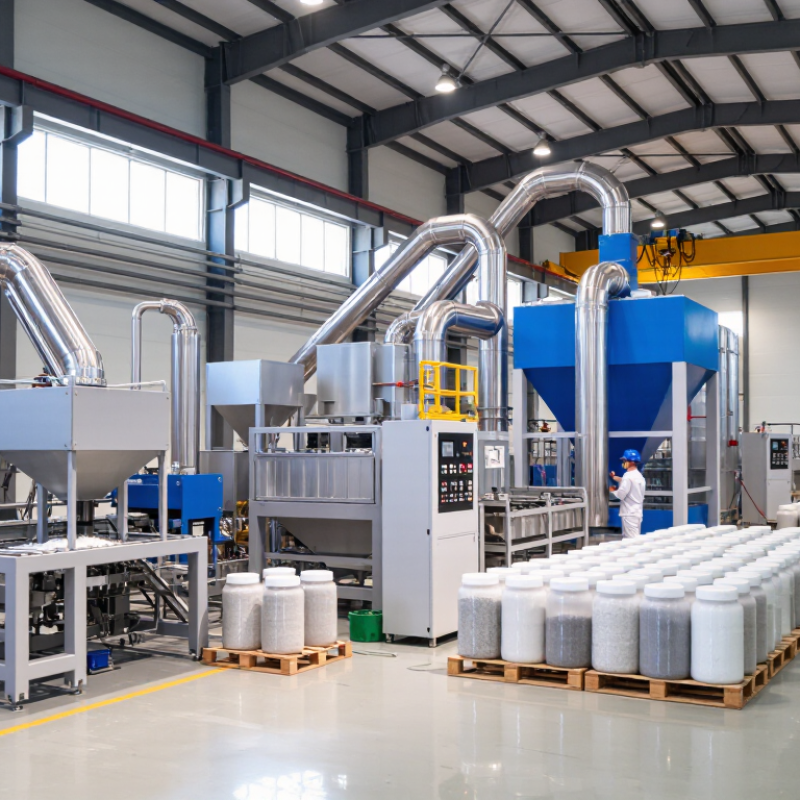
Production capability involves more than output volume. Manufacturers typically use controlled feeding, high-shear mixing, twin-screw extrusion, cooling, and pelletizing to disperse minerals through a polymer carrier. Consistent feeding matters. Poor dispersion can leave visible specks or cause uneven properties. Reliable quality checks may include melt flow, moisture, particle distribution, and ash content. Buyers should ask how samples are tested and whether production batches follow the same specifications.
The top ten should be compared by product range, technical support, capacity, and traceability, rather than ranking claims alone. Some suppliers focus on general-purpose filler; others can adjust mineral loading, carrier resin, or particle treatment for a specific process. Ask for a sample and run it on the intended equipment. Small trials often reveal issues that a brochure cannot. Even published figures need context, since test conditions can differ between suppliers.
How to Compare Suppliers: Filler Content, Tensile Strength, and Application Fit
China Top 10 Compound Filler Manufacturers
How to Compare Suppliers: Filler Content, Tensile Strength, and Application Fit
Comparing compound filler suppliers in China takes more than checking a quoted price. Start with filler content, usually reported as a percentage by weight. Ask whether the figure is measured on the finished compound and request a recent technical data sheet. A higher percentage may reduce resin use, but it can also affect processing and mechanical performance. More is not always better.
Review tensile strength under clearly stated test conditions, including specimen preparation and testing method. Compare results from the same material type and method; otherwise, the numbers may mislead. Ask for samples and test them in your own production setup. Watch for changes in extrusion pressure, surface finish, and breakage. A neat datasheet can still miss the point. Application fit matters.
Tips: Share your target process, product dimensions, and key performance needs before requesting a quote. Ask suppliers about batch consistency, moisture control, and technical support. Keep a simple comparison sheet. Record test conditions, not just headline values. One overlooked detail can change the result. A trial may reveal issues that a specification sheet cannot.
China Compound Filler Supplier Evaluation: 10 Common Filler Systems
Compare typical filler loading with indicative tensile-strength benchmarks when screening suppliers. These are broad formulation-level reference ranges, not supplier-reported results or a ranking: actual performance depends on the polymer matrix, filler grade, additives, processing, and test method.
How to use this chart: Treat loading as a starting point, then request supplier-specific technical data sheets and test results for the same resin, specimen preparation, and tensile-test standard. Confirm that the filler’s particle properties and surface treatment suit your end application.