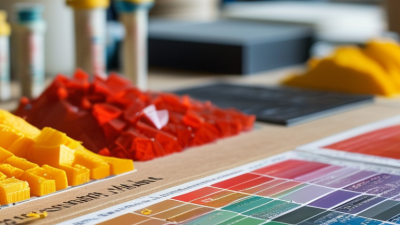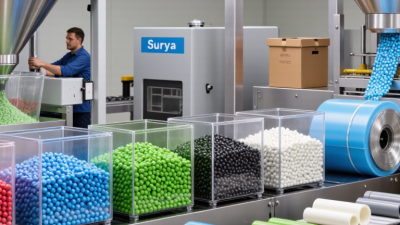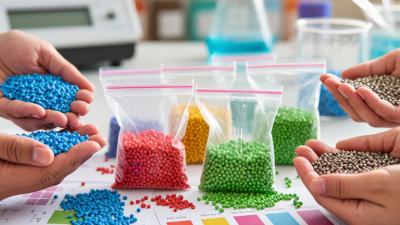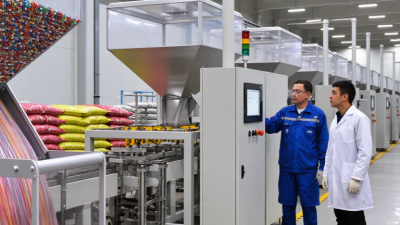
Additive masterbatch helps processors build specific performance into plastic without changing the base polymer. A small pellet can deliver UV protection, antistatic behavior, flame retardancy, slip, or easier processing. The right choice depends on the resin, dosage, end use, and processing conditions. A formulation suited to polyethylene film may not behave the same way in polypropylene injection molding. Details matter.
The scale is significant. PlasticsEurope’s Plastics – the Fast Facts 2023 reports global plastics production of 400.3 million tonnes in 2022. The OECD’s Global Plastics Outlook reports that 353 million tonnes of plastic waste were generated in 2019, while only 9% was ultimately recycled. These figures make durability, process efficiency, and end-of-life performance important considerations—not automatic benefits of any additive. This guide compares common additive masterbatch types, their functions, and the practical trade-offs buyers should check, including compatibility, migration risk, dispersion, and impact on recyclability. A datasheet is a starting point, not proof of performance in a finished product.
A named expert quotation should be checked against its original source before publication. No verifiable quotation or source was provided here, so attributing one would risk misrepresenting an industry specialist. That limitation matters. Reliable formulation decisions need traceable evidence, not a memorable but unsupported quote.

What Are the Top Types of Additive Masterbatch?
Additive Masterbatch Basics: Typical Let-Down Rates of 1–5%
Additive masterbatch can provide UV protection, color stability, slip, or antistatic performance. The right type depends on the resin, processing conditions, and the finished product’s needs. Typical let-down rates often fall between 1% and 5%, but this is a starting range, not a fixed rule. A concentrated formulation may work at a lower rate. A demanding application may need more.
At 1%, a batch adds 10 kilograms of masterbatch to 990 kilograms of base resin. Small details matter. Poor dispersion can leave streaks or uneven performance, even when the calculation is correct. Check the product’s technical data sheet for its recommended dosage and carrier compatibility. Then run a small production trial. Record the feed rate, melt conditions, and visible results. I’ve seen teams focus on the percentage and overlook mixing consistency; that can lead to a frustrating retest.
Tips: Start low. Increase the dosage gradually, and change only one setting at a time. Use a calibrated scale, especially for small batches. If results are unclear, review both the additive level and the mixing process before adjusting either one again.
UV and antioxidant masterbatches are often combined to help plastics resist sunlight and heat-driven oxidation. ISO 4892-2 describes laboratory exposure using xenon-arc light, which can simulate parts of natural sunlight. Test conditions matter. Filter type, irradiance, temperature, moisture, and exposure duration can all affect results. Keep these settings consistent when comparing formulations.
Prepare specimens with the same resin, thickness, processing history, and pigment level. Include unexposed controls and repeat samples; small differences in molding can distort comparisons. After exposure, assess color change, surface cracking, tensile strength, and elongation. A glossy surface may still conceal weakened material. That is easy to miss. UV stabilizers can slow light-related damage, while antioxidants help limit oxidation during processing and service. Their performance depends on the polymer and formulation, so a successful result in one resin is not a guarantee for another. ISO 4892-2 provides an exposure method, not a direct prediction of years outdoors. Record failures as carefully as improvements, and treat accelerated tests as one part of material selection.
This comparison summarizes common additive types and suitable evaluation metrics. ISO 4892-2 describes exposure of plastics to xenon-arc light, heat, and moisture; it does not prescribe a universal masterbatch formulation or guarantee a specific service life.
| Additive Masterbatch Type | Primary Function | Relevance to Xenon-Arc Weathering | Useful Measurements | How to Report Results |
|---|---|---|---|---|
| UV absorber masterbatch | Absorbs selected ultraviolet wavelengths and dissipates the absorbed energy, helping reduce UV-related damage in the polymer. | Compare treated and untreated specimens exposed under the same ISO 4892-2 method, filter, irradiance, temperature, and moisture cycle. | Color change (ΔE*ab); yellowness index; tensile-strength retention; elongation-at-break retention. | Report the exposure duration or radiant exposure, the selected color measurement method, and the percentage of each mechanical property retained. |
| HALS (hindered amine light stabilizer) masterbatch | Helps interrupt photo-oxidative degradation through a regenerative radical-scavenging mechanism. | Assess changes in appearance and mechanical properties over repeated xenon-arc exposure intervals; effectiveness depends on the polymer and formulation. | Surface cracking or chalking rating; tensile-strength retention; elongation-at-break retention; color change. | State the visual-rating scale used and report each property at defined exposure intervals, alongside an unexposed control. |
| Primary antioxidant masterbatch (for example, hindered phenol type) | Scavenges polymer radicals and helps limit oxidation during processing and subsequent aging. | Useful when evaluating oxidation-related aging, but it is not a UV screen; results should be interpreted with the exposure conditions and polymer type stated. | Carbonyl index by FTIR; color change; tensile-strength retention; elongation-at-break retention. | Describe the FTIR calculation and sampling method. Compare exposed specimens with matched controls and avoid treating one metric as a complete measure of durability. |
| Secondary antioxidant masterbatch (for example, phosphite type) | Decomposes hydroperoxides and is commonly used to support processing and oxidation stability, often together with a primary antioxidant. | Can be included in weathering evaluations, but its contribution should be separated from UV-stabilizer effects using matched formulations. | Melt-flow rate before and after exposure; color change; tensile-property retention; carbonyl index where appropriate. | Specify the test method and conditioning for melt-flow measurements, and report formulation and exposure details for each comparison. |
| Combined UV-stabilizer and antioxidant masterbatch | Combines light-stabilization and oxidation-control functions; the balance depends on the polymer, pigment, application, and processing conditions. | Evaluate the complete formulation and, where practical, compare it with UV-only, antioxidant-only, and unstabilized controls under identical ISO 4892-2 conditions. | Color change; tensile-strength retention; elongation-at-break retention; surface appearance; carbonyl index if relevant. | Report the full formulation basis, additive let-down rate, specimen preparation, exposure cycle, and results at each measurement interval. |
Test note: ISO 4892-2 exposure settings depend on the selected method and intended application. State the xenon-arc filter, irradiance, temperature, moisture cycle, specimen details, and exposure duration when reporting results. Performance values should come from testing of the actual polymer formulation; they cannot be inferred from additive type alone.
Antistatic and conductive additive masterbatches are selected by the electrical behavior required in the finished part. Antistatic grades help reduce charge buildup, while conductive grades provide a more continuous path for charge dissipation. The right choice depends on the resin, additive loading, part geometry, and intended use. A pellet’s datasheet is only a starting point.
IEC 61340-2-3 provides methods for measuring resistance and resistivity in solid materials used to control electrostatic charge. For a meaningful comparison, test molded specimens made with the actual resin and processing conditions. Record conditioning details, including temperature and humidity, because moisture can change readings. Use the specified electrodes and measurement setup, then report the method and results clearly. Small setup differences matter.
Test the finished part, too. A plaque may show a stable reading while a thin rib or weld line behaves differently. That distinction is easy to miss. Keep sample thickness and electrode placement consistent, and repeat measurements when results vary. There is no single resistance value that suits every application; acceptance limits should follow the product’s performance needs and test plan.
Indicative surface-resistance bands for antistatic, dissipative, and conductive materials
The bands shown are common indicative ranges, not IEC acceptance limits or specific test results. IEC 61340-2-3 describes methods for measuring resistance and resistivity; actual results depend on the material, formulation, conditioning, and test setup.
What Are the Top Types of Additive Masterbatch?
Flame-Retardant Masterbatches: The 10-Second UL 94 V-0 Burn Limit
Flame-retardant masterbatch helps reduce a plastic part’s tendency to sustain burning. The UL 94 test method sets a clear V-0 benchmark: after each of two flame applications, a specimen’s afterflame time must not exceed 10 seconds. Across five specimens and ten applications, total afterflame time must stay within 50 seconds. Flaming drops must not ignite the cotton indicator. Small details matter. The result applies to the tested material, thickness, and conditions—not every finished product.
A masterbatch is a concentrated additive blend carried in a compatible resin. Its effectiveness depends on even dispersion, accurate dosing, and polymer compatibility. A thin molded wall may behave differently from a thick test bar. Pigments and processing heat can also affect performance, so confirm the formulation through testing on representative parts. A neat laboratory result can be less reassuring when production settings drift; that deserves honest attention.
Tips: Check the UL 94 rating at the intended specimen thickness. Keep a record of resin grade, dosage, and processing conditions. Retest after meaningful material or design changes. The UL 94 criteria are published in UL’s Standard for Tests for Flammability of Plastic Materials for Parts in Devices and Appliances. A V-0 classification is a material test result, not a substitute for evaluating the complete product’s fire risks.
Slip, anti-block, and processing-aid masterbatches solve different problems, so COF and melt flow should not be treated as one score. Slip agents migrate toward the film surface and reduce friction. ASTM D1894 measures static and kinetic COF on specified film specimens. Anti-block particles create tiny spaces between film layers, helping rolls unwind without necessarily lowering COF as much.
Not interchangeable. A clear film roll that opens easily may still slide poorly on a packaging line.
Processing aids target melt behavior, often reducing die buildup or melt fracture. They may improve extrusion stability without meaningfully raising the measured melt-flow rate. ASTM D1238 and ISO 1133 define melt-flow testing, but a single lab value cannot reproduce every production line.
That distinction matters. PlasticsEurope’s Plastics – the Fast Facts 2023 reports 400.3 million tonnes of global plastics production in 2022, underscoring the scale at which consistent testing matters.
Compare COF and melt flow using the same resin, additive loading, conditioning, and test settings. I would still question an impressive COF result if the roll blocks after storage; that practical check is easy to overlook.
WhatsApp us