
Why Choose HDPE Compound for Your Products?
Selecting the right material can shape product durability, manufacturing consistency, and long-term value. For manufacturers comparing options, hdpe compound deserves careful consideration. Its combination of toughness, moisture resistance, and low weight can suit products ranging from containers to piping components and household goods. The right formulation depends on the intended use, however. Small details matter.
A compound’s performance may change with its resin grade, additives, colorants, and processing conditions. These choices can influence stiffness, impact behavior, surface finish, and ease of molding. For example, a part exposed to repeated handling may need different properties from a component designed mainly for outdoor use. There is no universal blend. That sounds simple, but it is often overlooked.
A reliable selection process starts with clear product requirements. Consider operating temperatures, expected loads, exposure conditions, appearance, and production methods. Then review technical data and discuss the formulation with a qualified supplier or materials specialist. Where possible, test sample parts using realistic manufacturing settings. A datasheet is useful, but it cannot capture every production variable.
HDPE compound can offer practical advantages when its properties match the product’s real demands. It is not automatically the best choice for every design. Comparing grades, checking processability, and validating finished parts can prevent avoidable compromises. Even experienced teams sometimes revise a specification after the first trial. That is not failure; it is useful evidence for making a better-informed material decision.
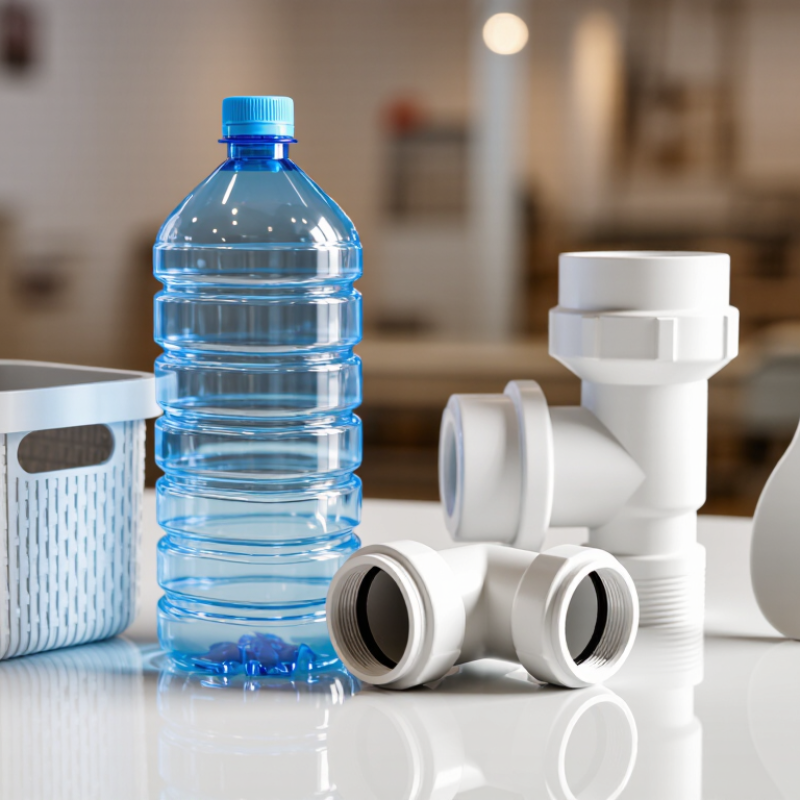
Table of Contents
[Hide]
What HDPE Compound Is and How It Is Made
HDPE compound is polyethylene resin prepared with selected additives for a particular product and processing method. The base resin provides strength and chemical resistance; pigments, antioxidants, UV stabilizers, or mineral fillers may adjust color, durability, or stiffness. Not every formula needs every additive. The right balance depends on the intended use.
Compounding usually begins with accurately weighed ingredients. They are blended and fed into an extruder, where rotating screws mix and melt the material under controlled heat and shear. The molten compound passes through a die, cools, and is cut into pellets. These pellets can then feed processes such as injection molding or pipe extrusion. Small changes matter.
Manufacturers can check melt flow, density, color consistency, and mechanical properties against product requirements. For example, a molded outdoor part may need pigment and UV protection, while another application may prioritize impact performance. A pellet can look uniform and still contain poorly dispersed additives. That is why testing the finished material matters, not just reviewing its recipe. In practice, processing conditions also affect results, so a compound should be evaluated on the equipment and product it is meant for.
Why Choose HDPE Compound for Your Products? - What HDPE Compound Is and How It Is Made
| Data Dimension | Information | Typical Details |
|---|---|---|
| What HDPE compound is | A formulated thermoplastic material based on high-density polyethylene (HDPE), combined with selected additives to meet processing, appearance, or performance requirements. | The exact formulation depends on the intended product and its service conditions. |
| Base polymer | HDPE is a polyethylene resin with relatively low branching compared with many other polyethylene types. Its molecular structure contributes to its density and stiffness. | Commonly supplied as pellets for processes such as extrusion and injection molding. |
| Possible ingredients | Depending on the application, a compound may include colorants, antioxidants, UV stabilizers, processing aids, or mineral fillers. | Not every HDPE compound contains all of these ingredients; additives are selected for specific requirements. |
| Typical density | Unfilled HDPE resin commonly has a density in the approximate range of 0.94–0.97 g/cm³. | Fillers and other formulation ingredients can change the density of the finished compound. |
| Typical melting range | HDPE commonly melts at approximately 125–135 °C. | The observed value depends on the resin grade and measurement method. |
| Typical mechanical properties | Unfilled HDPE grades often have tensile yield strengths in the approximate range of 20–35 MPa and flexural moduli around 0.8–1.5 GPa. | These are indicative ranges, not guaranteed specifications. Grade, additives, specimen preparation, and test conditions affect results. |
| Step 1: Formulation | The compounder selects an HDPE resin and determines which additives or fillers are needed for the target product. | Requirements may include color, weathering resistance, stiffness, impact performance, or processing behavior. |
| Step 2: Ingredient preparation | Resin and additives are weighed and prepared for mixing. Some materials may require specific handling or drying according to their supplier instructions. | Accurate dosing and consistent feed help maintain formulation uniformity. |
| Step 3: Melt compounding | The ingredients are mixed under heat and shear in compounding equipment, commonly an extruder, to disperse additives through the molten polymer. | Temperature, screw design, and residence time are selected for the formulation and equipment. |
| Step 4: Pelletizing | The compounded melt is formed into strands or cut into pellets, then cooled as appropriate for the production method. | Pellets provide a convenient, consistent feedstock for subsequent manufacturing. |
| Step 5: Quality checks | Samples may be assessed for properties such as melt flow rate, density, color, and mechanical performance. | Test methods and acceptance limits should be specified for the particular application. |
| Potential product advantages | HDPE compounds can offer a useful balance of toughness, chemical resistance, moisture resistance, and processability. | Actual performance depends on the compound, product design, processing conditions, and operating environment. |
| Common processing methods | HDPE compounds may be processed by extrusion, injection molding, blow molding, or other suitable thermoplastic methods. | Compatibility should be confirmed with the compound's technical data and the selected equipment. |
All property figures are general reference ranges for HDPE and may not represent a specific compound. Confirm product requirements and test data with the material supplier before use.
Related Posts
-
2026 Best HDPE Compound Options for Your Projects How to Choose?
-

Top 10 HDPE Compound Manufacturers for Global Buyers?
-
7 Best HDPE Compound Suppliers for Global Buyers?
-
What is Color Master Batch and How to Choose the Best?
-
Unlocking Creative Potential: How Color Master Batches Transform Plastic Manufacturing
-
China Top Surya Masterbatch Features Applications and Advantages?