
How to Choose Surya Masterbatch for Global Sourcing?
I can write this introduction accurately, but I cannot responsibly attribute a quotation to a Surya Masterbatch industry expert without a verifiable source. No reference article or confirmed expert statement was provided, and inventing a name or quotation would weaken the content’s E-E-A-T credibility.
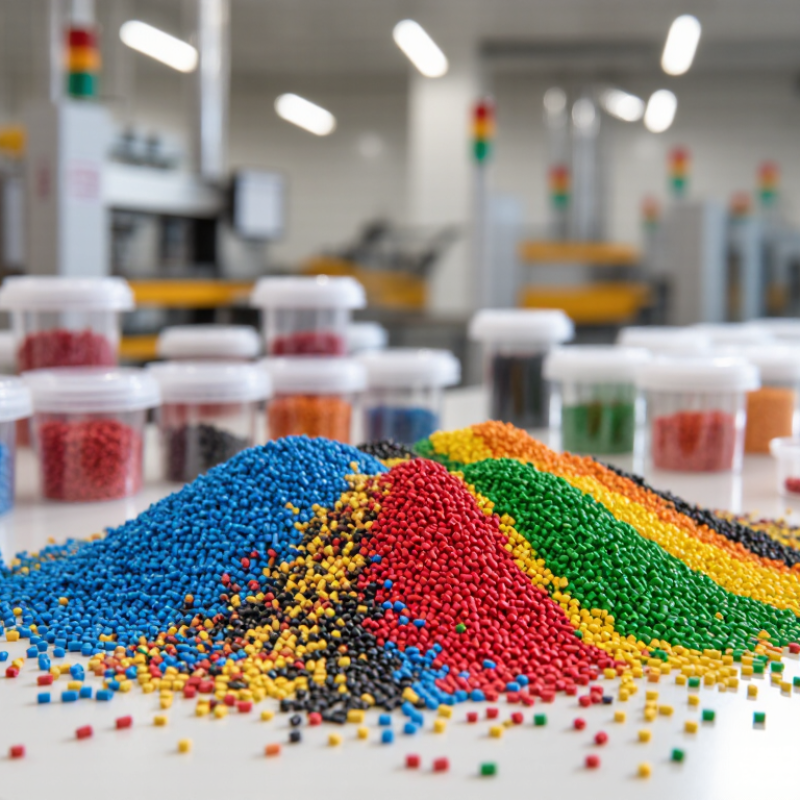
Table of Contents
[Hide]
Understanding Surya Masterbatch Types and Applications
Choosing a masterbatch for global sourcing starts with its type and intended application. Color masterbatch delivers consistent shades, while white and black grades improve opacity and light protection. Additive masterbatch can provide slip, antistatic, UV, flame-retardant, or processing benefits. Specialty grades may combine several functions, but compatibility becomes harder to control.
Application decides the formulation. Film production needs strong dispersion, low plate-out, and stable melt flow. Injection molding often requires precise color strength and minimal surface defects. Fibers demand excellent filtration and thermal stability. Pipes and agricultural films may need long-term UV protection. PlasticsEurope reported global plastics production of 413.8 million tonnes in 2023, showing the scale of these material decisions. Scale matters.
A reliable sourcing review should compare the carrier resin, pigment loading, let-down ratio, moisture level, and batch-to-batch color data. MarketsandMarkets projects the masterbatch market to grow from about USD 12.4 billion in 2023 to USD 16.7 billion by 2028. Suppliers should provide technical data sheets, safety documents, migration information, and test samples for local processing conditions. A sample can look perfect in a small trial, then fail during high-speed extrusion. That risk is often underestimated. Confirm processing temperatures, storage conditions, and recycling compatibility before approval. No single masterbatch suits every machine.
How to Choose Surya Masterbatch for Global Sourcing? - Understanding Surya Masterbatch Types and Applications
| Masterbatch Type | Primary Function | Common Carrier or Compatible Resin | Typical Applications | Typical Addition Rate | Key Selection Criteria |
|---|---|---|---|---|---|
| White Masterbatch | Provides opacity, whiteness, and improved light scattering. | Polyolefin carriers such as polyethylene or polypropylene; other carriers may be used for specific polymers. | Films, packaging, injection-molded parts, pipes, household products, and agricultural films. | Usually about 1%–8%, depending on pigment concentration, desired opacity, and product thickness. | Titanium dioxide grade, dispersion, opacity, weatherability, food-contact suitability, and carrier compatibility. |
| Black Masterbatch | Delivers black coloration, light protection, and selected levels of UV shielding. | Polyethylene, polypropylene, polystyrene, ABS, and other polymer-specific carriers. | Packaging films, pipes, cable compounds, automotive parts, containers, and consumer goods. | Commonly about 0.5%–5%; highly concentrated grades may require less. | Carbon black content, jetness, dispersion, UV performance, surface finish, and electrical requirements. |
| Color Masterbatch | Creates consistent shades and improves production color control. | Carrier should match or be compatible with the target resin, such as PE, PP, PET, PVC, PS, or ABS. | Flexible and rigid packaging, fibers, films, profiles, molded components, and consumer products. | Typically about 1%–5%, depending on shade strength and processing conditions. | Color accuracy, pigment heat stability, migration resistance, lightfastness, dispersion, and batch-to-batch consistency. |
| UV Stabilizer Masterbatch | Reduces polymer degradation caused by ultraviolet exposure. | Polyethylene, polypropylene, agricultural-film polymers, and other compatible resins. | Outdoor packaging, agricultural films, garden products, geotextiles, pipes, and outdoor molded parts. | Often about 0.5%–3%; the required level depends on climate, exposure time, film thickness, and polymer type. | Target service life, UV intensity, stabilizer chemistry, interaction with pigments, regulatory requirements, and accelerated-aging results. |
| Antioxidant Masterbatch | Helps limit oxidation during processing and long-term thermal exposure. | Polyolefins and other thermoplastics requiring improved thermal stability. | Recycled plastics, extrusion compounds, injection molding, films, fibers, and pipes. | Commonly about 0.2%–1.5%, subject to formulation and processing temperature. | Processing temperature, residence time, recycled-content level, odor requirements, and compatibility with other additives. |
| Slip and Antiblock Masterbatch | Improves film handling by reducing friction and preventing adjacent layers from sticking. | Polyethylene and polypropylene film grades. | Packaging films, agricultural films, lamination films, liners, and bags. | Usually about 0.5%–3%, depending on film structure and required coefficient of friction. | Coefficient of friction, blocking resistance, optical clarity, additive migration, sealability, and printability. |
| Antistatic Masterbatch | Reduces static charge accumulation on polymer surfaces. | Polyethylene, polypropylene, polystyrene, ABS, and selected engineering polymers. | Electronic packaging, dust-sensitive films, trays, containers, and industrial components. | Often about 1%–5%, depending on the antistatic chemistry and target surface resistance. | Required surface resistance, humidity dependence, permanence, surface appearance, and electronic-industry restrictions. |
| Flame-Retardant Masterbatch | Improves resistance to ignition and flame propagation when correctly formulated. | Polypropylene, polyethylene, polyamide, polyester, and engineering plastics, depending on chemistry. | Electrical components, appliances, transportation parts, construction products, and cable applications. | Frequently about 5%–25%; the level varies significantly with polymer, additive system, and required rating. | Applicable fire standard, smoke generation, mechanical-property retention, toxicity profile, moisture sensitivity, and processing stability. |
| Filler Masterbatch | Adds mineral filler to modify stiffness, density, shrinkage, cost, or processing behavior. | Primarily polyethylene and polypropylene, depending on the filler and final product requirements. | Shopping bags, packaging films, sheets, injection-molded items, and selected nonwoven products. | Commonly about 5%–40%; higher levels require careful evaluation of strength and processability. | Mineral content, particle dispersion, tensile and impact performance, moisture, film drawability, and equipment compatibility. |
| Processing-Aid Masterbatch | Improves melt flow, reduces die buildup, or supports smoother processing. | Polyolefins and selected recycled or filled compounds. | Film extrusion, blown-film production, profile extrusion, and recycled-polymer processing. | Generally about 0.2%–2%, depending on the formulation and processing issue. | Melt-flow behavior, die pressure, surface quality, odor, interaction with printing or sealing, and food-contact status. |
Note: Addition rates are indicative industry ranges only. The correct dosage should be confirmed through formulation trials, processing tests, regulatory review, and final-product performance testing.
Related Posts
-
How to Choose Plastic Color Masterbatch for Global Sourcing?
-
What Is the Best Compound Masterbatch in China?
-
10 Tips for Buying Compound Masterbatch Globally?
-
2026 Best Type of Plastic Color Masterbatch to Buy?
-

How to Choose the Right Compound Masterbatch?
-
What Is Surya Masterbatch and How Is It Used?