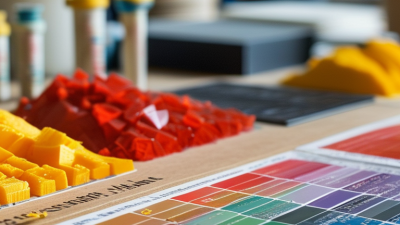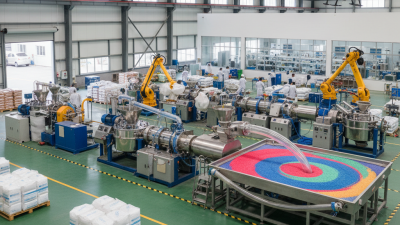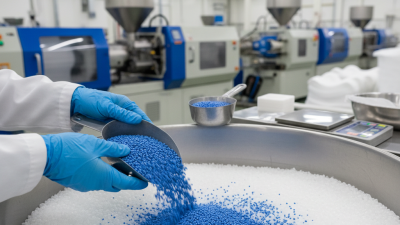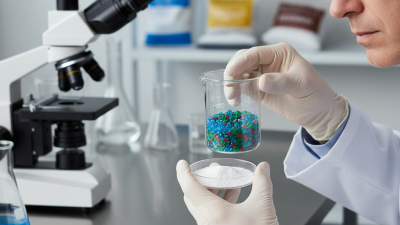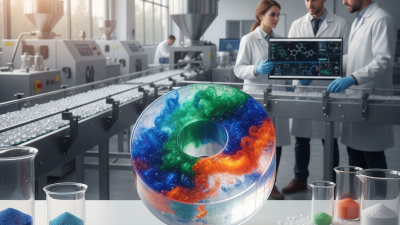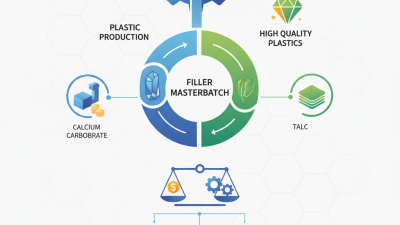
Choosing the best plastic color masterbatch in 2026 requires more than matching a sample chip. Resin type, processing temperature, recycled content, dosage, and end-use regulations all influence performance. A bright blue for polypropylene may fail in recycled polyethylene, where moisture, contamination, and melt-flow variation change the final shade.
Recent industry research shows why this decision matters. Grand View Research estimates that the global masterbatch market will continue expanding through the decade, driven by packaging, automotive, construction, and consumer products. Smithers also identifies recycled polymers, lightweight packaging, and functional additives as major development priorities. However, market estimates differ between reports. That gap deserves caution. Buyers should examine methodology, regional coverage, and product definitions before trusting a headline figure.
As color and plastics specialist Steve B. Hake has stated, “Color consistency begins with process consistency.” This principle remains practical on a factory floor. A technician checks a pellet sample under controlled lighting, then compares it against the approved standard after molding. The result can change when screw speed, cooling time, or recycled resin content shifts.
The best 2026 choice may therefore be a low-dosage, thermally stable, and migration-controlled grade with documented compatibility. For food-contact, medical, electrical, or outdoor applications, technical files matter more than attractive pricing. Buyers should request test data, regulatory declarations, batch traceability, and processing guidance. A cheaper masterbatch can create visible streaks, rejected parts, and expensive line cleaning.
Color alone is not enough. Performance earns repeat orders.
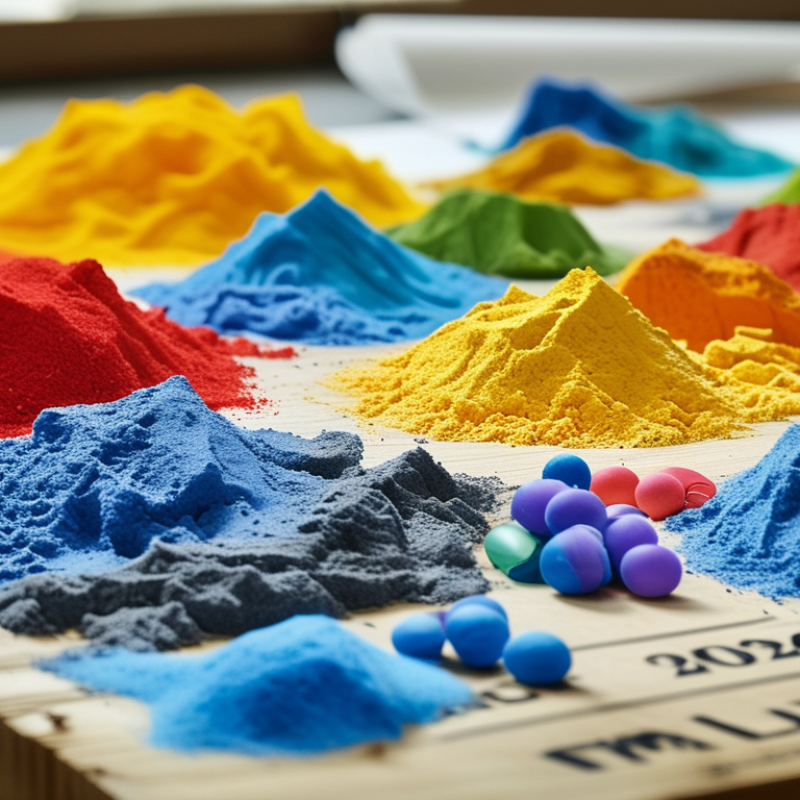
The best plastic color masterbatch in 2026 is not always the cheapest bag. It should balance let-down ratio, ΔE performance, and real cost per kilogram. Let-down ratio shows how efficiently the concentrate colors the base resin. A 1:25 ratio may require less material than a 1:10 ratio, but only when shade strength remains stable.
ΔE gives a measurable view of color difference. Lower ΔE usually means closer shade matching, yet the number needs context. Test plaques should use the same resin, processing temperature, thickness, and surface finish. Measure samples under controlled lighting with a calibrated spectrophotometer. A factory target of ΔE 0.8 may be acceptable for one product, but too loose for another. Visual checks still matter.
Cost per kilogram should include the dosage, not only the masterbatch price. For example, a concentrate costing 6 dollars per kilogram at a 1:20 ratio adds about 0.29 dollars per kilogram of finished compound, before processing losses. Compare this figure with color consistency, reject rates, and cleaning time. A cheaper product can become expensive after unstable dosing or filter blockage. Request a production-sized trial and record screw speed, melt temperature, moisture, and actual usage. Small test batches can hide problems.
There is no universal “best” type. A high-strength concentrate may suit packaging film, while a heat-stable grade may fit engineering plastics. Results can shift between machines. That part is easy to underestimate. Recheck ΔE after aging, recycling, or outdoor exposure when the application requires it.
2026 Best Type of Plastic Color Masterbatch to Buy?
Choosing a color masterbatch starts with the carrier, not only the pigment. PE carriers suit polyethylene films, bags, and molded parts because they disperse smoothly in similar resin. At a 1–2% let-down rate, they can produce clean shades with limited changes to melt flow. PP carriers are better for polypropylene, especially caps, fibers, and automotive components. They usually tolerate higher processing temperatures and maintain good surface consistency.
PET applications demand more control. PET carriers should be dried carefully because moisture can cause haze, brittleness, or reduced molecular weight during processing. A 1–3% dosage often works for standard shades, but transparent products may need lower addition levels. PLA carriers are designed for compostable or bio-based PLA systems. They help preserve compatibility at moderate processing temperatures. Excessive heat or long residence time can still damage the polymer. It happens.
At 3–5% let-down, color strength increases, but so can opacity, viscosity, and cost per finished kilogram. A strong pigment may need only 1%, while a pale shade may require more carrier-based concentrate. I recommend testing each dosage on the actual machine, using production-grade resin, not only laboratory plaques. Check pellet feeding, melt pressure, surface streaks, color delta, and impact strength after cooling. One overlooked detail is drying time; even a well-matched carrier can fail when moisture is uncontrolled. My own view remains cautious: the best result may sit between two dosage settings, rather than at the supplier’s suggested number.
| Carrier Type | Typical Density (g/cm³) |
Common Melt-Processing Range (°C) |
Moisture Sensitivity | Recommended Let-Down Rate | At 1% Let-Down | At 3% Let-Down | At 5% Let-Down | Best-Matched Applications | Key Buying Considerations |
|---|---|---|---|---|---|---|---|---|---|
| PE Carrier (Polyethylene) |
0.91–0.97 | 160–220 | Low | 1–5% | Light tint or transparent shade; suitable for pale colors and high-transparency effects. | Medium to strong color development; suitable for most general-purpose colored films and molded parts. | Strong, opaque color; higher risk of haze or reduced mechanical performance if the concentrate contains excessive filler. | PE film, bags, sheets, containers, rotational molding, wire and cable compounds. | Choose a PE carrier for PE substrates. Check whether the concentrate is linear-low-density, low-density, or high-density PE compatible. |
| PP Carrier (Polypropylene) |
0.90–0.91 | 190–240 | Low | 1–5% | Light to moderate tint with good dispersion in injection and extrusion grades. | Strong, uniform color for common PP parts, caps, fibers, and nonwoven products. | Very strong color depth; verify impact strength, stiffness, and flow because high concentrate addition can alter formulation balance. | Injection-molded parts, automotive components, caps and closures, raffia, fibers, and nonwovens. | Use a PP-compatible carrier to minimize phase separation, surface streaks, and inconsistent gloss. Confirm compatibility with filled or glass-fiber-reinforced PP. |
| PET Carrier (Polyethylene Terephthalate) |
1.33–1.40 | 250–280 | High | 1–3% Up to 5% only when validated |
Light tint with minimal impact on resin properties when the concentrate is properly dried. | Strong, consistent color for bottles, preforms, fibers, and films when pigment and carrier are thermally stable. | Very strong color, but excessive addition may affect intrinsic viscosity, haze, crystallization, or processing stability. | Blow-molded bottles, preforms, polyester fibers, films, and engineering polyester products. | Predry both PET resin and masterbatch. Select low-moisture, PET-compatible concentrates and confirm food-contact, acetaldehyde, and viscosity requirements where applicable. |
| PLA Carrier (Polylactic Acid) |
1.24–1.27 | 170–210 | High | 1–5% | Light tint for compostable films, thermoformed products, and 3D-printing materials. | Medium to strong color development with a suitable PLA-compatible pigment package. | Strong opaque color, but the added concentrate may reduce biodegradation or compostability claims if its ingredients are not appropriately qualified. | Compostable films, thermoformed packaging, disposable articles, filaments, and PLA injection-molded products. | Use a PLA carrier with low-moisture packaging and short residence time. Avoid pigments or additives that require temperatures above PLA’s processing window. |
Choosing the best plastic color masterbatch starts with the final color target, not the lowest price. The practical choice is usually a carrier-matched masterbatch with stable pigments and consistent dosing. For demanding parts, specify color quality at ΔE ≤1.0. A ΔE reading compares the molded sample with an approved standard. Keep the same light source, sample thickness, and measurement method. Aim under one.
Ask for a controlled laboratory drawdown before production. Use a calibrated spectrophotometer and measure several areas, not only the center. Record the average and the highest deviation. For dispersion, prepare a thin film or molded plaque from the actual polymer. Examine it under suitable magnification. Pigment agglomerates should remain below 50 μm. Any visible streak, speck, or color cloud deserves investigation.
Material compatibility matters. A polyethylene carrier may not disperse well in every engineering resin. Check melt temperature, screw design, moisture, and dosage range during a short trial. Production experience shows that mixing time can change both color and dispersion. Yet, one caution remains. A perfect first sample can mislead. ΔE may drift after cooling, aging, or a resin change. Recheck retained samples and production parts under identical conditions. Choose the masterbatch that stays stable, not merely the one that passes once.
The best color masterbatch is not chosen by shade alone. It must survive the polymer’s processing heat and residence time. For common PE and PP grades, many applications run around 180–230°C. A heat-stable carrier, compatible with the resin, helps prevent streaks and poor dispersion. Small trials matter. A color that looks clean in a sample cup may form specks during extrusion.
PET usually demands a higher thermal window, often near 250–280°C. The masterbatch must tolerate heat without fading, gassing, or damaging clarity. PET also requires careful drying. Moisture can create bubbles and weaken the finished product. That detail is easy to miss. PLA often processes near 180–210°C, but its safe range varies by grade and equipment. Excessive heat or long residence time can cause yellowing and brittleness.
Check the technical data sheet before buying. Ask for recommended dosage, carrier type, pigment stability, and processing limits. Then test the batch on your actual screw speed, output rate, and cooling setup. A two-hour trial is more informative than a color card. Watch the first purge, melt pressure, and final surface. Sometimes a lower dosage gives better dispersion, but not always. I would also recheck the result after storage, because an attractive fresh part can change later. Temperature is only one piece, yet it is often decisive.
In 2026, plastic color masterbatch selection must begin with compliance, not shade. EU packaging rules set a 100 ppm limit for the combined concentration of lead, cadmium, mercury, and hexavalent chromium. This limit is often misunderstood. It applies to the total packaging material, not automatically to every masterbatch product.
PlasticsEurope’s Plastics—The Fast Facts 2024 reported 54.6 million tonnes of plastics production in Europe during 2023. That scale makes traceability essential. Ask for batch-specific heavy-metal test results, not only a general declaration. Independent laboratories commonly use ICP-OES or ICP-MS testing. Keep the report, formulation reference, and production date together. A supplier certificate alone may be insufficient.
Food-contact use needs deeper evidence. Regulation (EU) No 10/2011 requires migration assessment for plastic food-contact materials. The overall migration limit is generally 10 mg/dm², while specific migration limits may apply to individual substances. Check the carrier resin, pigments, additives, processing temperature, and food type. A pigment can pass heavy-metal screening but still fail migration testing. This is where purchasing decisions often become careless. Test the final colored article under realistic conditions, including heat and storage time. I would also recheck recycled-content inputs, because contamination risk can change between batches.
WhatsApp us