Why Choose Oxo Biodegradable Packaging for Global Sourcing?

Global sourcing teams face a difficult question: what happens to packaging after the product reaches the customer? Containers may travel through warehouses, ports, shops, and homes before disposal. In some regions, collection systems remain incomplete. This is where oxo biodegradable packaging enters the discussion, offering a designed end-of-life pathway for certain plastic products.

Michael Stephen, a long-time specialist in oxo biodegradable technology and former chairman of Symphony Environmental Technologies, has said, “Oxo-biodegradable technology is designed to deal with plastic that escapes into the environment.” His statement highlights both the opportunity and the limitation. This packaging is not a substitute for waste collection, recycling, or responsible procurement. It should support a broader packaging strategy.

For global buyers, the decision requires more than a supplier’s attractive brochure. They should examine additive composition, shelf-life data, independent laboratory testing, and disposal conditions. A shipping pouch must survive heat, humidity, pressure, and long storage. It must also perform consistently across markets.

Details matter.

A cheaper package can create hidden costs if it tears during transit. However, oxo biodegradable claims can also be overstated when evidence is weak or testing is unclear. Buyers should request traceable documentation and check current requirements in every destination market. The technology may help reduce long-lasting litter, but it is not perfect. Its value depends on honest specifications, verified performance, and practical waste management.
Why Choose Oxo Biodegradable Packaging for Global Sourcing?

What Is Oxo-Biodegradable Packaging?

Oxo-biodegradable packaging is usually conventional polyolefin plastic containing pro-oxidant additives. Heat, oxygen, and sunlight accelerate oxidation, causing the material to weaken and fragment. However, fragmentation is not the same as biological decomposition. The European Commission has warned that oxo-degradable plastics may create microplastic residues and should not be described casually as biodegradable. The terminology needs discipline.

Global sourcing teams should examine real test evidence, not only supplier brochures. The OECD’s Global Plastics Outlook reported 353 million tonnes of plastic waste in 2019, nearly double the 2000 level. Packaging represented a major share of this waste stream. This pressure explains the interest in materials designed for shorter environmental persistence. Yet performance depends on thickness, temperature, humidity, storage, and disposal conditions. A package that changes in sunlight may fail during transport. That is a practical risk.

Tips: Request independent laboratory reports, full additive disclosures, and end-of-life instructions. Check whether testing measures biodegradation or only fragmentation. Compare barrier strength, shelf life, and recyclability before approving a supplier. Experience shows that “biodegradable” can sound clearer than it is. That is the uncomfortable part. The International Organization for Standardization and local regulators may apply different requirements, so sourcing specifications should include region-specific verification. Claims should remain narrow, measurable, and easy to audit.

How Oxo-Biodegradable Packaging Works

Oxo-biodegradable packaging is designed to change after its useful service life. It usually contains a small pro-oxidant additive within conventional plastic. Sunlight, oxygen, and heat trigger oxidation in the polymer chains. The material gradually loses strength, becoming brittle and fragmenting into smaller pieces. This stage is not the same as biodegradation. Important distinction. Microorganisms must then metabolize the oxidized material into biomass, water, and carbon dioxide. The speed depends on temperature, oxygen availability, thickness, and additive formulation. A thin film in warm, exposed conditions may change faster than a shaded container. Real outcomes vary.

For global sourcing, buyers should request test reports, composition data, and disposal guidance. A credible assessment should identify the test method, exposure period, and final degradation result. It should also state whether the evidence covers soil, marine, landfill, or industrial composting environments. These environments do not behave alike. Oxo-biodegradable packaging is generally not a substitute for certified compostable packaging. It may also be unsuitable where recycling systems require stable, conventional plastic streams. Check local rules before specifying it. In practice, I would compare shelf life, transport stress, collection infrastructure, and end-of-life evidence. The technology sounds straightforward, but the final stage remains difficult to verify. That uncertainty deserves attention.

Key Benefits for Global Sourcing

Global sourcing teams often need packaging that protects products, controls costs, and meets changing environmental expectations. Oxo biodegradable packaging can support this balance in selected applications. Its additives help plastic break down faster after exposure to oxygen, heat, and light. However, it is not the same as compostable packaging. Buyers must check the exact product claim.

The practical benefits start with supply flexibility. Many converters can produce oxo biodegradable films, bags, and wraps using familiar manufacturing equipment. This may reduce tooling changes and simplify supplier qualification. The material can also provide useful strength, moisture resistance, and lightweight protection during long-distance transport. Less packaging weight can lower shipping volume and handling costs. Small gains matter across thousands of cartons.

Responsible sourcing requires evidence, not attractive wording. Request independent test reports, material specifications, and clear degradation conditions. Check whether the destination market permits oxo additives. Recycling compatibility also needs careful review, because local systems differ widely. A supplier audit should examine batch consistency, labeling, worker safety, and disposal guidance.

The choice is not flawless. Fragmentation does not automatically mean complete environmental recovery. Some packaging may perform poorly in cold, dark, or dry conditions. Procurement teams should compare oxo options with reusable, recyclable, or certified compostable materials. The best decision depends on the product, route, climate, and end-of-life system. Our assumptions may fail without field testing. A controlled trial with real shipments can reveal damage, storage problems, and disposal confusion before a global rollout.

Environmental and Regulatory Considerations

Why Choose Oxo Biodegradable Packaging for Global Sourcing?

Environmental and regulatory considerations should guide every packaging decision. Oxo biodegradable packaging uses additives that promote fragmentation under oxygen, heat, and light. However, fragmentation is not always the same as complete biodegradation. Some materials may leave smaller plastic particles in soil or water. That distinction matters.

Global sourcing teams should request independent test reports before approving suppliers. Reports should identify the testing method, exposure conditions, and measured biodegradation results. A vague “eco-friendly” claim is not enough. It can create customs delays, retailer objections, or regulatory concerns. Requirements also differ between markets, waste systems, and product categories. Packaging accepted in one region may face restrictions elsewhere.

Documentation must follow the shipment. Keep material specifications, additive declarations, recycling guidance, and verified claim language together. Check whether local rules permit oxo-related environmental claims. Do not assume a supplier’s certificate covers every destination. It may not. Clear labeling can also reduce confusion for warehouse staff and consumers, especially when packaging looks like ordinary plastic.

A practical weakness deserves attention. Oxo packaging may perform well during storage, yet its end-of-life behavior depends heavily on local conditions. Landfill, composting, recycling, and open environments produce different results. Sourcing decisions should balance shelf life, transport protection, waste infrastructure, and independently verified evidence. Sometimes, a simpler recyclable structure is the more defensible choice.

Why Choose Oxo Biodegradable Packaging for Global Sourcing?

Environmental and Regulatory Considerations

Global plastic-waste outcomes show why packaging decisions must consider the full waste-management system. In 2019, approximately 9% of plastic waste was recycled, while about 50% was sent to landfill, 19% was incinerated, and 22% was mismanaged. Oxo-degradable packaging should therefore be assessed alongside local recycling infrastructure, end-of-life conditions, labeling requirements, and market restrictions. In the European Union, the Single-Use Plastics Directive restricts oxo-degradable plastic products from being placed on the market, making regulatory due diligence essential for global sourcing.

Source: OECD, Global Plastics Outlook, 2019 data; European Union Single-Use Plastics Directive (EU) 2019/904.

How to Evaluate Suppliers and Packaging Performance

Why Choose Oxo Biodegradable Packaging for Global Sourcing?

Supplier evaluation must begin with evidence, not the word “biodegradable.” Oxo packaging uses additives that encourage oxidation and fragmentation. That process is not automatically biological decomposition. ASTM D6954 and ISO 17556 provide useful testing references, but they measure different conditions. Ask suppliers for independent laboratory reports, complete formulations, and test dates. Confirm results for the actual film, ink, adhesive, and seal.

Performance data matters during international transport. Check tensile strength, puncture resistance, seal strength, moisture barriers, and shelf life. Request samples from different production batches. Test them after heat, humidity, compression, and ultraviolet exposure. The OECD Global Plastics Outlook reported that only 9% of plastic waste was recycled globally in 2019. This makes credible end-of-life evidence more important, not less. A supplier should also explain collection, recycling, or disposal pathways in each target market.

Tips: Compare test methods before comparing percentages. Reject reports without sample details. Record batch numbers and shipment conditions. I would not approve a large order from one attractive certificate. My checklist can still miss a weak seal or confusing disposal label. A small pilot shipment often reveals more. Avoid claims that promise complete disappearance in open environments. Performance should be reviewed with customs teams, warehouse staff, and local waste operators. The European Commission has also warned that oxo-degradable plastics may fragment without proving full biodegradation. That warning deserves a place in every sourcing review.

Why Choose Oxo Biodegradable Packaging for Global Sourcing? - How to Evaluate Suppliers and Packaging Performance

Evaluation Dimension What to Measure or Verify Relevant Requirement or Reference Practical Sourcing Interpretation
Material Definition Confirm whether the product is conventional plastic containing pro-oxidant additives, compostable plastic, or recycled-content plastic. Material declaration, formulation disclosure, and independent laboratory documentation. “Oxo-degradable” and “compostable” are not interchangeable claims. The supplier should state the material category clearly.
Regulatory Market Access Check the intended destination, product category, labeling rules, and restrictions on oxo-degradable plastic. The European Union Single-Use Plastics Directive prohibits placing oxo-degradable plastic products on the market in the EU. A package acceptable in one market may be restricted in another. Regulatory screening should be completed before supplier approval.
Oxidative Degradation Evidence Review changes in molecular weight, tensile strength, elongation, and visual integrity after controlled aging. ASTM D6954 provides a guide for evaluating degradation and biodegradation of polyolefins in specified environmental conditions. A loss of strength or fragmentation alone does not prove complete biodegradation. Test results must identify the final degradation outcome.
Biodegradation Evidence Verify measured conversion of carbon into carbon dioxide under the stated test environment, together with controls and test duration. ISO 17556 evaluates ultimate aerobic biodegradability of plastics in soil by measuring oxygen demand or carbon dioxide evolution. Results from soil testing should not automatically be presented as proof of marine, landfill, or industrial-composting biodegradation.
Compostability Claim Check disintegration, biodegradation, ecotoxicity, heavy-metal limits, and the required composting conditions. ASTM D6400 and EN 13432 address requirements for plastics or packaging intended for municipal or industrial composting conditions. Do not use a compostability logo or claim unless the complete packaging system meets the applicable standard and certification requirements.
Packaging Function Measure tensile strength, tear resistance, puncture resistance, seal strength, and drop performance using the final package design. Use documented laboratory methods appropriate to the package format, such as ASTM or ISO methods for tensile, tear, puncture, and seal testing. Supplier samples should be tested after printing, sealing, transport simulation, and any expected storage exposure.
Shelf-Life Stability Evaluate performance after exposure to heat, humidity, ultraviolet light, and the intended storage period. Test conditions should be documented and linked to the product’s expected distribution and storage environment. The package should remain functional throughout its required service life and should not begin premature embrittlement during normal logistics.
Barrier Performance Verify water-vapor transmission, oxygen transmission, grease resistance, and light protection where relevant to the product. Use recognized ASTM or ISO barrier-test methods and report temperature, relative humidity, film thickness, and test direction. Barrier performance depends on resin, thickness, additives, coating, humidity, and package construction; supplier claims should be linked to test conditions.
Recyclability Compatibility Determine whether additives, inks, coatings, adhesives, and multilayer structures are accepted by the target recycling stream. Verify against the technical guidance and acceptance rules of the destination country’s relevant recycling system. A package may be technically recyclable but not accepted in local collection or sorting infrastructure. Market-specific confirmation is essential.
Contamination and Residue Risk Request evidence on persistent fragments, microplastic formation, additive migration, and ecotoxicity under the claimed disposal pathway. Environmental claims should be supported by complete test reports rather than by photographs or fragmentation observations alone. A supplier should explain what remains after degradation and whether residues meet the requirements of the intended environment.
Traceability and Quality Control Review batch coding, raw-material traceability, certificate-of-analysis records, incoming inspection, and nonconformance procedures. Require documented quality procedures, controlled specifications, and retained samples for each production batch. Consistent additive concentration, film thickness, sealing performance, and print quality are more important than a one-time sample result.
Supplier Documentation Collect technical data sheets, safety data sheets, full test reports, declarations of conformity, claim substantiation, and product specifications. Reports should identify the tested sample, laboratory, method, conditioning, test date, result, uncertainty where applicable, and acceptance criteria. Independent, product-specific evidence is stronger than generic certificates, marketing statements, or test reports for a different film structure.
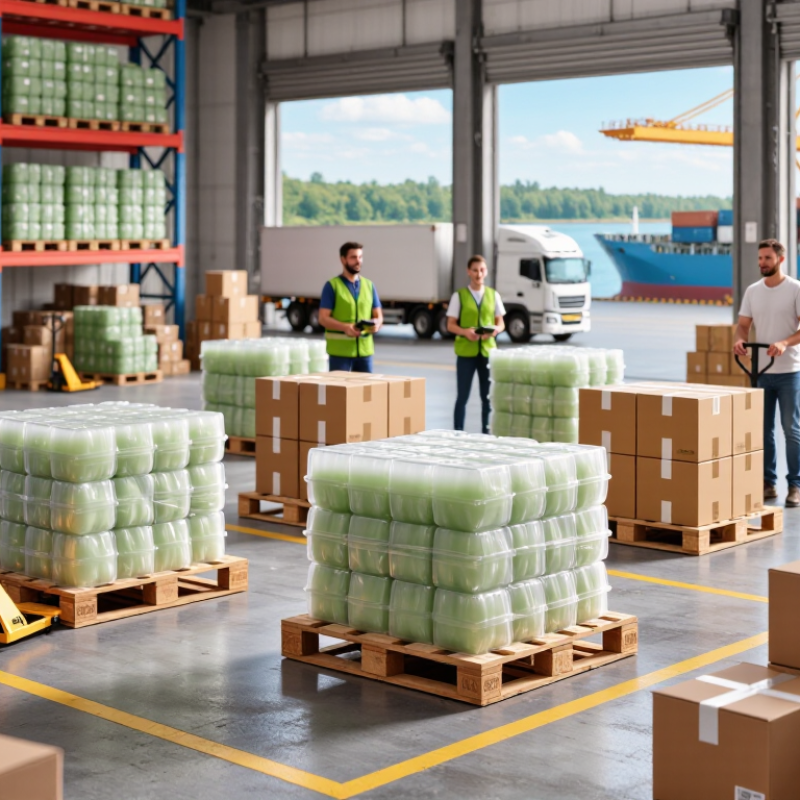
Global Logistics Performance Assess pallet stability, compression resistance, moisture protection, container loading, transport simulation, and storage conditions. Use packaging distribution tests appropriate to the package type and route, including vibration, compression, impact, and climatic exposure where necessary. Global sourcing decisions should consider the complete route from production to end user, not only laboratory performance at standard conditions.
Total Cost of Ownership Compare material cost, package weight, freight volume, tooling, testing, compliance, waste handling, and failure-related costs. Use a documented cost model based on the final package specification and destination-market requirements. The lowest unit price may not be the lowest overall cost if the material increases damage, regulatory, disposal, or claim risk.
Environmental Claim Review Check whether claims such as “biodegradable,” “eco-friendly,” or “environmentally safe” specify time, location, conditions, and disposal route. Environmental marketing claims should be specific, substantiated, and consistent with applicable consumer-protection and advertising rules. Avoid broad claims that imply harmless degradation in all environments. Use precise, test-supported wording.
Important sourcing note: Oxo-degradable packaging is not automatically compostable or recyclable, and fragmentation is not equivalent to complete biodegradation. Final approval should be based on destination-market regulations, product-specific laboratory evidence, packaging-function tests, and the actual end-of-life infrastructure available to customers.