2026 Top Oxo Biodegradable Products for Global Buyers?

Global buyers entering 2026 need more than attractive packaging claims. They need verified performance, clear documentation, and practical end-of-life information. This guide examines leading oxo biodegradable products across retail bags, shipping materials, food-service packaging, agricultural films, and flexible packaging. Each category demands different testing. A carrier bag faces sunlight, friction, and moisture. Agricultural film faces soil contact and seasonal exposure.

Dr. Michael Stephen, a long-time specialist in oxo biodegradable technology, has stated, “Oxo-biodegradable plastic is designed to biodegrade in the open environment.” His statement reflects the central purpose of this material. However, buyers should not treat it as automatic proof of environmental superiority. Product claims require independent evidence, controlled testing, and transparent supplier records. Local rules also matter. Some markets restrict or prohibit oxo biodegradable plastics, while others demand specific labeling or certification. Check before ordering.

The strongest 2026 products should show measurable degradation data, responsible additive disclosure, and realistic shelf-life controls. They should also support recycling policies where permitted. This is where purchasing teams must think carefully. A low price may hide weak documentation, inconsistent formulation, or difficult disposal guidance. Even established suppliers can provide incomplete evidence. That is an uncomfortable point, but it deserves attention.

This overview helps global buyers compare products by application, durability, compliance readiness, and supplier reliability. The goal is not to promote every oxo biodegradable option. It is to identify choices that withstand technical questions, regulatory review, and real-world use. Not perfect. More accountable.
2026 Top Oxo Biodegradable Products for Global Buyers?

2026 Oxo-Biodegradable Products: Definitions, Chemistry, and Standards

Oxo-biodegradable products are plastics designed to break down through oxidation before biological activity can act. Pro-oxidant additives help heat, oxygen, and ultraviolet light split long polymer chains into smaller fragments. Microorganisms may then consume some residues. The process is not automatic. Soil, temperature, oxygen, thickness, and exposure time can change the result.

ASTM D6954 provides a framework for evaluating oxidation followed by biodegradation, but it is not a universal certification. ISO 17556 measures aerobic biodegradation in soil, while EN 13432 addresses industrially compostable packaging. These standards answer different questions. Buyers should request complete test conditions, sample thickness, residue analysis, and test duration. A single “biodegradable” statement is too weak.

The scale of plastic waste makes careful verification important. The OECD Global Plastics Outlook reported approximately 353 million tonnes of plastic waste in 2019, with only 9% recycled. Oxo technology may reduce visible persistence, but it does not automatically solve litter, recycling contamination, or microplastic risks. The European Union’s Single-Use Plastics Directive restricts oxo-degradable plastic products, showing that market access differs sharply by region. This is easy to overlook.

In practical sourcing, buyers should compare polymer composition, additive disclosure, independent laboratory reports, and local waste infrastructure. Ask whether the product was tested in soil, marine water, landfill-like conditions, or controlled compost. These are not interchangeable environments. I would also treat claims about “complete biodegradation” cautiously unless carbon conversion and ecotoxicity data are available. The evidence base is still uneven. Some purchasing decisions may need rethinking.

Global Compliance: EU Directive 2019/904 Banned Oxo-Plastics in 2021

For global buyers, “oxo biodegradable” demands legal caution, not marketing excitement. Under EU Directive 2019/904, oxo-degradable plastic products could not be placed on the EU market from 3 July 2021. The rule targets materials designed to fragment through oxidation, even when they appear to disappear.

Fragmentation is not the same as biodegradation.

That distinction matters during import checks, tender reviews, and environmental claims.

Ask suppliers for resin composition, additive details, test methods, and written evidence supporting every claim. Do not rely on a green symbol or a short product description. Labels can mislead.

Independent laboratory reports can strengthen due diligence, but they must match the actual production batch. Physical samples matter. A product accepted in one country may fail an EU compliance review, especially when its packaging uses unclear terminology.

Responsible sourcing teams should examine EU legal texts, national enforcement notices, and destination-market requirements before approving samples. Documentation should identify the polymer, intended use, disposal pathway, and responsible manufacturer.

Yet compliance work is rarely perfect. Standards change, translations vary, and supplier files may contain gaps. That uncertainty deserves escalation, not optimistic interpretation.

Buyers should record decisions, request corrections, and recheck applicable rules before shipment. A cheaper product may create higher costs when customs, retailers, or regulators challenge its environmental claims.

Top Product Categories: Bags, Agricultural Films, Packaging, and Liners

2026 Top Oxo Biodegradable Products for Global Buyers

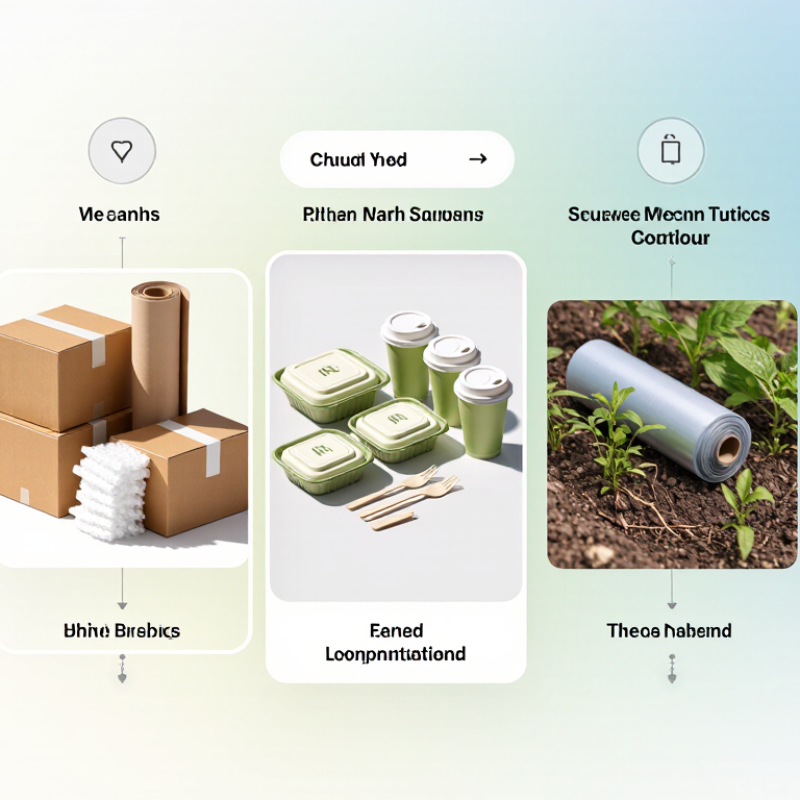
Oxo biodegradable bags remain useful for retail carryout, waste collection, and lightweight industrial handling. Buyers should check tear strength, seal performance, thickness, and storage stability. A bag that degrades too early can fail during transport. Agricultural films need different priorities. Farmers often require controlled service life, sunlight resistance, and reliable crop coverage. Test data should show how the film behaves in local heat, moisture, and soil conditions. “Biodegradable” is not a shortcut for verification.

Packaging products include wraps, pouches, and protective sheets for dry goods and non-food industrial items. Liners can support drums, cartons, and bulk containers, especially where moisture or dust control matters. However, food-contact applications require additional safety documentation. Global buyers should request composition details, migration results, tensile data, and documented end-of-life claims. Local rules may differ sharply. A product accepted in one market may need reformulation elsewhere. That is easy to overlook.

Tips: Ask for recent laboratory reports, production samples, and batch records. Test filled bags under real warehouse conditions. Check whether printing, adhesives, and recycled content affect performance. Avoid vague claims such as “fully disappears.” Clear evidence is more valuable. A perfect material rarely exists; cost, durability, and environmental performance can conflict. Small pilot orders reveal problems that brochures often hide.

2026 Top Oxo Biodegradable Products for Global Buyers — Top Product Categories: Bags, Agricultural Films, Packaging, and Liners

Buyer-oriented comparison of common oxo-degradable product formats. Technical performance depends on resin formulation, additive dosage, thickness, exposure conditions, storage, and end-of-life requirements.

Product Category Typical Product Formats Common End Use Indicative Thickness / Gauge Key Functional Requirements Oxo-Related Performance Consideration Common Test or Specification Reference Global Buyer Checkpoint Regulatory Status Indicator
Retail and Merchandise Bags T-shirt bags, vest-handle bags, die-cut handle bags, flat carrier bags Retail checkout, apparel, household goods, takeaway distribution Approximately 20–70 micrometres, depending on load and bag size Handle strength, tear resistance, seal integrity, low odor, print adhesion, controlled coefficient of friction Oxidative fragmentation can be accelerated by heat, light, and oxygen; fragmentation should not be represented as proven biological mineralization ASTM D6954 guidance for evaluating oxidative degradation and biodegradation; ISO 17556 for aerobic biodegradability in soil when applicable Confirm destination-country rules, required load rating, recycled-content claims, additive disclosure, and evidence for the claimed end-of-life pathway Restricted in some markets
Garbage and Waste Bags Bin liners, refuse sacks, drawstring bags, pet-waste bags, food-waste collection bags Household waste, commercial waste, institutional waste, selected organic-waste collection systems Approximately 25–100 micrometres, with heavier gauges for sharp or wet waste Puncture resistance, leak resistance, weld strength, stretch, odor control, compatibility with bins and collection systems Oxidative degradation does not automatically make a bag suitable for composting or organic-waste treatment; contamination and collection rules remain decisive ASTM D6954; EN 13432 applies to certified industrially compostable packaging, not automatically to oxo-degradable products Verify whether the waste operator accepts the material and whether “biodegradable,” “compostable,” or “oxo-degradable” claims are legally permitted Claims require careful review
Agricultural Mulch Films Transparent mulch film, black mulch film, reflective mulch film, row-cover film Weed suppression, soil moisture retention, soil warming, crop-quality management Approximately 12–50 micrometres, selected according to crop cycle and field conditions Light transmission or opacity, tensile strength, puncture resistance, controlled service life, wind resistance, easy removal where required Field exposure can cause oxidation and embrittlement; residue persistence and microplastic formation must be assessed before soil use ISO 17556 for aerobic biodegradability in soil; EN 17033 covers biodegradable mulch films and requires defined performance evidence Request soil-biodegradation data, ecotoxicity information, residue testing, crop-cycle validation, and compliance with local agricultural-film rules High technical scrutiny
Greenhouse and Agricultural Cover Films Low-tunnel film, crop-protection film, temporary protective covers, nursery covers Temperature moderation, humidity control, crop protection, seasonal production Approximately 40–200 micrometres, depending on structure, exposure period, and installation method Light management, anti-drip performance, weather resistance, dimensional stability, puncture resistance, service-life consistency Oxo additives may alter aging behavior, but a defined service-life target does not prove complete biodegradation after use Relevant agricultural-film durability tests; ASTM D6954 or ISO 17556 only where the specific claim and test conditions are appropriate Confirm UV-stabilizer interaction, expected field life, collection or disposal route, and whether soil incorporation is permitted Application-specific review
Flexible Food and Consumer Packaging Produce bags, bread bags, overwrap, sachets, pouches, film wraps, secondary packaging film Food, personal care, household products, light consumer goods Approximately 20–120 micrometres, depending on barrier and sealing requirements Moisture and oxygen barrier, sealability, transparency, printability, food-contact compliance, aroma protection Oxo-degradable additives do not automatically provide compostability, recyclability, or food-contact authorization; migration and recycling impacts require assessment Food-contact regulations of the destination market; ASTM D6954 for oxidative-degradation assessment where relevant Check food-contact declarations, multilayer structure, recycling compatibility, additive composition, shelf-life evidence, and environmental-claim substantiation Market-dependent
Protective and Transit Packaging Stretch film, pallet wrap, shrink film, protective sleeves, bundling film, garment covers Logistics, warehousing, export packaging, product protection, unitization Approximately 12–150 micrometres, depending on stretch, load, and puncture requirements Load retention, puncture resistance, cling, tear propagation control, shrink performance, stable storage life Premature oxidation during storage or transport can reduce mechanical performance; end-of-life claims require separate evidence ASTM D6954 where an oxidative-degradation claim is made; packaging recyclability and material-identification requirements may also apply Specify storage temperature, warehouse exposure, transport duration, pallet load, film elongation, and disposal or recycling route Performance and claim review
Industrial and Commercial Liners Container liners, drum liners, FIBC inner liners, pallet liners, construction-site liners Bulk solids, chemicals where permitted, agricultural materials, construction materials, industrial handling Approximately 50–200 micrometres, with thicker constructions for demanding loads High tear and puncture resistance, seam strength, chemical compatibility, anti-static options, dimensional stability Oxidative aging can change flexibility and strength; compatibility with the contained material and safe disposal route must be verified Application-specific mechanical and chemical-compatibility testing; ASTM D6954 only for relevant oxidative-degradation claims Confirm contents, filling method, drop and stacking conditions, hazardous-goods obligations, liner extraction, and waste classification Specification-led review
Construction and Landscaping Liners Temporary ground sheets, soil liners, rubble liners, material-separation sheets, site protection film Construction protection, landscaping, temporary containment, transport of loose materials Approximately 50–250 micrometres, depending on abrasion and containment needs Abrasion resistance, puncture resistance, weatherability, load-bearing capacity, easy handling and removal Surface oxidation may cause embrittlement and fragments; claims should define whether the product is intended for removal, recycling, or verified biodegradation ASTM D6954 for oxidative-degradation assessment; project specifications and local waste regulations remain applicable Define service duration, exposure conditions, contact with soil or water, retrieval responsibility, and post-use waste pathway Use-case dependent
Important compliance note: Oxo-degradable plastic is not the same as compostable plastic or proven soil-biodegradable plastic. In the European Union, placing oxo-degradable plastic products on the market has been prohibited under Article 5 of Directive (EU) 2019/904 since 3 July 2021. Buyers should obtain destination-market legal confirmation, full material disclosure, third-party test reports, and evidence matching the exact environmental claim.

Testing Evidence: ASTM D6954-04 and ISO 17556:2019 Biodegradation Methods

For global buyers evaluating oxo-biodegradable products in 2026, testing evidence matters more than a “biodegradable” claim.

PlasticsEurope reported 400.3 million tonnes of global plastic production in 2022.

The scale is enormous. OECD’s Global Plastics Outlook estimates that only 9% of plastic waste was recycled in 2019.

ASTM D6954-04 is a guide, not a simple pass-or-fail certificate. It examines three stages: oxidation, physical changes, and biodegradation. A credible laboratory should show sample thickness, temperature, ultraviolet exposure, testing duration, and carbon dioxide results. Surface cracking alone proves very little. It may only indicate fragmentation.

ISO 17556:2019 measures ultimate aerobic biodegradability in soil through oxygen consumption or carbon dioxide evolution. Buyers should request reference materials, blank controls, replicate samples, and complete soil conditions. Results should identify whether carbon became microbial biomass or mineralized carbon dioxide.

The uncomfortable point is that laboratory soil rarely matches a roadside, landfill, or marine environment. Therefore, ASTM D6954-04 and ISO 17556:2019 should be read together, not selectively.

I would question any report lacking raw curves, test duration, or method deviations. Faster disintegration is not the same as complete biodegradation. Much remains conditional.

Buyer Checklist: Shelf Life, Fragmentation, LCA Data, and Claim Verification

2026 Top Oxo Biodegradable Products for Global Buyers?

A serious buyer checklist starts with shelf life, not a glossy environmental claim. Request batch-specific stability data, storage conditions, and the expected service period. A package stored in a hot warehouse may age differently from one kept indoors. Check tensile strength, color change, odor, and seal performance after aging tests. Do not accept “two years” without test methods and sample records.

Fragmentation needs careful interpretation. Smaller pieces are not automatically biodegradable. Ask what triggers fragmentation, which test conditions apply, and whether residues remain. LCA data should state system boundaries, energy sources, transport assumptions, and the comparison product. Independent review adds credibility. The data may still contain gaps. That is acceptable when clearly disclosed.

Tips: Build a claim file for every product and batch. Keep test reports, supplier declarations, photographs, and approval dates together. Verify that marketing language matches the evidence and destination-market requirements. Ask whether “biodegradable” describes the whole item or only an additive effect. Check certificate numbers directly with the issuing laboratory. A neat spreadsheet is not proof. If a supplier avoids raw data, pause the purchase. Claims should survive technical review, not just attract attention.