Choosing the right compound cable is rarely a simple price comparison. Global buyers must examine structure, insulation, shielding, connectors, installation conditions, and long-term support. A cable that performs well in a dry warehouse may fail near saltwater, heavy machinery, or repeated bending.
This guide reviews ten compound cable options for industrial automation, renewable energy, data systems, transportation, and demanding commercial projects. The comparison considers conductor materials, temperature ratings, bend radius, flame performance, ingress protection, certification evidence, and supplier consistency. Test reports matter. So does field experience.
Cable engineer Dr. George J. Anders offers a practical reminder: “A cable is only reliable when its weakest layer survives the real installation.” That principle shapes this selection. We look beyond impressive brochures and examine details buyers can verify, including jacket thickness, labeling, batch traceability, termination quality, and warranty terms. Some products appear similar. They are not.
The ranking is not absolute. Project conditions change. A flexible compound cable may suit robotic equipment, while a heavily shielded design may better protect sensitive signals in a factory. Buyers should confirm regional standards and installation requirements with qualified professionals before ordering. This article also acknowledges an uncomfortable point: supplier data can be incomplete, and laboratory performance may not mirror years of field abuse. Careful questions remain essential.
Expect practical comparisons, visible trade-offs, and a few recommendations that may challenge popular choices. The best cable is not always the most expensive. It is the one that fits the environment, installation method, safety expectations, and maintenance plan.

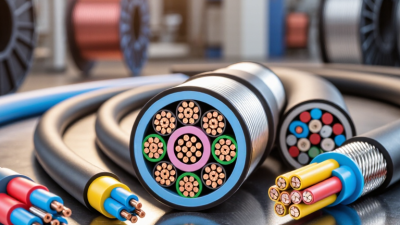
Compound cables combine two or more functions inside one outer jacket. A single assembly may carry power, control signals, Ethernet data, coaxial signals, or optical fibers. The conductors remain separately insulated, while the shared jacket protects them from moisture, abrasion, and mechanical stress. This arrangement reduces cable clutter and simplifies routing through cabinets, machines, and building spaces. In practice, one organized cable is easier to install than several loose lines. However, “compound” does not describe one universal construction.
Manufacturers design these cables for specific environments. Robotic equipment may need continuous flexing and a small bending radius. Outdoor security systems often require ultraviolet resistance, water protection, and stable signal transmission across long distances. Industrial production lines may demand shielding against electromagnetic interference, with separate power and communication paths. Elevators, medical equipment, transport systems, and renewable energy installations also use compound designs when space and reliability matter. The correct choice depends on voltage, current, data speed, temperature, movement, and local installation rules.
For global buyers, technical documents deserve careful review. Ask for conductor sizes, insulation materials, bending-cycle data, fire performance, test reports, and applicable compliance evidence. Connector compatibility matters too. A cable can meet a headline specification yet fail when connectors, glands, or shielding are poorly matched. I have found that installation conditions are often underestimated, especially heat, repeated movement, and tight routing. A conservative design may cost more initially, but replacing a buried or machine-integrated cable is rarely simple. Some applications still need separate cables. That limitation deserves honest consideration before purchase.
Global buyers should compare compound cables by function, not appearance. A hybrid cable may carry power, control signals, and data in one jacket. Check conductor cross-section, voltage rating, current capacity, impedance, attenuation, and shielding separately. IEC 60228 defines conductor classes and resistance requirements, helping buyers compare copper performance across suppliers. The International Energy Agency reported that annual grid investment may need to exceed 600 billion dollars by 2030. That pressure increases demand for reliable, higher-capacity cable systems.
Mechanical details matter in real installations. Record the minimum bending radius, tensile strength, operating temperature, jacket material, and oil or moisture resistance. A cable installed beside machinery may face vibration, heat, and repeated movement. Confirm flame performance under IEC 60332 and enclosure protection under IEC 60529 when relevant. Do not accept “industrial grade” as a specification. It is too vague.
Documentation often separates a dependable supplier from a risky purchase. Request conductor resistance results, insulation tests, dimensional tolerances, batch numbers, and traceability records. Global Wire and Cable Market research published by Grand View Research estimated the market at approximately 202.7 billion dollars in 2023. Large demand does not guarantee consistent quality. I would also compare delivery length, packaging, connector compatibility, and regional certification needs. A lower price can hide thinner insulation or shorter usable life. That deserves a second review.
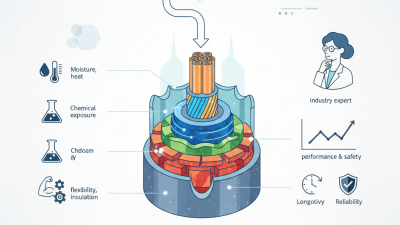
Compound cables combine conductors, insulation, shielding, and protective sheaths to suit demanding operating conditions. The right construction depends on heat, moisture, vibration, and signal quality. Small details matter.
For general distribution, low-voltage power cables serve buildings, while medium-voltage cables connect industrial equipment and local networks. Control cables carry switching commands; instrumentation cables protect low-level measurement signals. Shielded variable-frequency-drive cables help manage electrical interference near motors. Thermocouple extension cables carry temperature readings from furnaces and process lines. Fire-resistant cables are designed to maintain circuit function during specified fire tests. Mining cables withstand abrasion and repeated movement underground. Marine and offshore cables resist salt spray and oil exposure. Solar photovoltaic cables tolerate outdoor ultraviolet exposure and temperature swings. Hybrid fiber-optic power cables combine data and electrical conductors for remote equipment.
Application claims should be checked against test conditions, not just product labels. The International Energy Agency’s 2023 report, Electricity Grids and Secure Energy Transitions, says annual grid investment must rise from about USD 300 billion to over USD 600 billion by 2030. That expansion increases demand for reliable cable systems, but it does not make every cable interchangeable. A useful specification records voltage, conductor size, temperature range, shielding, and sheath material. I would also verify bend radius on site; drawings often underestimate tight cable-tray corners.
A “best” compound cable is only best for its duty: voltage, temperature, bending radius, and exposure to chemicals all matter. IEA’s 2023 Electricity Grids and Secure Energy Transitions report says annual grid investment must exceed USD 600 billion by 2030 to meet global needs. That expansion makes supplier checks more than paperwork. Ask manufacturers for traceable batch records, conductor and insulation details, and test results linked to the exact cable construction. A polished brochure proves little.
Check that certificates cover the actual product and production site, not just a related range. ISO 9001 indicates a quality management system; it does not, by itself, certify cable performance. Request independent test reports and confirm the relevant IEC or regional standard matches the cable’s voltage and intended use. Look for dated results, sample identification, and laboratory accreditation. Details matter. Inspect a cut cable sample too: uneven layers or unclear markings deserve questions. It is tempting to rank suppliers by price and certificate count, but neither reveals how a batch behaves after repeated bending or heat exposure. I would still leave room for doubt until the documentation, sample, and specification agree.
| No. | Cable configuration | Typical use | Key design details to evaluate | Relevant standards to discuss | Quality evidence to request |
|---|---|---|---|---|---|
| 1 | Power and control conductors in one cable | Industrial machinery, packaged equipment, and moving production lines | Voltage separation, conductor sizing, shielding, bending radius, oil resistance, and whether power and signal cores need separate screens | IEC 60228 for conductor classes; IEC 60502-1 may be relevant to fixed-installation power cables within its scope; IEC 60332-1-2 for a specified single-cable flame test | Construction drawings, conductor and insulation test results, finished-cable electrical tests, and test reports identifying the exact cable construction |
| 2 | Power and instrumentation pairs or triads | Process plants, measurement systems, and control panels | Pair or triad lay, individual and overall screens, capacitance, insulation resistance, and protection against electrical interference | EN 50288 series may apply to metallic instrumentation and control cables, depending on cable type; IEC 60228 may apply to conductor requirements | Pair identification records, screen-continuity results, electrical test data, and documented verification against the agreed cable specification |
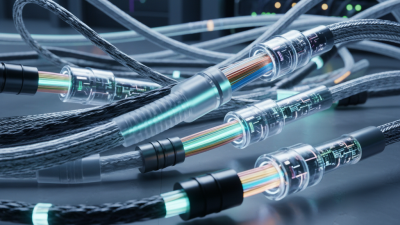
| 3 | Power conductors combined with optical fibers | Remote equipment, security systems, and installations needing both electrical supply and data links | Fiber type and count, optical attenuation, power-core rating, separation between elements, water blocking, and termination requirements | IEC 60794 series for optical-fiber cables; the relevant electrical-cable standard must be selected separately for the power section | Optical attenuation and continuity results, fiber identification schedule, power-core test reports, and a combined-cable construction drawing |
| 4 | Power and data pairs for industrial communication | Distributed sensors, actuators, and network-connected equipment | Data-pair impedance and transmission performance, screen arrangement, pair separation, connector compatibility, and power-core interference | IEC 61156 series can be relevant to certain balanced communication cables; confirm that the selected part and performance category match the application | Transmission-performance reports for the completed design, shield-continuity checks, and confirmation that the cable is tested with the intended connector and installation method |
| 5 | Power and thermocouple or sensor elements | Industrial temperature monitoring and equipment skids | Thermocouple conductor alloy and type, polarity identification, reference-junction arrangement, screening, and operating-temperature limits | IEC 60584 series covers thermocouples; cable and insulation requirements should be specified for the full assembly and operating environment | Conductor-material certificates, polarity and identification checks, continuity results, and documented temperature-related material limits |
| 6 | Power and signal elements in a marine cable | Shipboard equipment and marine control systems | Marine environmental suitability, moisture resistance, vibration, flame performance, smoke and gas requirements, and installation classification | IEC 60092 series addresses electrical installations in ships; IEC 60332, IEC 60754, and IEC 61034 may be specified for particular fire-related tests | Reports for the specified fire tests, traceable material and production records, and evidence that the tested construction matches the offered cable |
| 7 | Power and control elements for rail vehicles | Rolling-stock equipment and railway vehicle systems | Flexibility, vibration resistance, temperature range, smoke and fire performance, and the railway application category | EN 50264 or EN 50306 may apply to particular railway rolling-stock cable types; EN 45545-2 addresses fire protection requirements for railway vehicles | Application-specific fire-test documentation, mechanical and electrical test records, and confirmation of the applicable railway hazard level and cable category |
| 8 | Power and communication elements for photovoltaic systems | Solar installations where power and monitoring links are routed together | Outdoor and UV exposure, temperature, moisture, DC voltage design, connector compatibility, and separation of power and data elements | IEC 62930 applies to electric cables for photovoltaic systems within its defined scope; communication elements may require separate standards | Applicable PV cable test documentation, UV and environmental test evidence where specified, and separate performance records for the communication elements |
| 9 | Power and control elements for cable trays | Commercial and industrial tray installations | Tray suitability, conductor temperature rating, impact and crush resistance, flame performance, and the installation rules of the destination market | UL 1277 may be relevant to certain tray cables in the United States; IEC 60332 test requirements may be specified for particular applications | Listing or certification records where required, reports covering the exact cable type, and verification of voltage, temperature, and installation markings |
| 10 | Custom multi-service cable with power, control, and data elements | Robotics, automated equipment, and integrated machinery | Element separation, torsion and flex life, shielding, chemical exposure, minimum bend radius, and compatibility with cable carriers or robotic motion | Specify applicable component standards for each element and relevant machine or installation requirements; no single standard automatically covers every custom combination | Design review records, prototype qualification results, flex or torsion test reports when required, production inspection records, and batch traceability |
Buyer note: Standards listed are examples for specification review, not a statement that every configuration is certified or compliant. Ask for certificates and test reports that identify the exact construction, test method, rating, issuing body, and validity. Confirm local regulatory requirements and installation conditions before purchase.
When comparing ten compound cables for global purchase, look beyond the unit price. Conductor material, insulation compound, cable diameter, testing requirements, and order volume can all change the quote. Ask suppliers to price the same specification and quantity. Otherwise, a low offer may simply describe a different cable. Request a sample and confirm its measured diameter and packaging before approving a large order. Small details matter.
Shipping can shift the landed cost considerably. A compact coil may travel more cheaply than a long drum, but tight packing must not damage the cable. Compare air and sea freight using the shipment’s actual weight and dimensions. Ask whether the quote includes export packing, insurance, and delivery to your location. Check the agreed delivery terms carefully; unclear responsibility for freight or handling can cause delays. One quote can look clean, yet omit costs that appear later.
Tips: Before ordering, confirm the product description, invoice details, origin information, and any certificates your destination may require. Import rules and duty rates vary by country, so verify the applicable tariff classification with a qualified customs professional. Keep records of the approved sample and final specifications. We have seen small document mismatches slow a shipment, and estimates are not guarantees.
Indicative nominal voltage classes for commonly traded cable constructions. Ratings are not a quality ranking; confirm the applicable standard, conductor size, insulation, and destination-country requirements before purchasing.
Voltage classes shown follow commonly used IEC-style designations. Prices, freight costs, and delivery times depend on copper or aluminum prices, order volume, cable specification, origin, route, and customs clearance; obtain current supplier and freight-forwarder quotations.
WhatsApp us