What Is the Best Type of Compound Cable from China?

Choosing the best compound cable from China requires more than comparing prices or counting conductors. The correct choice depends on application, voltage, temperature, flexibility, shielding, and installation conditions. A cable that performs well in a dry factory may fail in oil, sunlight, vibration, or repeated bending.

William A. Thue, a respected cable-engineering author, offers a useful principle: “The cable system is only as strong as its weakest component.” This idea matters when evaluating Chinese suppliers. Conductor purity, insulation consistency, filler design, shielding quality, and outer-jacket durability must work together. One attractive specification is never enough.

Look closely at the construction. A reliable compound cable should show stable dimensions, clean extrusion, firm bonding, and clear marking on the sheath. Ask for conductor resistance data, insulation tests, aging results, flame performance, and batch traceability. Independent laboratory reports can strengthen confidence, especially for large projects.

Factory experience also matters. A capable manufacturer can explain its material choices without vague promises. It should provide samples, production records, inspection procedures, and realistic delivery details. Visit the plant when possible. Notice storage conditions, testing equipment, and how workers handle finished coils.

The cheapest option may not be the best value. Replacement costs can exceed the original saving. Still, premium pricing does not guarantee quality. That is an uncomfortable truth.

This guide compares compound cable types from China through a practical lens. It considers technical performance, supplier reliability, customization ability, and long-term operating risk. Some conclusions may change after field testing. That is why careful verification remains essential.
What Is the Best Type of Compound Cable from China?

What Is a Compound Cable and How Is It Used?

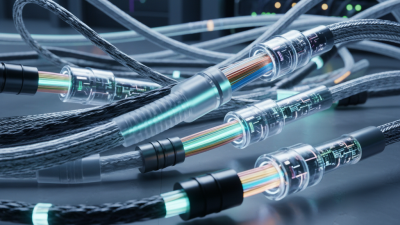
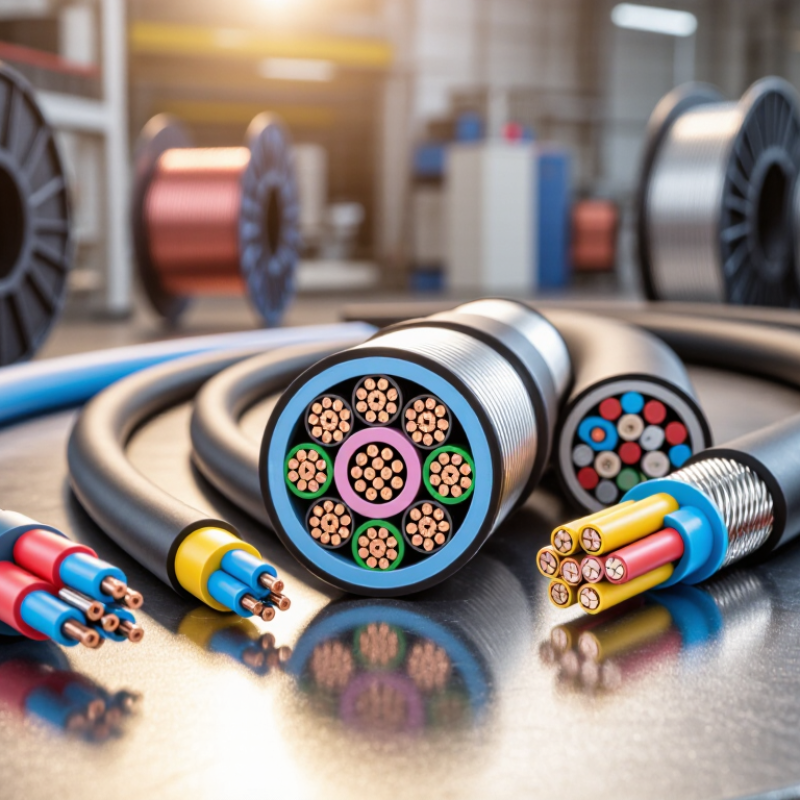
A compound cable combines two or more cable functions under one protective jacket. It may carry power, data, control signals, or optical communication. The internal elements remain separately insulated. This design reduces cable clutter and simplifies installation. It is not the same as one oversized conductor.

In factory automation, a compound cable can connect motors, sensors, and control equipment along one route. In security systems, it may combine power and communication lines. Outdoor versions often include water-resistant jackets, shielding, and stronger strain relief. Installers should check bending radius carefully. A cable that looks flexible may still fail in a tight energy chain.

The best compound cable from China depends on the working environment, not its country of origin. Request a clear construction drawing, conductor sizes, insulation materials, temperature range, and test records. Check whether the cable meets the required electrical and safety standards for its destination. Sample testing is essential. Measure resistance, flexibility, jacket thickness, and signal performance before placing a large order. A compound cable is not automatically better. That assumption deserves questioning. Combining functions can save space, but one damaged section may affect several systems. For harsh movement, separated internal cores and reinforced shielding may matter more than a lower purchase price. Clear specifications prevent expensive misunderstandings.

Which Compound Cable Types Are Manufactured in China?

What Is the Best Type of Compound Cable from China?

Which Compound Cable Types Are Manufactured in China?

China manufactures several compound cable types for power, data, control, and renewable-energy projects. The label is not always precise. In practice, it may describe a hybrid cable combining copper conductors with optical fibers, control pairs, or communication cores. Common products include power-and-control cables, fiber-optic composite overhead cables, photovoltaic power-and-data cables, and charging cables with signal conductors. IEC 60502-1 and IEC 60228 are useful references for insulation, voltage, and conductor requirements.

Demand is growing with electrification. The International Energy Agency reported in Renewables 2024 that China accounted for almost 60% of global renewable-capacity additions in 2023. This supports strong production of solar, wind, and grid compound cables. Manufacturers commonly offer XLPE insulation, LSZH jackets, armored versions, and customized core layouts. A factory sample should show clear markings, consistent twisting, and a clean jacket surface. Small details matter.

Tips: Ask for a sectional drawing, conductor resistance data, bend-radius limits, and test records. Check whether the cable passed flame, insulation, and tensile tests under the required standard. For outdoor solar installations, inspect UV resistance and water-blocking construction. For industrial systems, confirm electromagnetic compatibility and connector matching. One practical warning remains: “hybrid” does not guarantee better performance. A thinner cable may reduce cost, yet increase voltage drop or installation risk. I would compare measured data, not only the catalog description.

How Do Materials and Construction Affect Cable Performance?

What Is the Best Type of Compound Cable from China?

How Do Materials and Construction Affect Cable Performance?

A compound cable performs through material choices, not country of origin. The U.S. Department of Energy’s Copper Wire Tables list copper resistivity at 1.7241 μΩ·cm at 20°C. Aluminum measures about 2.8264 μΩ·cm. Copper therefore carries the same load with a smaller conductor. Aluminum can reduce weight, but it needs larger sizing and careful joint design.

Insulation also changes real-world reliability. XLPE handles heat well and supports higher continuous operating temperatures than ordinary PVC. PVC remains practical for general indoor wiring. TPU jackets resist abrasion and repeated flexing, while LSZH compounds reduce smoke and corrosive gas during fire exposure. IEC 60228 classifies conductor construction, and IEC 60502-1 covers many extruded-insulation power cables. These standards help, but test results still depend on manufacturing control.

Construction deserves equal attention. A finely stranded conductor bends easily, yet it may need stronger compaction and termination control. Shielding can reduce electromagnetic interference, while braiding and armoring improve mechanical protection. I have seen specifications focus on insulation but ignore bend radius. That is an expensive mistake. A cable can pass a laboratory test and still fail early after rough installation.

Tips: Ask for resistance data at 20°C, insulation thickness, bend-radius limits, flame-test results, and batch traceability. Request independent test reports, not only factory claims. Compare the complete construction, not just the copper percentage. Price alone is a weak technical decision.

How Materials and Construction Affect Compound Cable Performance

Insulation compounds strongly influence the continuous operating and short-circuit temperature limits of a cable. XLPE and EPR generally allow higher thermal performance than PVC, while conductor stranding, shielding, and jacket construction affect flexibility, electromagnetic protection, moisture resistance, and mechanical durability.

Typical temperature ratings are based on commonly specified IEC 60502-1 cable insulation classes. Actual values depend on formulation, conductor size, installation conditions, and the complete cable design.

What Standards Should Chinese Compound Cables Meet?

What Is the Best Type of Compound Cable from China?

A reliable Chinese compound cable should meet the installation standard, not merely carry a low price. Start by defining its construction: power, control, data, or a hybrid assembly. IEC 60228 sets conductor resistance and cross-sectional requirements. IEC 60502-1 covers many low-voltage power cables. For fire performance, IEC 60332 testing evaluates flame spread. These details matter inside crowded cable trays.

The International Energy Agency’s Electricity 2024 report expects global electricity demand to grow by about 4% annually through 2026. More power infrastructure means greater pressure on cable safety and traceability. For buildings, buyers should also check reaction-to-fire requirements under EN 50575, where applicable. Low-smoke, halogen-free compounds need evidence for smoke density, acidity, and flame behavior. Do not accept “fire resistant” as a complete specification.

Ask for batch test results, conductor resistance records, insulation thickness measurements, and voltage-test data. Independent laboratory verification is stronger than a factory declaration alone. Certification should match the exact cable structure, voltage rating, and intended market. A certificate for a similar model is not enough. I have seen attractive datasheets hide unclear compound formulations. That deserves scrutiny. Supplier audits, sample cutting, and witnessed testing can expose weak adhesion, uneven insulation, or excessive filler. Perfection is unlikely. A transparent supplier should still explain every deviation.

What Is the Best Type of Compound Cable from China? - What Standards Should Chinese Compound Cables Meet?

“Compound cable” is not one universal cable category. The best construction depends on the power rating, signal type, installation environment, fire requirements, and applicable market regulations. The following table summarizes common compound or composite cable configurations and the principal standards that may apply.

Compound Cable Type Typical Construction Typical Use Typical Electrical or Optical Parameters Main Applicable Standards Recommended Selection
Power and Fiber-Optic Composite Cable Copper power conductors combined with optical fibers, separated by insulation, fillers, water-blocking materials, and an outer sheath. Smart buildings, telecommunications infrastructure, security systems, distributed antenna systems, and remote equipment. Power voltage is design-specific; common low-voltage constructions are below 1 kV. Optical fibers are usually single-mode or multimode, depending on transmission distance and network design. GB/T 12706.1 or IEC 60502-1 for applicable low-voltage power elements; GB/T 7424 series and IEC 60793/IEC 60794 for optical-fiber elements; IEC 60228 for conductor classes where applicable. Usually the best choice where power and data must be installed in one route. Confirm separation, electromagnetic compatibility, bending radius, and optical performance before ordering.
Power and Control Composite Cable Power cores combined with individually insulated control, instrumentation, or communication pairs. Internal screens may be added to reduce interference. Industrial automation, machinery, production lines, pumps, HVAC systems, and control cabinets. Power section commonly uses copper conductors with a rated voltage selected for the equipment. Control sections may use twisted pairs, shielded pairs, or multiple low-voltage cores. GB/T 12706.1 or IEC 60502-1 for power sections; GB/T 9330 for applicable plastic-insulated control cables; IEC 60228 for conductor requirements; IEC 60332 series for flame propagation where specified. A practical option for machinery and fixed industrial installations. Specify shield coverage, pair layout, grounding method, flexing cycles, and oil or chemical resistance.
Power and Data Communication Cable Power conductors combined with balanced twisted pairs or other data elements, with controlled impedance and shielding where required. Building automation, access control, sensors, intelligent lighting, and equipment monitoring. Data performance depends on pair geometry, insertion loss, return loss, crosstalk, shielding, and the intended data rate. The power section must be rated separately. Applicable power-cable standards such as GB/T 12706.1 or IEC 60502-1; relevant balanced-cabling requirements from ISO/IEC 11801 or EN 50173 where applicable; IEC 60332 series for fire behavior when specified. Choose this type only when the manufacturer provides verified data-transmission performance. Do not assume that a combined cable automatically meets a category or Ethernet requirement.
Coaxial and Power Composite Cable One or more coaxial communication elements combined with low-voltage power cores and a common protective sheath. Cameras, radio equipment, antenna systems, monitoring devices, and selected security installations. Coaxial elements require controlled impedance, commonly 50 ohms or 75 ohms depending on the system. Power voltage and current capacity must be specified independently. Applicable coaxial-cable requirements, such as IEC 61196 series where relevant; IEC 60228 for copper conductor requirements; IEC 60332 series for flame propagation where required. Suitable for short, integrated equipment connections. Verify attenuation, shielding effectiveness, impedance, connector compatibility, and voltage drop.
Armored Power and Communication Composite Cable Power and communication elements protected by metallic tape, wire armor, or other mechanical protection, with an outer sheath. Outdoor routes, industrial areas, utility corridors, buried installations, and locations exposed to mechanical damage. Performance depends on conductor size, armor type, fault-current requirements, optical or data elements, installation depth, and minimum bending radius. GB/T 12706.1 or IEC 60502-1 for applicable power components; GB/T 7424 series and IEC 60794 for optical components; IEC 60724 or relevant national requirements for short-circuit temperature considerations where applicable. Preferred for demanding outdoor or buried applications. Confirm corrosion protection, armor continuity, water blocking, grounding, and installation method.
Flexible Drag-Chain Composite Cable Fine-stranded conductors, flexible insulation, control or data elements, separators, textile fillers, and a highly flexible outer jacket. Robotic equipment, CNC machines, automated handling systems, moving gantries, and cable chains. Required parameters include minimum bending radius, travel speed, acceleration, torsion, flexing cycles, conductor class, and permissible operating temperature. IEC 60228 for conductor class where applicable; IEC 60332 series for flame behavior; IEC 60811 for selected material and mechanical tests; additional manufacturer-rated dynamic-flex testing is essential. Best for continuous motion only when the supplier provides documented dynamic testing. A standard fixed-installation cable should not be substituted for a drag-chain cable.
Low-Smoke, Halogen-Free Composite Cable Power and communication elements using low-smoke, halogen-free insulation or sheathing materials, often with enhanced flame performance. Public buildings, transport facilities, data rooms, tunnels, hospitals, and areas requiring reduced smoke and corrosive gas emissions. Electrical rating remains construction-specific. Fire performance may include flame spread, smoke density, acidity, and conductivity of combustion gases. IEC 60754-1 and IEC 60754-2 for halogen-acid gas and conductivity-related tests; IEC 61034-2 for smoke density; IEC 60332 series for flame propagation; applicable GB/T equivalents should be confirmed for the Chinese market. A strong choice for occupied or enclosed areas. Request complete fire-test reports rather than relying only on the term “LSZH” or “low-smoke halogen-free.”

Minimum Compliance Checklist for Chinese Compound Cables

Compliance Area What the Cable Should Demonstrate Documents or Tests to Request
Product Standard Each functional element should be matched to the correct Chinese GB/T or applicable IEC product standard. There is no single standard that covers every compound-cable design. Technical specification, standard edition, construction drawing, and a clause-by-clause compliance statement.
Conductor and Resistance Conductor material, cross-sectional area, class, DC resistance, and resistance balance should meet the declared requirements. Conductor-resistance test results, material declaration, dimensional report, and applicable IEC 60228 or GB/T evidence.
Insulation and Sheath Insulation thickness, sheath thickness, tensile strength, elongation, aging performance, temperature rating, and compatibility with the installation environment. Routine and type-test reports, material data sheets, aging tests, dimensional inspection, and IEC 60811 or applicable GB/T results.
Electrical Safety Conductor continuity, insulation resistance, voltage withstand, polarity or identification, and protection against accidental contact must be verified. Routine test records, insulation-resistance results, high-voltage test results, and production traceability.
Fire Performance Flame propagation, smoke emission, and halogen-acid gas performance should match the installation specification. IEC 60332, IEC 60754, IEC 61034, or corresponding GB/T test reports, depending on the required fire classification.
Mechanical and Environmental Resistance The cable should withstand the specified bending, tensile, impact, crushing, water, oil, UV, temperature, and chemical conditions. Type-test reports based on the actual cable construction and the declared installation environment.
Optical or Data Performance Optical attenuation, bandwidth, return loss, impedance, crosstalk, insertion loss, and shielding performance must be verified when communication elements are included. Optical test traces, OTDR results, transmission test reports, impedance data, and the applicable communication-cabling standard.
Marking and Traceability The sheath marking should identify the manufacturer, cable designation, rated voltage where relevant, standard, production information, and meter marking as required. Approved label artwork, packing list, batch records, inspection certificate, and sample photographs.

Key conclusion: The best compound cable is the one whose separate power, control, optical, or communication elements each meet the correct product requirements and whose complete assembly passes the required electrical, mechanical, environmental, and fire tests. The purchaser should specify the destination market, installation method, voltage, temperature, movement, fire classification, and communication performance before approving a Chinese cable design.

How Can Buyers Select the Best Compound Cable Supplier?

What Is the Best Type of Compound Cable from China?

Selecting the best compound cable supplier requires more than comparing prices. In practice, buyers should examine insulation compounds, conductor materials, layer adhesion, and production consistency. The IEA Electricity 2024 report expects global electricity demand to grow by about 3.5% annually through 2026. This growth increases pressure on cable quality, delivery, and traceability. A supplier should provide clear technical datasheets, batch records, and samples from regular production lines. Samples can look excellent. Mass production may differ.

Ask whether the factory tests conductor resistance, tensile strength, elongation, insulation aging, flame performance, and water resistance. Relevant standards may include IEC 60228 and IEC 60502-1, depending on cable design and voltage. Request current laboratory reports, calibration records, and inspection procedures. The ISO Survey 2023 recorded more than 1.5 million ISO 9001 certificates worldwide, but certification alone cannot prove product performance. Audit the actual workshop. Check compound storage, extrusion temperature control, and online diameter monitoring. These details expose weak process control.

Commercial reliability matters too. The World Bank Logistics Performance Index 2023 shows that international shipment performance varies significantly between markets. Buyers should confirm packaging, loading photos, lead-time history, and claim handling before ordering. A written tolerance for cable length and outer diameter prevents later disputes. I would also request a small trial order before committing to a container. No checklist is perfect. Cost pressure can still distort judgment. A supplier that answers technical questions precisely is usually safer than one offering only a fast quotation.