
Why Choose Bess Battery Energy Storage Systems?
Electricity demand is becoming less predictable. Solar panels produce heavily at noon, while homes often need power after sunset. BESS Battery Energy systems help close this timing gap by storing electricity and releasing it when demand rises. A containerized system beside a factory can charge during low-price hours, then support machinery during evening peaks. The result is more controlled energy use, not simply more stored power.
Dr. Imre Gyuk, a leading energy storage expert, has said, “Energy storage is the key to unlocking the full potential of renewables.” His point remains practical. A battery system can reduce grid pressure, improve renewable integration, and provide backup support during short interruptions. It can also help businesses monitor consumption through battery management software, thermal sensors, and remote controls. Small details matter.
Performance still requires judgment.
Battery chemistry, fire protection, ventilation, site conditions, and maintenance schedules influence the final outcome. A poorly sized system may cost more than expected or deliver limited savings. That uncomfortable possibility deserves honest attention. Capacity alone does not guarantee reliability. Operators must review degradation, round-trip efficiency, warranties, and local grid requirements before purchasing equipment. When designed around real load data, BESS Battery Energy solutions can become a dependable part of modern energy infrastructure, rather than an impressive installation with disappointing results.
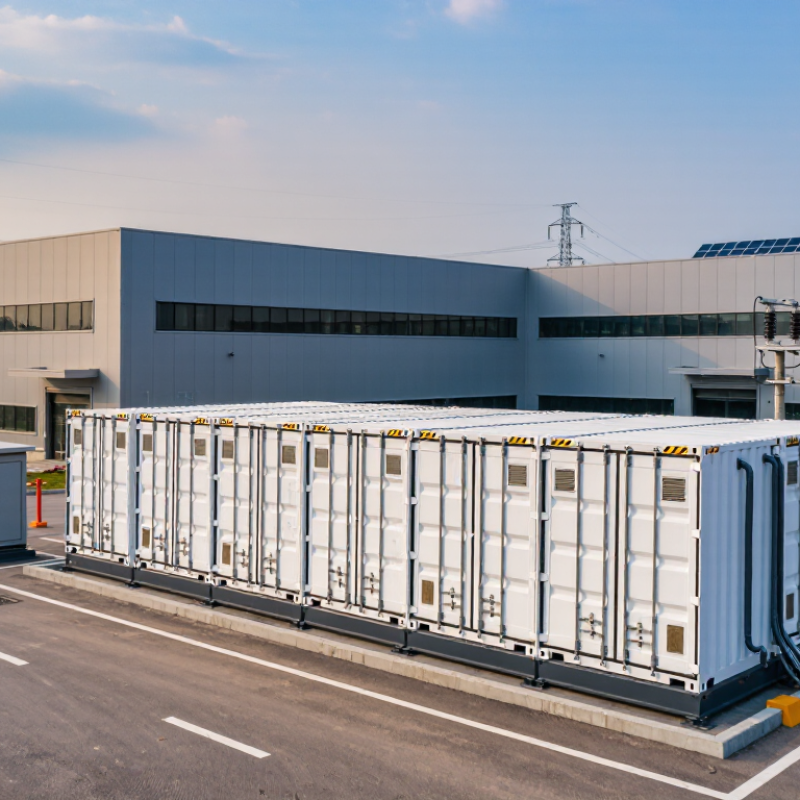
Battery Energy Storage Systems, or BESS, store electricity for later use. They can respond within milliseconds. That speed supports grid stability, renewable integration, and peak-demand management.
A complete BESS includes battery cells, modules, racks, and a battery management system. Power conversion equipment changes direct current into usable alternating current. Energy management controls decide when to charge or discharge. Thermal systems, fire protection, transformers, switchgear, and monitoring equipment also matter. The battery is only one part.
Lithium-ion chemistry currently dominates new installations because it offers strong efficiency and compact design. Lithium iron phosphate chemistry provides good thermal stability and long cycle life. Nickel-rich chemistries can deliver higher energy density, but they require careful thermal control. Actual performance depends on temperature, cycling patterns, maintenance, and system design. Small details matter.
The International Energy Agency reported 42 GW of battery storage added globally in 2023. That figure shows rapid growth, not guaranteed success. Project reviews often reveal overlooked limits, including grid connection delays and capacity fade. A spreadsheet may look perfect. The site may disagree.
BESS can reduce wasted renewable energy and help facilities avoid expensive demand peaks. However, safety systems, qualified commissioning, and transparent performance testing remain essential. Choosing chemistry by price alone is a weak decision. A better assessment considers duration, operating conditions, degradation, local regulations, and the people maintaining the system.
Why Choose BESS Battery Energy Storage Systems?
A BESS begins charging when solar production exceeds demand or grid prices are favorable. Power flows through a bidirectional inverter, which converts alternating current into direct current. Battery cells store that energy chemically. The system’s energy management software tracks voltage, temperature, current, and state of charge. Small errors matter. A few degrees of extra heat can accelerate battery aging.
During discharge, the stored direct current returns through the inverter. The inverter produces stable alternating current for buildings, microgrids, or the wider network. Controls match output with changing loads, often within seconds. Operators can reserve capacity for peak demand, frequency regulation, or renewable balancing. Dispatch decisions depend on forecasts, market rules, battery limits, and local grid conditions.
Real-world performance is less perfect than a data sheet suggests. Round-trip losses occur during conversion, cooling, and auxiliary operation. Batteries also lose capacity after repeated cycles, especially under high temperatures or deep discharge. Experienced operators therefore set conservative operating limits and inspect alarms before dispatch. A BESS may charge at midday, hold energy through a cloudy afternoon, then release power when demand rises. It must still retain enough reserve for unexpected events. That balance requires reliable sensors, tested protection systems, documented maintenance, and clear human oversight.
A practical overview of the main BESS operating stages, measurable performance ranges, and common grid applications.
| BESS Stage | How It Works | Key Data Dimension | Typical Technical Range | Primary Grid Value |
|---|---|---|---|---|
| 1. Charging | Electricity from the grid or renewable generation is converted into controlled DC power and stored in battery cells. | Charge power and charging source | Typically rated in MW; charging may be scheduled during low-price or high-renewable periods. | Renewable-energy capture, load shifting, and demand-cost reduction |
| 2. Battery Storage | Electrochemical cells store energy as chemical potential. A battery-management system monitors voltage, temperature, current, and state of charge. | Energy capacity and state of charge | Capacity is measured in kWh or MWh; many systems operate within an operating window such as approximately 10%–90% state of charge. | Energy availability when generation or grid capacity is limited |
| 3. Power Conversion | A bidirectional power-conversion system changes AC power to DC during charging and DC power to AC during discharge. | Conversion efficiency and output power | Round-trip system efficiency is commonly about 85%–95%, depending on equipment, temperature, operating point, and auxiliary loads. | Controlled import and export of active and, where supported, reactive power |
| 4. Grid Dispatch | An energy-management system receives schedules, price signals, or grid commands and determines when and how much power to charge or discharge. | Response time and dispatch duration | Fast-response services can react in milliseconds to seconds; common energy-duration designs provide approximately 1–4 hours at rated output. | Frequency regulation, peak shaving, reserve capacity, and energy arbitrage |
| 5. Safety and Thermal Control | Sensors, protection equipment, ventilation or liquid cooling, fire detection, and control logic manage operating limits and abnormal conditions. | Temperature, protection status, and fault detection | Operating limits are defined by the cell, enclosure, cooling system, local standards, and project design. | Operational continuity, asset protection, and risk management |
Note: The technical ranges shown are representative industry values for utility-scale and commercial BESS projects. Actual performance depends on battery chemistry, system architecture, ambient conditions, operating strategy, grid-code requirements, and equipment selection.
Why Choose BESS Battery Energy Storage Systems?
The IEA reported that global battery storage capacity additions more than doubled in 2023. This rapid growth reflects a practical need, not only industry excitement. Renewable power changes with sunlight and wind. A BESS stores surplus electricity and releases it during evening peaks or sudden demand. In a real facility, this can reduce grid pressure, support backup operations, and improve the use of on-site solar power. However, batteries are not a magic box. Their value depends on load patterns, tariffs, connection limits, and expected cycling frequency.
Careful engineering matters. A suitable system should include thermal monitoring, fire protection, battery management controls, and clear maintenance procedures. Round-trip efficiency and degradation also affect financial results. A system that looks affordable on paper may perform poorly if it cycles too often or operates in extreme heat. IEA data shows strong market momentum, but growth alone does not prove that every project is well designed. Independent testing and transparent performance data remain essential.
Tips: Measure your electricity demand in short intervals before choosing capacity. Compare usable energy, not only the advertised battery size. Ask for warranty terms, safety documentation, and degradation assumptions. Leave room for uncertainty. Real operating conditions often differ from the original forecast.
Global battery storage additions more than doubled in 2023, highlighting the growing importance of Battery Energy Storage Systems (BESS) for grid flexibility, renewable integration, and energy security.
Global battery storage capacity additions increased from approximately 17 GW in 2022 to 42 GW in 2023. Source: International Energy Agency (IEA), 2024. Values are rounded.
A BESS earns value by changing when electricity is used, not merely by storing it. During high-price evening intervals, it discharges and lowers a facility’s grid demand. This is peak shaving. Short bursts matter. Operators compare interval meter data with dispatch records before claiming savings. A poorly sized system may empty too early, leaving the final peak untouched. Good design uses load forecasts, state-of-charge limits, and measured tariff rules.
Frequency control needs a different operating mindset. The battery responds to grid deviations within seconds, adjusting active power automatically. Its control platform must follow verified signals, maintain reserve headroom, and record every action. Fast response sounds impressive. It is not free. Repeated cycling increases wear, while inaccurate telemetry can create penalties or missed performance. Engineering teams should test these conditions under realistic network constraints, not only in simulations.
Solar shifting moves midday generation toward the evening ramp. At noon, excess solar charges the BESS instead of being curtailed or exported at a weak price. After sunset, stored energy supports local loads and reduces purchases from the grid. Weather forecasts help, but clouds remain unpredictable. That uncertainty deserves honest financial modeling. Battery degradation, inverter limits, fire protection, and connection studies can change the business case. A useful project leaves room for revision when operating data challenges the original assumptions.
Why Choose BESS Battery Energy Storage Systems?
Evaluating BESS requires more than checking its advertised capacity. Round-trip efficiency shows how much stored electricity returns to the grid. NREL’s 2024 Annual Technology Baseline models utility-scale batteries at about 85% round-trip efficiency. In practice, a 100 kWh charge may deliver roughly 85 kWh, before additional site losses. Small differences matter during daily cycling. A system with 90% efficiency can reduce energy waste and improve revenue over time.
Cycle life and safety deserve equal attention. Many lithium-ion systems are designed for roughly 3,000 to 10,000 cycles, depending on chemistry, operating temperature, and depth of discharge. That range is broad. It is not a guarantee. Testing under UL 9540A and installation guidance from NFPA 855 help evaluate thermal runaway risks, fire separation, and emergency response. Yet design quality and maintenance still matter in the field. LCOS connects these factors with project economics. Lazard’s 2024 Levelized Cost of Storage analysis estimated four-hour standalone storage at approximately 110 to 225 dollars per megawatt-hour, depending on assumptions. Financing, degradation, augmentation, and electricity prices can shift the result sharply. The cheapest battery is not always the lowest-cost asset. This is where many comparisons become too simple.
WhatsApp us