2026 Top Zebra Blind Mechanism Manufacturers
Zebra blinds look simple from across a room. Up close, their performance depends on a compact mechanism that must keep alternating fabric bands aligned through repeated movement. For buyers, the right supplier is not just a name on a catalog. A capable Zebra Blind Mechanism Manufacturer should explain its clutch design, tube compatibility, bracket options, and quality checks in clear terms. Small details matter: a chain that feels gritty, a loose end cap, or fabric that drifts after several cycles can change the user experience.
This 2026 guide introduces manufacturers and the practical differences buyers should examine before requesting samples or quotations. It considers product range, material consistency, customization, production capacity, communication, and support after delivery. Ask how mechanisms are tested, which blind sizes they suit, and whether spare components are available. If motorized options are offered, confirm how the drive system fits the intended tube and installation. Specifications are useful. Real samples are better. A polished website alone proves little, and supplier claims deserve verification. No manufacturer is perfect. Even a well-made mechanism may need adjustment for a particular fabric weight or window. That is worth remembering. The goal is not to crown a universal winner, but to help importers, fabricators, and project buyers compare suppliers with sharper questions and fewer surprises.
Zebra Blind Mechanisms: Components, Operating Principles, and 2026 Market Scope
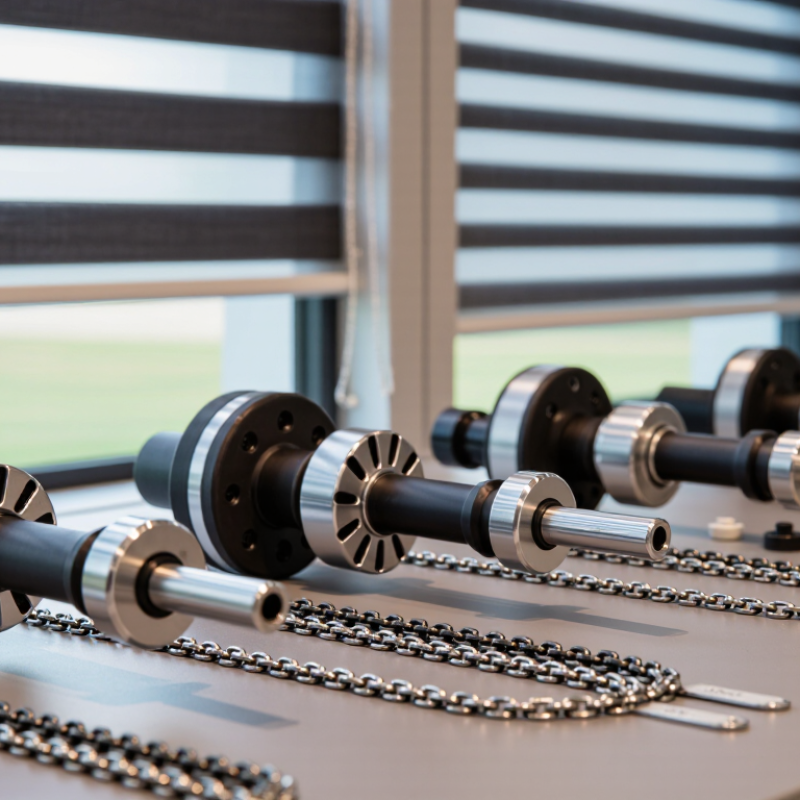
A zebra blind mechanism combines a headrail, drive system, fabric tube, mounting brackets, and weighted bottom rail. Its paired fabric layers carry alternating sheer and opaque bands. Turning the tube shifts one layer against the other, changing how the bands overlap. Aligned sheer sections admit filtered daylight; overlapping opaque sections provide greater privacy. A clutch and chain commonly control movement, while spring-assisted and motorized options suit different window sizes and user preferences. Small parts matter. Uneven brackets or a poorly tensioned tube can cause the fabric to drift, bunch, or stop at an inconsistent height.
In 2026, market scope is shaped by renovation demand, custom window dimensions, light control, and interest in home automation. Buyers and manufacturers assess more than appearance: fabric durability, smooth operation, repeatable assembly, and access to replacement components also affect long-term value. Cycle testing can reveal wear in chains, clutches, and internal supports, though results depend on test conditions. There is a trade-off. A motor may simplify operation on a wide window, but it adds cost and servicing needs. Accurate measurements remain essential; even a small width error can leave visible gaps or make installation difficult.
How ANSI/WCMA A100.1-2022 Informs Window-Covering Safety
2026 Top Zebra Blind Mechanism Manufacturers
How ANSI/WCMA A100.1-2022 Informs Window-Covering Safety
Zebra blinds pair alternating sheer and opaque fabric bands with a moving mechanism. That movement can create pinch points, while accessible cords may pose a strangulation hazard. ANSI/WCMA A100.1-2022 provides a safety benchmark for window coverings, covering areas such as cord accessibility, performance testing, and warning labels. In the United States, a CPSC rule based on the standard took effect on June 1, 2024. Manufacturers should verify current requirements for each product type rather than assume one mechanism fits every configuration.
The risk is documented. CPSC staff incident data for 2009–2021 recorded 209 incidents involving children aged eight and under: 48 deaths and 161 nonfatal incidents. These figures make small design choices matter. A neatly finished sample may still conceal a reachable loop or a snag point near the headrail. I would not judge safety by appearance alone; installation height, operating parts, and clear instructions deserve practical review, too.
Tips: Ask for applicable test documentation and inspect the finished blind at its installed height. Check that cords cannot form accessible loops, and keep labels and instructions with the product. Small details matter. A mechanism that feels smooth in a showroom can behave differently after installation, so real-world checks should not be skipped.
Compare Manufacturers by Tube Diameter, Fabric Compatibility, and Torque Ratings
A reliable comparison of zebra blind mechanism manufacturers starts with tube diameter, not catalogue photos. Measure the fabric tube and check the mechanism’s stated compatible range; a small mismatch can cause sagging or uneven rotation. Wider tubes may support heavier shades, but only when the brackets and drive are designed for that load. Ask for dimensional drawings and tolerances. Details matter.
Fabric compatibility deserves equal attention. Alternating sheer and opaque bands can vary in thickness, stiffness, and total roll weight. Request confirmation that the mechanism suits the fabric’s width and weight, rather than relying on a broad “zebra blind” label. Then compare torque ratings at the intended tube size. A rating without its test conditions is hard to interpret. Check whether it describes starting torque, running torque, or a recommended operating limit. These are not interchangeable.
For a fair shortlist, compare published specifications in one table and request sample testing where possible. Test a full-width assembly, not just a small mechanism on a bench. Watch for fabric drift, noisy operation, and strain near the end of travel. Small differences show up. A tidy data sheet can still leave gaps; some suppliers omit load assumptions or test cycles. Record those unknowns, and treat them as questions rather than proof of poor quality.
2026 Top Zebra Blind Mechanism Manufacturers - Compare Manufacturers by Tube Diameter, Fabric Compatibility, and Torque Ratings | Mechanism configuration | Common nominal tube diameter | Typical fabric compatibility | Torque rating | Comparison notes |
| Compact-duty system | Approximately 28–32 mm | Generally suited to lighter zebra blind fabrics; confirm the fabric’s finished weight and the mechanism’s stated capacity. | Manufacturer- and model-specific; request the rated torque in N·m. | A smaller tube can be appropriate for compact blinds, but allowable width, drop, and load depend on the complete system. |
| Standard-duty system | Approximately 32–38 mm | Often used with common light-to-medium-weight blind fabrics, subject to the supplier’s size and load limits. | Manufacturer- and model-specific; compare published ratings rather than assuming equivalence from tube diameter. | Check compatibility among the tube, drive, brackets, fabric dimensions, and operating system. |
| Heavy-duty system | Approximately 38–45 mm | May be offered for larger blinds or heavier fabric constructions; verify the specific fabric weight and maximum supported dimensions. | Manufacturer- and model-specific; obtain the rated torque and any maximum-load guidance from the product datasheet. | A larger tube alone does not establish a higher torque rating or guarantee suitability for a particular blind. |
| Custom or project-specific system | Specified by the supplier for the project | Compatibility should be confirmed against the fabric construction, finished size, and intended operating method. | Request a documented rating for the exact mechanism and configuration. | Useful when standard configurations do not meet the project’s size, fabric, or control requirements. |
| Selection note: Tube diameters shown are common nominal examples, not a universal industry standard or a verified specification for any particular manufacturer. Zebra blind fabric compatibility and torque ratings vary by product and configuration. Compare current supplier datasheets for rated torque, fabric weight limits, maximum blind dimensions, and compatible components before specifying a system. |
Evaluate Durability with 10,000-Cycle Endurance Tests and ISO 9001:2015
For 2026, evaluating zebra blind mechanism manufacturers means looking beyond smooth operation on a showroom sample. A 10,000-cycle endurance test can reveal wear that short demonstrations miss. Run the blind through repeated full raises, lowers, and alternating fabric positions. Check for slipping clutches, noisy chains, uneven fabric alignment, and loose brackets. Record failures at set intervals, not only at the final cycle. Small details matter.
The test needs clear conditions. Use a consistent load, installation angle, operating speed, and inspection checklist; otherwise, results are difficult to compare. ISO 9001:2015 supports controlled processes, documented procedures, and corrective action. It does not certify that a particular mechanism will survive 10,000 cycles. That distinction is important. The ISO Survey 2022 reported 1,265,216 ISO 9001 certificates worldwide, but certificate counts describe adoption, not product endurance. Buyers should verify a manufacturer’s current certification scope and review actual test records.
Ask for dated results, sample counts, and the failure criteria. A mechanism that completes the test should still be inspected for chain stretch, gear wear, and changes in lift effort. In practice, one successful sample is not enough. Testing may also miss years of dust, humidity, or careless handling. That is a limitation worth stating, not hiding. Combine cycle results with incoming-material checks and production quality records before comparing suppliers.
Rank 2026 Suppliers by Customization, MOQ, Lead Time, and Export Readiness
For 2026, rank zebra blind mechanism suppliers by evidence, not catalogue claims. Customization should cover tube diameters, bracket options, control chains, and fabric compatibility. Ask for drawings and sample mechanisms; check whether changes affect tooling costs or production time. A polished catalogue is not proof.
MOQ and lead time need comparable terms. Request the minimum order for standard parts and custom components separately, plus a written schedule from sample approval to dispatch. Fortune Business Insights estimates the global window coverings market at USD 33.69 billion in 2023, with projected growth through 2032. That market outlook signals demand, but it does not verify any supplier’s capacity. Confirm quoted output with recent production records and sample orders.
Export readiness deserves its own score. Check packing specifications, carton labeling, spare-part availability, and experience preparing consistent commercial documents. Ask for shipment references to your destination market, while keeping sensitive customer details private. Score each supplier against the same checklist: customization range, MOQ clarity, lead-time reliability, and export support. Then compare evidence, not promises. One weakness remains: published reports rarely measure mechanism-level supplier performance, so buyer verification is still essential.
2026 Top Zebra Blind Mechanism Manufacturers
Illustrative supplier-screening scorecard — anonymized profiles, not verified company rankings. Scores show a sample 0–100 evaluation framework for customization, MOQ flexibility, lead time, and export readiness.
Use these criteria to compare suppliers; confirm current MOQ, production schedules, and export documentation directly with each manufacturer.