The compound filler industry is evolving rapidly, driven by innovative technologies and changing market demands. According to a recent report by Grand View Research, the global compound filler market is expected to reach USD 17.45 billion by 2026, growing at a CAGR of 6.5%. This growth signifies the increasing importance of compound fillers in diverse applications, including construction, automotive, and consumer goods.
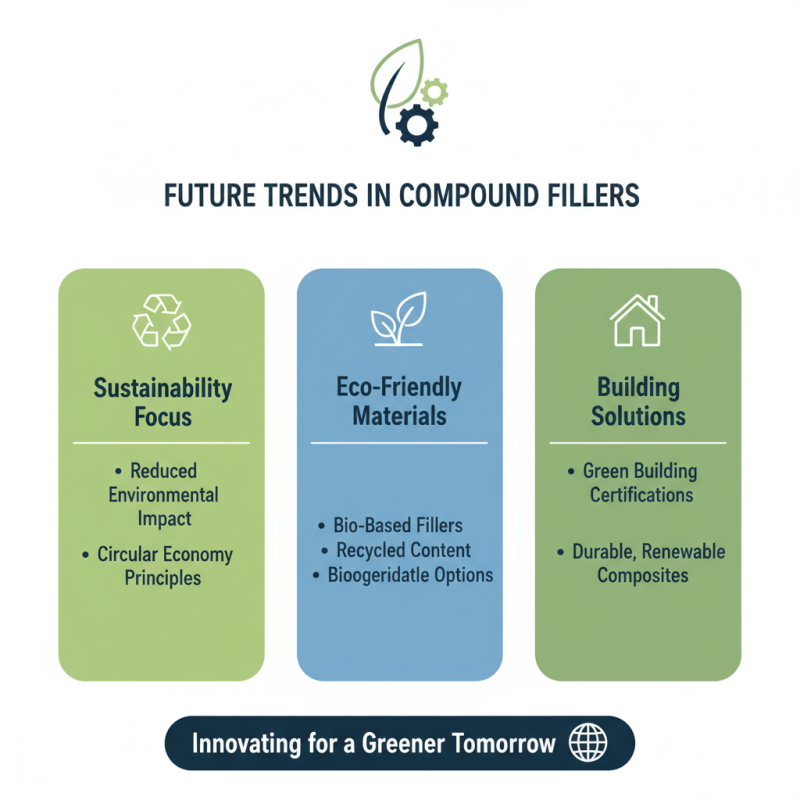
As sustainability becomes a key focus, manufacturers are turning to eco-friendly compound fillers. These materials not only reduce environmental impact but also enhance product performance. In particular, bio-based fillers are gaining traction, reflecting a shift towards greener solutions in the industry. Despite these advancements, challenges persist. Many companies struggle with sourcing materials that meet performance and sustainability standards simultaneously.
Additionally, the demand for high-performance compound fillers raises concerns about market saturation. As more players enter the field, differentiation becomes crucial. Understanding the latest trends in compound fillers can provide insights into strategic positioning for stakeholders. The coming years will reveal how industry players adapt to these changes and continue to innovate in the face of evolving consumer needs.

The demand for sustainable compound fillers is rapidly increasing in 2026. More industries are recognizing the impact of their choices on the environment. Companies are shifting towards eco-friendly materials in their production processes. Many are exploring renewable resources to minimize waste and carbon footprints. This transition is not without its challenges, though.
Sustainable fillers often have performance limitations. For example, they might not always match the durability of traditional options. This can lead to concerns about the longevity of products. Manufacturers are trialing various biomass and recycled materials to find suitable alternatives. The results are promising, yet there is room for improvement. Innovations are crucial to overcome these hurdles.
As awareness grows, consumers are looking for transparency in sourcing. They expect brands to prioritize sustainability in their product design. However, not every company is ready to make this change. The emphasis on eco-friendly options pushes the industry forward. Yet, it also raises questions about cost, feasibility, and long-term impacts on performance. The journey towards truly sustainable compound fillers is ongoing, and reflection is necessary to navigate these complexities.
| Trend | Description | Projected Growth (%) | Key Material |
|---|---|---|---|
| Sustainable Fillers | Focus on eco-friendly materials sourced from renewable resources. | 25% | Natural fibers, recycled plastics |
| Bio-based Polymeric Filler | Increasing use of bio-based polymers for enhanced performance and sustainability. | 20% | PLA, PHA |
| Lightweight Fillers | Development of fillers that reduce weight while maintaining strength. | 18% | Microspheres, glass beads |
| Nanofillers | Utilization of nanotechnology to enhance material properties. | 15% | Carbon nanotubes, nanosilica |
| Recycled Fillers | Incorporation of recycled materials to minimize waste and reduce costs. | 30% | Post-consumer plastics, rubber |
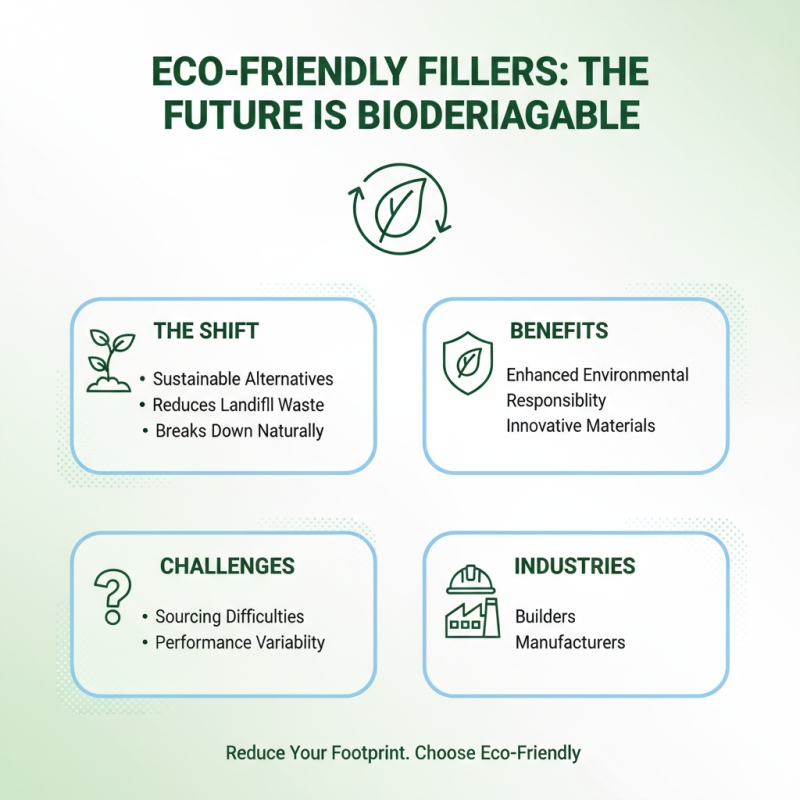
The trend towards biodegradable and eco-friendly fillers is on the rise. These innovative materials offer sustainable alternatives for various applications. They typically break down naturally, reducing landfill waste. For builders and manufacturers, this shift can enhance environmental responsibility. However, sourcing these materials can be challenging. Not all biodegradable options perform as expected.
Consider the potential of bioplastics or natural fibers in compound fillers. They are derived from renewable resources. These materials can embody the spirit of eco-friendliness while maintaining performance. Yet, there might be concerns regarding their durability compared to traditional options. This is an area that requires further research and development.
Incorporating biodegradable fillers can be an imperfect process. One needs to balance eco-friendliness with functionality. Sometimes, these materials can compromise the final product's strength. This trade-off is a crucial aspect to consider. The journey towards sustainability is ongoing, and we can learn from our experiences. Embracing innovation may lead to unexpected challenges, yet the potential benefits are worth exploring.
The advent of advanced manufacturing techniques is reshaping the world of compound fillers. Notably, 3D printing has made significant inroads. This technique allows for customized designs that were previously impossible. Manufacturers can now create intricate shapes and patterns. These capabilities lead to better performance in various applications. However, the reliance on such technology raises questions about scalability. Can every factory adapt fast enough?
Moreover, automation is revolutionizing production lines. Robots are taking over mundane tasks, improving efficiency. However, this shift may leave some workers behind. There is a risk of job displacement, which requires careful consideration. Finding a balance between automation and human labor is essential. While automation can enhance precision, the need for skilled operators remains critical.
Transitioning to eco-friendly materials is another trend. Manufacturers are exploring sustainable options for fillers. This trend is promising but reveals a deeper challenge. Sourcing sustainable materials can be difficult and costly. Many companies struggle to meet increasing demand while minimizing their environmental footprint. As they pursue these goals, they must reflect on their processes and impact on the planet. The road ahead is filled with opportunities but also significant hurdles.
The compound filler market is evolving rapidly. Various industries are adopting innovative fillers to enhance their products. In construction, for example, new composite materials are being used to improve strength and reduce weight. Lightweight fillers are becoming the norm, as they help decrease transportation costs and increase energy efficiency.
In the automotive sector, manufacturers are experimenting with sustainable fillers. Bio-based materials are gaining traction. They offer similar durability but with a reduced environmental impact. Additionally, the packaging industry is seeing a shift towards biodegradable fillers. This change is spurred by consumer demand for eco-friendly products. Yet, the challenge remains in ensuring these materials meet performance standards.
Despite the progress, there are pitfalls to consider. Not every new filler performs as expected in all conditions. Manufacturers must invest time in testing. Some may rush their products to market, leading to quality issues. Understanding the long-term implications of using new fillers is crucial. This ongoing learning process shapes the industry's future.
As we look towards the future, the trends in compound fillers are set to evolve significantly. Innovations that enhance sustainability are on the rise. Expect more eco-friendly materials that reduce environmental impact. These advancements will address the growing demand for sustainable building solutions.
Tips: Consider how these materials can be integrated into existing projects. Explore local resources to discover new applications for these compounds.
Emerging technologies will likely play a role in the development of smarter fillers. Features such as self-healing mechanisms or enhanced durability may become standard. Innovative manufacturing techniques could also contribute to faster production. There will be challenges to overcome, such as cost and accessibility. Reflect on whether your current practices can adapt to these innovations.
Tips: Stay informed about industry innovations. Network with professionals to share insights on emerging technologies. Embrace change, but also question its long-term effects.
WhatsApp us