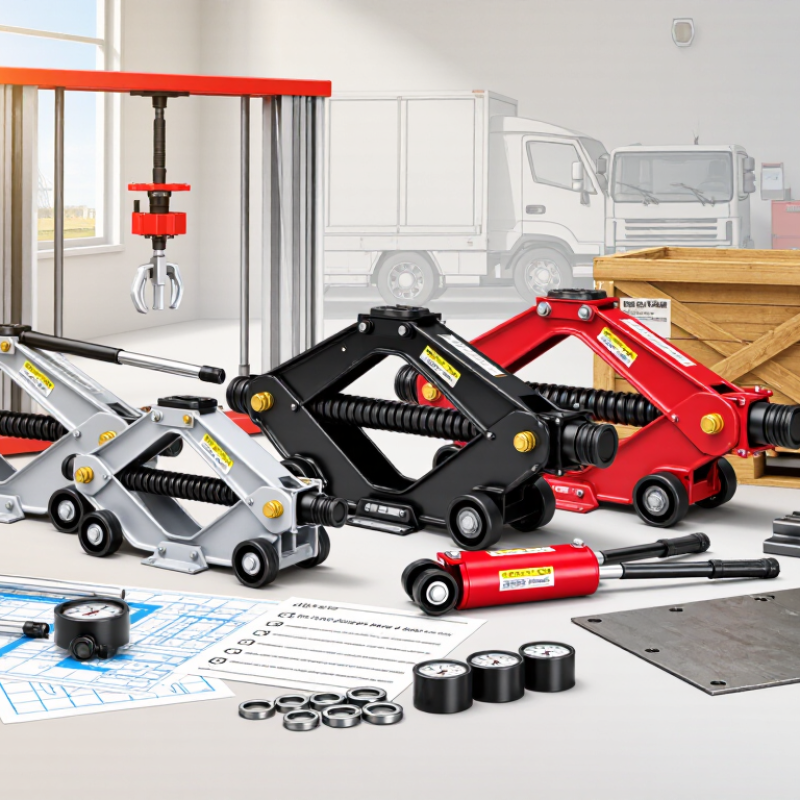
Choosing the right Short Hydraulic Jack supplier can affect lifting safety, delivery reliability, and long-term maintenance costs. Global buyers need more than attractive factory prices. They need clear specifications, stable production, documented testing, and responsive technical support.
Experienced suppliers usually explain capacity, minimum height, maximum height, oil type, release control, and operating temperature. These details matter on construction sites, repair floors, and mobile service vehicles. A compact jack should fit restricted spaces without sacrificing stability or lifting control. Buyers should request load-test records, material information, quality certificates, and product photographs from actual production lines. Factory audits, sample orders, and traceable inspection reports can reveal more than a polished website.
Reliable manufacturers also understand export packaging, labeling, spare parts, and communication across time zones. Strong suppliers identify risks early, including seal wear, uneven ground, overloaded use, and unsuitable storage. Their answers should be specific, not merely promotional. Ask difficult questions.
However, no supplier is perfect. Some factories offer excellent machining but weak after-sales communication. Others respond quickly but provide limited testing evidence. This is where careful comparison becomes essential. Buyers should assess real experience, engineering capability, production consistency, and customer references together. A low quotation may hide higher replacement or downtime costs. That possibility deserves attention.
This guide examines China’s leading Short Hydraulic Jack suppliers for global buyers. It focuses on practical sourcing evidence, product quality, compliance awareness, and dependable cooperation. The goal is not to name the cheapest option. It is to help buyers choose a supplier they can verify, trust, and work with safely.
A short hydraulic jack is a compact lifting tool designed for vehicles and machinery with limited ground clearance. Its shorter body fits beneath axles, frames, and other confined spaces. The jack uses hydraulic pressure to convert a small handle movement into controlled lifting force. Simple in principle. Careful operation matters.
When the handle moves, it drives a small pump piston inside the hydraulic system. The piston pushes oil through a one-way valve into a larger cylinder. Pressure then raises the main ram and its saddle. Closing the release valve holds the load temporarily. Opening it slowly allows oil to return, lowering the ram in a controlled way.
Never rely on hydraulic pressure alone for long-term support.
In practical inspections, I check the rated capacity, minimum height, lifting range, saddle shape, and frame strength. Weld quality also deserves attention. A short jack may lift high, yet lack enough clearance for a particular vehicle. I once overlooked handle clearance beside a wheel, and that small error made positioning awkward. Suppliers serving global buyers should provide load-test records, operating instructions, material details, and consistent dimensional data. Packaging matters too, because bent handles or damaged seals can appear after transport. A factory sample may perform well, but repeated production needs verification. That is where many purchasing decisions become less certain.
Short hydraulic jacks from China are selected by measurable specifications, not appearance alone. Capacity commonly ranges from 2 to 20 tons for workshop and maintenance applications. The collapsed height matters when clearance is limited. A jack measuring 80 mm can enter spaces where taller models cannot.
Check the lifting range carefully. A 100 mm stroke may suit small vehicles, while industrial equipment may require more travel. The saddle diameter affects contact stability. A wide, textured saddle can reduce slipping on a clean, solid lifting point. Buyers should also examine the minimum and maximum working height. Small differences matter.
Steel body construction supports repeated use, but thickness alone does not prove durability. Ask for load-testing records, seal material details, and the rated operating temperature. A built-in overload relief valve is essential. It helps prevent unsafe pressure increases. Yet, it is not a substitute for proper support stands.
Hydraulic oil quality and piston surface finish influence leakage risk. Inspect the ram for scratches, uneven plating, or oil residue around the seal. Packaging also deserves attention. A damaged valve or bent handle can appear after long-distance transport. Supplier documents should match the actual sample, although they sometimes do not. That gap deserves a second inspection before bulk purchasing.
China’s hydraulic jack factories increasingly combine automated machining with manual inspection. MarketsandMarkets’ 2024 Hydraulic Equipment Market report estimates the global market could reach about USD 61 billion by 2028. This growth increases pressure on Chinese suppliers to prove repeatable quality, not only low prices.
Production begins with tested steel billets and controlled heat treatment. Computer-controlled lathes shape cylinders, pistons, and pump bodies within recorded tolerances. Workers then clean every hydraulic passage. Even a small metal chip can damage a seal or restrict oil flow. Assemblers install seals, relief valves, and return springs in a controlled sequence. That detail matters.
Testing is practical and severe. Inspectors check empty stroke, rated lifting force, oil leakage, lowering stability, and overload response. Many factories use pressure gauges calibrated against traceable equipment. Testing procedures may reference ISO 10100 for hydraulic-cylinder acceptance testing, while lifting products also require applicable regional safety rules. Production records usually include batch numbers, pressure readings, and visual inspection results. Buyers should request these records.
A reliable factory repeats tests on samples from each batch. Better facilities test every finished jack. That costs more. It also reveals weak welds, uneven machining, or contaminated oil before shipment. The process is not perfect. Manual assembly can still create variation, especially during busy seasons. Independent pre-shipment inspection remains sensible for large orders. Performance data is more convincing than polished photographs.
Typical rated capacities and maximum lifting heights available for global buyers
Hydraulic jacks are commonly selected by rated lifting capacity and maximum lift height. Before shipment, manufacturers typically verify load performance, hydraulic sealing, lowering control, and structural stability against the product specification.
Choosing a Chinese hydraulic jack supplier requires more than comparing online prices. Grand View Research estimated the global hydraulic equipment market at about USD 49 billion in 2023, with steady growth expected through 2030. That growth attracts capable factories, but also inconsistent documentation. Buyers should verify production experience, export records, material certificates, and factory ownership. A video call is useful, but an on-site audit is stronger.
Ask for rated load, maximum lift, closed height, oil capacity, and leakage-test results. Request sample units from normal production, not specially prepared samples. Check welds, threads, seals, release valves, and the warning label. ISO 4413 provides useful guidance for hydraulic-system safety, while EN 1494 covers mobile or movable vehicle jacks. Compliance documents do not replace testing. They can be outdated.
Use a third-party laboratory for proof-load and endurance testing. Record performance at low temperatures, uneven surfaces, and repeated cycles. In practical sourcing work, I have found that packaging failures often damage good equipment before arrival. The World Bank’s 2023 Logistics Performance Index also shows why shipment visibility matters; China ranked 19th overall, but logistics performance still varies by route and destination. Require batch numbers, inspection photos, spare-seal availability, and a written warranty. A low quote may hide thinner steel, weaker seals, or unclear after-sales responsibility. That deserves a second look.
A practical supplier-evaluation framework for short hydraulic jacks, including bottle jacks, compact floor jacks, and other low-clearance lifting products.
| Evaluation Dimension | Relevant Data or Benchmark | What Global Buyers Should Request | Recommended Verification Method | Risk Level | Buyer Assessment Guidance |
|---|---|---|---|---|---|
| Rated Lifting Capacity | Common compact jack capacities include approximately 2, 3, 5, 10, and 20 metric tonnes, depending on the product design and application. | Rated-load specification, product drawings, lifting range, minimum height, maximum height, and intended application. | Compare the nameplate, technical drawing, catalogue, and sample performance. Do not rely on rated capacity alone; confirm the complete operating range. | High | Select a rated capacity above the maximum working load and ensure the jack is not used beyond its stated rating. |
| Minimum and Maximum Height | Short hydraulic jacks are selected primarily for low minimum height and sufficient extension height for the target vehicle or equipment. | Exact minimum height, maximum height, extension-screw travel, hydraulic stroke, and saddle dimensions in millimetres. | Measure a production sample using calibrated tools. Confirm that the dimensions match the approved drawing and packaging information. | High | Check the jack against the actual clearance and lifting points of the vehicle or machine before placing an order. |
| Applicable Safety Standard | For mobile jacks sold in Europe, EN 1494 is a key reference for mobile or movable jacks. Other markets may apply different requirements. | Applicable standard list, risk assessment, test reports, declaration of conformity where required, and destination-market compliance documents. | Verify the document scope, product model, test date, laboratory details, and whether the report covers the supplied configuration. | High | Compliance should be evaluated for the destination country, product type, and final use rather than accepted as a generic supplier claim. |
| Hydraulic System Integrity | The hydraulic circuit normally includes a pump, cylinder, release valve, seals, oil reservoir, and pressure-control components. | Hydraulic schematic, seal material, oil specification, pressure-control design, leakage criteria, and maintenance instructions. | Conduct a load-holding test, repeated lifting test, visual leakage inspection, and release-control check on production samples. | High | Uncontrolled lowering, oil leakage, or inconsistent release operation should be treated as a critical nonconformity. |
| Load-Holding Performance | A safe jack must hold the load without unacceptable descent after the load is raised and the control is released. | Load-holding test procedure, test load, holding time, allowable descent, and test temperature or environmental conditions. | Use an independent inspection or a witnessed factory test with calibrated load and height-measurement equipment. | High | Require the acceptance limit in writing before mass production; avoid accepting only a general statement such as “no leakage.” |
| Structural Materials | Important components include the base, frame, saddle, lifting arm, cylinder, pins, wheels, and handle assembly. | Material specifications, thicknesses, heat-treatment information where applicable, welding method, and corrosion-protection process. | Review material certificates when required, inspect welds, check critical dimensions, and compare the sample with approved drawings. | High | Focus on load-bearing parts and welded joints rather than judging quality only by external paint or surface finish. |
| Factory Quality System | An ISO 9001-certified quality management system can support controlled production, although certification alone does not guarantee product quality. | Quality certificate, certificate scope, internal inspection plan, nonconformity procedure, calibration records, and batch traceability process. | Check the certificate through the issuing body where possible and conduct a remote or on-site production audit. | Medium | Give greater weight to actual inspection records and corrective-action capability than to certificates displayed in marketing materials. |
| Incoming and In-Process Inspection | Critical checks may include steel dimensions, hydraulic-cylinder fit, weld quality, valve assembly, oil filling, and operating force. | Incoming inspection standards, process control plan, first-article inspection report, and final inspection checklist. | Review recent records and confirm that measurements are linked to batch numbers or production orders. | High | A supplier should be able to show repeatable control before shipment, not only a final visual inspection. |
| Product Testing | Useful tests include rated-load lifting, load holding, overload or proof testing where applicable, repeated operation, leakage, and lowering control. | Test frequency, test equipment, acceptance criteria, sample quantity, and retained test records. | Witness testing during factory inspection and repeat selected tests on randomly sampled finished goods. | High | Testing should represent the actual mass-production model, not only a specially prepared engineering sample. |
| Customization Capability | Typical customization areas include capacity, minimum height, saddle design, handle length, coating, packaging, labels, and manuals. | Engineering-change process, tooling ownership, minimum order quantity, prototype lead time, and drawing approval procedure. | Request a controlled sample made from the final production drawing and compare it with the approved specification. | Medium | Freeze all safety-critical dimensions and materials in the purchase specification before production begins. |
| Packaging and Export Readiness | Hydraulic jacks are heavy metal products that can suffer from surface corrosion, impact damage, or oil leakage during transport. | Packaging drawings, carton strength, pallet configuration, moisture protection, spare-part packaging, and shipping marks. | Perform packaging-drop or handling checks where appropriate and inspect a packed sample before shipment. | Medium | Packaging should protect valves, handles, wheels, painted surfaces, and hydraulic seals throughout international transport. |
| Delivery Capability | Lead time depends on product complexity, tooling, order quantity, raw-material availability, inspection requirements, and shipping method. | Sample lead time, mass-production lead time, monthly capacity, production schedule, and on-time delivery history. | Compare stated lead time with previous order records and include shipment milestones in the purchase contract. | Medium | Do not evaluate delivery only from a sample order; confirm whether the supplier can maintain quality during volume production. |
| After-Sales Support | Common support requirements include operating instructions, spare seals, replacement valves, warranty terms, and failure analysis. | Warranty period, claim process, spare-parts list, response time, technical contact, and corrective-action procedure. | Submit technical questions before ordering and assess the clarity, speed, and engineering quality of the responses. | Medium | A written warranty should define coverage, exclusions, evidence requirements, and the remedy for confirmed product defects. |
| Total Landed Cost | Total cost includes product price, tooling, packaging, inspection, inland transport, freight, insurance, duties, taxes, and after-sales costs. | Itemized quotation, trade term, packaging cost, tooling charge, payment terms, spare-parts cost, and estimated shipping assumptions. | Compare quotations using the same capacity, dimensions, compliance scope, packaging level, and delivery term. | Medium | The lowest unit price may create higher total cost if it results in leakage, returns, rework, or compliance delays. |
| Supplier Transparency | Reliable suppliers should provide consistent technical information, traceable samples, clear production locations, and verifiable documentation. | Business registration information, factory address, product drawings, inspection records, references, and authorized contact details. | Cross-check documents, factory information, sample markings, and payment-account details before making an advance payment. | High | Inconsistent specifications, unexplained document changes, or refusal to support inspection are significant warning signs. |
| Recommended Supplier Score | Suggested weighting: safety and performance 35%, quality system 20%, technical capability 15%, delivery 10%, cost 10%, service and transparency 10%. | Completed supplier scorecard with evidence for every score and separate treatment of critical safety failures. | Score at least three qualified suppliers using identical criteria and verify high-risk items before commercial comparison. | High | Do not award a supplier with a critical safety failure merely because its price or lead time is attractive. |

China’s short hydraulic jack suppliers can offer competitive export pricing, but buyers should verify more than factory quotations. A dependable supplier should provide material records, pressure-test results, and clear production controls. Ask which standards apply in your destination market. Requirements may include ISO-based quality systems, applicable lifting-equipment standards, and market-specific conformity documents. Do not accept a generic certificate without checking its scope and validity.
Request a quotation with Incoterms, minimum order quantity, packaging details, and spare-seal costs. FOB pricing may look attractive, yet freight, insurance, customs duties, and port charges can change the final cost. Compare identical specifications, including rated capacity, minimum height, maximum lift, saddle size, and relief-valve performance. A 2-ton jack and a 5-ton jack should not share one price comparison. Cheap offers often exclude export cartons or final leak testing.
Practical inspection matters. Check welded joints, handle alignment, hydraulic oil condition, and lowering control. Ask for random load tests and photographs before shipment. Serial-number traceability improves after-sales handling. A written warranty should define leakage limits, replacement parts, and response times. My cost estimates are never perfect; exchange rates and shipping surcharges move quickly. Buyers should keep a contingency budget. One overlooked detail can damage an otherwise careful purchase.
WhatsApp us