
China’s steel industry produced approximately 1.89 billion tonnes of crude steel in 2023, according to World Steel Association data. This capacity supports a broad supply base for construction lifting components, including the Steel Threaded Lifting Socket. Yet volume alone does not prove reliability. A socket may look flawless while its thread engagement, weld quality, or anchorage remains inadequate.
Market reports from Grand View Research and Allied Market Research indicate continued growth in construction equipment and lifting applications. That growth increases demand for traceable, tested components. In practice, buyers should examine heat numbers, material certificates, proof-test records, working load limits, and installation instructions. Concrete strength and edge distance also matter. A perfect socket cannot correct poor placement.
Ronald Kletz, a respected process-safety expert, warned, “If you think safety is expensive, try an accident.” His statement applies directly to lifting sockets. The hidden cost often begins with an unchecked assumption. Some suppliers emphasize price, but forget batch consistency and field support. That is uncomfortable, yet worth admitting. A dependable Chinese manufacturer should explain its steel grade, thread tolerance, load testing, corrosion protection, and quality-control process clearly. This article examines how to identify a top Steel Threaded Lifting Socket manufacturer through engineering evidence, production experience, and transparent documentation. Nakne. Selection should be based on verified performance, not polished photographs or broad marketing claims.
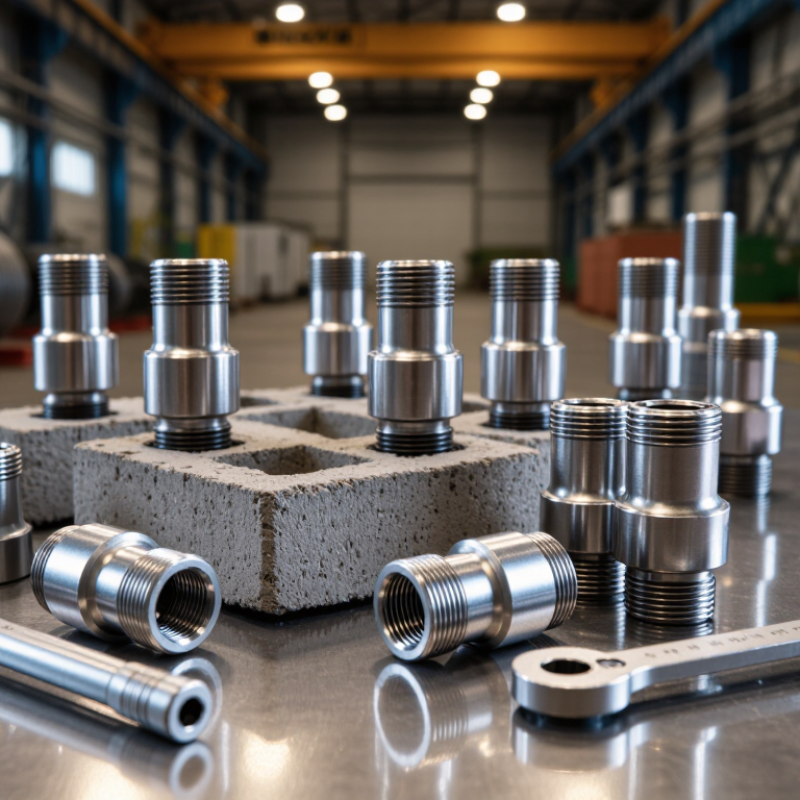
A steel threaded lifting socket is a cast-in anchor used to lift precast concrete components safely. It contains a steel body with an internal thread for a compatible lifting clutch or bolt. Reinforcement bars connect the socket to the concrete, transferring lifting forces through the panel or beam.
The socket is installed before concrete placement. Its opening must remain aligned and protected from concrete splashes. After curing, workers remove the cap and inspect the thread. Even a small blockage can prevent full engagement. That detail matters.
Socket size, steel grade, embedment depth, and reinforcement design depend on the lifting load. Engineers should verify these values for each concrete element. A socket is not automatically safe because it looks thick. Surface rust may be acceptable in some conditions, but deep corrosion requires rejection. Moisture, salt, and repeated handling can reduce reliability.
Experienced manufacturers normally control thread accuracy, welding quality, dimensional tolerance, and material traceability. Load testing and documented inspections provide stronger evidence than appearance alone. Packaging also matters. Damaged threads often begin during transport, not production.
One point deserves honest attention. Field installation is sometimes treated as a minor task, yet poor alignment can create uneven loading. Clear drawings, trained workers, and final checks reduce that risk. A reliable steel threaded lifting socket supports safer handling, but it must work within a verified lifting system.
A steel threaded lifting socket transfers lifting force through a threaded connection into concrete. Its design begins with the required load, lifting direction, edge distance, and concrete strength. Engineers check tension, shear, thread engagement, local steel stress, and concrete breakout. Safety factors must reflect real site conditions, not only laboratory values.
The socket is usually formed from certified steel tube, bar, or forged material. Forging can improve grain flow, while precision machining controls thread accuracy and socket dimensions. The internal thread needs clean flanks and consistent depth. Poor machining may create difficult installation or uneven load transfer. It happens more often than expected.
Manufacturing continues with deburring, surface treatment, and dimensional inspection. Workers verify thread gauges, wall thickness, length, and weld quality where welded components are used. Samples may receive tensile or proof-load testing under controlled conditions. Inspectors record heat numbers and test results for traceability. Small details matter.
A reliable manufacturer also examines how workers will use the socket. Clear installation instructions should define reinforcement placement, concrete cover, curing strength, and compatible lifting hardware. Field feedback can reveal problems that drawings miss. A socket may pass a test yet remain awkward on a crowded construction site. That weakness deserves correction, not concealment. During production, human inspection still matters, although automated checks improve repeatability.
China Top Steel Threaded Lifting Socket Manufacturer?
Which standards and tests ensure socket quality? A reliable steel threaded lifting socket begins with traceable material, not a polished surface. The World Steel Association reported global crude steel production of about 1.88 billion tonnes in 2023. This scale makes heat-number traceability essential. Each socket should link to its steel certificate, chemical analysis, and batch record.
Relevant requirements depend on the lifting design. EN 1677 covers lifting components, while EN 1992-1-1 supports concrete anchorage assessment. ISO 898-1 helps verify mechanical properties for suitable threaded fasteners. Dimensional checks must confirm thread pitch, shoulder size, and alignment. Small errors matter. A socket can look perfect and still fit badly.
Testing should include tensile loading, proof loading, hardness, thread gauges, and visual inspection. Fatigue testing is valuable for repeated lifting cycles. Corrosion testing may be needed for outdoor or marine exposure. An independent laboratory operating under ISO/IEC 17025 adds stronger confidence. The ILO estimates nearly 3 million work-related deaths annually, so lifting hardware deserves more than factory paperwork. ISO’s 2023 survey recorded over 1.2 million ISO 9001 certificates worldwide, yet certification alone cannot prove socket capacity. Manufacturers should publish load ratings, test frequency, failure observations, and corrective actions. Real production is imperfect. That is why retained samples and witnessed tests remain useful.
Load verification is a key part of lifting-socket quality control. The chart shows commonly referenced load factors used for lifting accessories: a proof test at 2 times the Working Load Limit (WLL) and a minimum breaking-load benchmark at 4 times the WLL. Actual requirements depend on the applicable product standard, design, material, thread specification, and certification scheme.
Quality checks should also include: material certification, dimensional and thread inspection, visual examination, proof-load testing, breaking-load validation where required, and traceable inspection records. EN 1677-1 is commonly referenced for general lifting accessories, while the exact standard must match the socket design and intended application.
Choosing a leading Chinese lifting socket manufacturer requires more than comparing prices. Check the steel grade, thread accuracy, rated load, and surface protection. Ask for material certificates and batch-level traceability. A reliable factory should explain its testing process clearly, not hide behind impressive photographs. Request dimensional drawings before production. Small errors in thread fit can affect installation and safety.
Tips:
Visit the factory when possible. Review machining, heat treatment, and inspection areas. Ask for recent test records, sample reports, and quality procedures. Confirm whether workers inspect threads with calibrated gauges. Also check response times. Slow, unclear communication may create larger problems during custom production.
Experience shows that a polished catalog is not proof of manufacturing strength. A supplier should discuss tolerances, working conditions, and realistic production limits. Ask how sockets perform under repeated loading, outdoor exposure, and uneven installation. Do not accept vague claims such as “high quality” without measurable evidence. An independent inspection can add confidence, although it increases cost and planning time. That trade-off is often worthwhile. A leading manufacturer also supports packaging, labeling, documentation, and after-sales investigation when defects appear. Mistakes can still happen. What matters is whether the supplier identifies causes, corrects them, and records the improvement.
What Industries Use Steel Threaded Lifting Sockets?
Steel threaded lifting sockets support controlled handling in several demanding industries. Construction crews use them in precast concrete panels, stair units, beams, and foundation elements. The socket stays embedded in the concrete, while a matching lifting clutch connects during installation. This method reduces manual handling around heavy components.
Infrastructure projects also depend on them. Bridge sections, tunnel segments, utility chambers, and drainage units may require reliable lifting points. Energy facilities use sockets for equipment bases, cable trenches, and modular structures. Shipyards and marine contractors can use them for reinforced concrete components exposed to difficult working conditions. In industrial manufacturing, sockets help move machine housings, platforms, and large fabricated assemblies.
A socket may look simple. Its safety depends on more than steel strength. Engineers should check the working load limit, thread compatibility, embedment depth, concrete strength, edge distance, and lifting angle. Site teams should inspect threads for damage, remove concrete debris, and confirm the socket is fully engaged. Records should also connect each component to its production batch and inspection results. The correct choice is not always obvious, especially when drawings change late.
Tips: Match the socket with its approved lifting accessory. Never exceed the stated working load. Avoid side loading unless the design allows it. Train operators to keep hands away from pinch points. A practical trial lift can reveal alignment problems before full installation. It may feel cautious, but small oversights often become expensive corrections.
| Industry | Typical Products or Structures | How Steel Threaded Lifting Sockets Are Used | Main Selection Considerations | Important Installation Checks |
|---|---|---|---|---|
| Precast Concrete | Wall panels, beams, columns, floor slabs, stairs, pipes, and other precast elements | Embedded into concrete to provide reusable threaded lifting points for demoulding, handling, transport, and installation | Working load limit, concrete strength, embedment depth, socket geometry, and compatibility with the lifting accessory | Correct positioning, sufficient concrete cover, reinforcement clearance, secure fixing, and clean internal threads |
| Building Construction | Modular concrete units, façade elements, stair flights, balconies, and prefabricated building components | Creates temporary lifting and positioning points for factory-made components during delivery and on-site assembly | Load direction, edge distance, lifting angle, corrosion protection, and repeated-use requirements | The socket must be fully surrounded by sound concrete and aligned with the intended lifting direction |
| Infrastructure and Civil Engineering | Bridge components, tunnel segments, drainage channels, utility structures, retaining elements, and railway products | Supports controlled lifting of heavy precast sections where repeatable handling and accurate placement are required | High load capacity, fatigue resistance, exposure conditions, dimensional consistency, and traceability of safety-critical parts | Inspect for cracking around the socket, concrete breakout, deformation, thread damage, and unauthorized modifications |
| Energy and Renewable Energy | Concrete foundations, precast turbine components, solar mounting structures, substations, and energy-related enclosures | Provides lifting points for large concrete components manufactured off-site and installed with cranes or lifting frames | Outdoor corrosion resistance, load distribution, lifting configuration, temperature exposure, and project-specific safety requirements | Confirm that the lifting plan accounts for the component’s center of gravity and unequal load sharing between sockets |
| Marine and Coastal Construction | Marine precast units, seawalls, quay elements, floating concrete structures, and coastal protection products | Used as embedded lifting points during production, loading, installation, and maintenance in humid or salt-laden environments | Corrosion protection, drainage, sealing, stainless or coated components where appropriate, and resistance to wet service conditions | Prevent water and debris from remaining in the threaded cavity and inspect protective finishes regularly |
| Industrial Equipment | Concrete machine bases, equipment housings, industrial frames, and heavy prefabricated assemblies | Allows lifting accessories to be attached to concrete-based equipment without relying on improvised lifting points | Static and dynamic loads, vibration, thread size, socket orientation, access for lifting hardware, and service environment | Verify that the socket is not obstructed by grout, coatings, reinforcement, or nearby equipment features |
| Precast Concrete Pipe and Utility Products | Manholes, inspection chambers, concrete pipes, culverts, cable trenches, and utility vaults | Facilitates lifting, alignment, and placement of repetitive products during manufacturing and infrastructure installation | Compact design, adequate concrete cover, resistance to handling impacts, thread protection, and compatibility with lifting tools | Ensure sockets remain properly seated during vibration and casting, with no movement or concrete ingress |
| Logistics and Heavy Transport | Large precast units, concrete moulds, transport frames, and reusable handling fixtures | Provides standardized attachment locations for lifting, loading, unloading, and temporary securing operations | Rated capacity, shock loading, lifting frequency, thread durability, accessibility, and compatibility with shackles or lifting eyes | Use only approved lifting accessories and verify that the complete lifting system is rated for the planned load and configuration |
Steel threaded lifting sockets are load-bearing embedded components. Their safe use depends on the socket design, concrete strength, embedment, reinforcement arrangement, lifting angle, connected hardware, and the applicable project or regulatory requirements.
WhatsApp us