
China Top 10 Dynamic Compaction Equipment Manufacturers?

China’s top 10 Dynamic Compaction Equipment manufacturers deserve comparison beyond price and rated drop energy. Buyers need to examine hammer weight, drop height, crane stability, controls, spare-parts access, and service support. On a site, a worn wire rope or inconsistent lift cycle can matter as much as the machine’s headline capacity. Small details matter.

The Federal Highway Administration’s Geotechnical Engineering Circular No. 1, authored by geotechnical engineer R. G. Lukas, is a useful technical reference for understanding dynamic compaction and its field application. Lukas’s guidance emphasizes a practical point: treatment design and field verification must work together. That is not a sales claim. It is a reminder that equipment performance alone cannot guarantee improved ground conditions. Project teams still need suitable site investigation, controlled operations, and monitoring.

This guide compares manufacturers through that practical lens, including product range, customization, manufacturing capability, and after-sales support. It also considers how equipment fits different project needs, from broad-area ground improvement to confined construction sites. Public company information can be incomplete, and specifications may change; readers should confirm current models and service terms directly with manufacturers. That limitation deserves attention. A ranked list is a starting point, not a substitute for technical review, site-specific engineering, or a careful supplier audit.
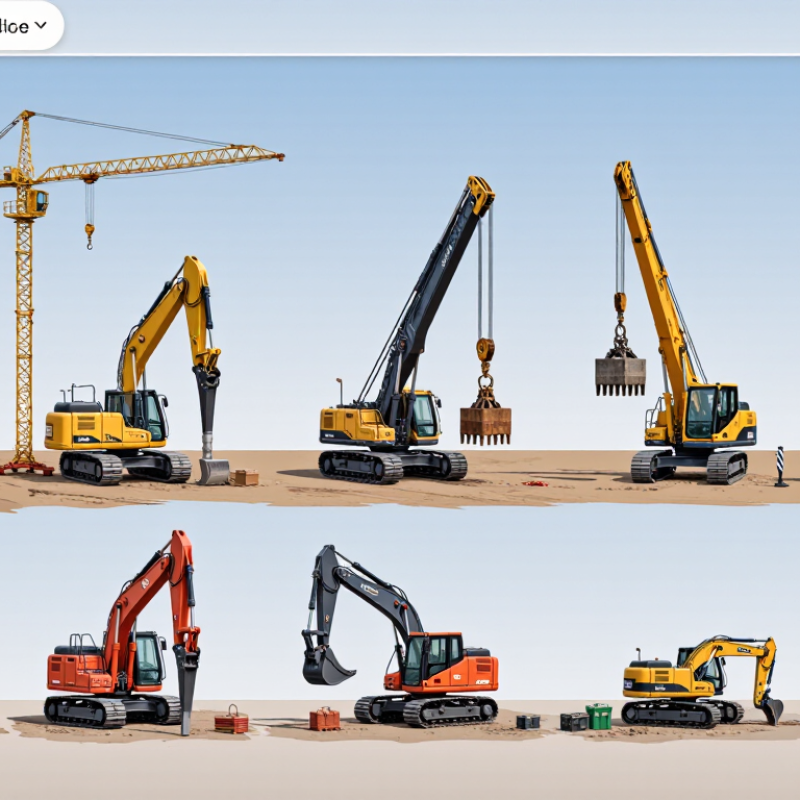
China Top 10 Dynamic Compaction Equipment Manufacturers?

What Dynamic Compaction Equipment Is and How It Works

Dynamic compaction equipment densifies loose ground by repeatedly dropping a heavy weight from a controlled height. A typical setup uses a crane, lifting cables, a drop weight, and basic positioning controls. The impact sends stress waves through the soil, helping rearrange particles and reduce large voids. It is commonly considered for fill, granular soil, and some reclaimed sites, but results depend on ground conditions.

Work usually follows a planned grid. The operator lifts the weight, releases it, and records each impact point and drop count. Repeated blows form compacted zones beneath the surface. Crews may treat the ground in several passes, then fill and level impact craters. Engineers check performance through field testing and settlement observations. The method is not a shortcut for every soil; very soft or highly variable layers can respond unevenly. Even a well-planned grid may need adjustment.

Tips: Confirm underground utilities and nearby structures before work. Keep a clear exclusion zone around the drop area. Track weight, drop height, and impact locations consistently. Test the ground before and after treatment; visual firmness alone can be misleading. Soil moisture and hidden layers matter more than a tidy site suggests.

Common Applications of Dynamic Compaction Equipment in China

Dynamic compaction is used on suitable loose, compressible ground before construction, especially at reclaimed sites, industrial parks, port yards, and large warehouse platforms. Heavy weights repeatedly drop onto the soil, tightening loose granular layers and reducing later settlement. Road and rail embankments may also use the method where broad areas need treatment. Site conditions matter. The National Bureau of Statistics reported that China’s infrastructure investment grew 5.9% in 2023; this helps explain demand for ground preparation, but does not measure dynamic compaction use. Its 2023 statistical communiqué also put the urbanization rate at 66.16%, pointing to continuing pressure for urban land development.

The Federal Highway Administration’s Geotechnical Engineering Circular No. 1, Dynamic Compaction, describes the method’s use for loose granular soils and fills. In practice, engineers check soil layers, groundwater, nearby buildings, and vibration limits before choosing drop weight and grid spacing. A trial section can reveal whether the treatment reaches the required depth. Not every site responds well. Saturated fine-grained soils may need another approach, and nearby structures can be disturbed by repeated impacts. Even a well-designed pattern needs verification; field results are not always as uniform as drawings suggest.

Criteria for Evaluating Chinese Equipment Manufacturers

China Top 10 Dynamic Compaction Equipment Manufacturers?

Criteria for Evaluating Chinese Equipment Manufacturers

A reliable shortlist starts with verifiable engineering, not brochure claims. The U.S. Federal Highway Administration’s 2017 Geotechnical Engineering Circular No. 13 describes an estimated improvement depth using D = n√(WH), where W is tamper mass, H is drop height, and n depends on soil conditions. This is a planning estimate, not a guaranteed result. Ask manufacturers to explain their assumptions and provide field-trial records for comparable ground. Small details matter.

Compare rated lifting capacity, braking performance, drop-height control, and cycle time under working loads. Request unit-specific load charts and factory test records. Check whether the control system logs impact energy and drop counts; these records help crews compare planned and actual work. Ask about spare-part availability, technician response times, operator training, and warranty coverage. A low purchase price can look attractive, but downtime may change the calculation. Service promises should be documented, not just discussed.

Tips: Ask for a site-specific demonstration. Check the records yourself. Even a sound specification needs field verification.

China Top 10 Dynamic Compaction Equipment Manufacturers? - Criteria for Evaluating Chinese Equipment Manufacturers

Use the criteria below to assess and compare manufacturers. Scores should be assigned only after reviewing evidence; this framework does not rank or identify specific companies.

No. Evaluation criterion Suggested weight What to assess Evidence to request
1 Technical suitability 15% Compatibility with the project’s ground conditions, treatment depth, required energy, and work sequence. Technical proposal, operating limits, project references, and engineering review.
2 Rated capacity and configuration 12% Crane or carrier configuration, rated lifting capacity, boom arrangement, and compatibility with the specified tamper and drop height. Rated-capacity charts, equipment specifications, and configuration drawings.
3 Structural design and safety 12% Design provisions for repeated dynamic loading, stability, braking, guarding, and safe operating procedures. Risk assessment, inspection records, maintenance instructions, and applicable conformity documentation.
4 Performance and productivity 12% Cycle time, achievable drop frequency, setup time, and expected output under stated site conditions. Documented operating data, acceptance-test results, and comparable project records.
5 Reliability and maintainability 10% Service intervals, component durability, ease of inspection, and availability of maintenance documentation. Maintenance schedules, warranty terms, service records, and parts lists.
6 Quality management and manufacturing control 10% Documented production controls, traceability, inspection procedures, and consistency between the supplied unit and specifications. Quality-system certificates where applicable, inspection plans, and factory-test reports.
7 After-sales service and spare parts 10% Service response arrangements, technician availability, parts lead times, and support in the destination market. Service-level commitments, parts catalogue, support contacts, and reference checks.
8 Customization and integration 7% Ability to accommodate project-specific interfaces, monitoring systems, power requirements, and transport constraints. Interface drawings, customization scope, and written confirmation of technical changes.
9 Delivery, commissioning, and training 6% Production and delivery schedule, installation support, commissioning scope, and operator training arrangements. Project schedule, commissioning checklist, training plan, and delivery terms.
10 Total cost of ownership and commercial terms 6% Purchase price alongside operating costs, consumables, freight, warranty coverage, payment terms, and expected service costs. Itemized quotation, warranty statement, operating-cost assumptions, and contract terms.
Total weighting 100% Apply the same scoring scale and evidence requirements to every candidate.

Suggested scoring scale: 1 = does not meet requirements; 2 = meets some requirements; 3 = meets requirements; 4 = exceeds requirements; 5 = substantially exceeds requirements. Verify all claims against project-specific requirements and independent documentation.

Profiles of China’s Leading Dynamic Compaction Equipment Manufacturers

Profiles of China’s Leading Dynamic Compaction Equipment Manufacturers

China’s equipment makers serve projects ranging from industrial yards to reclaimed land. Their strengths differ: some focus on crawler cranes and lifting capacity, while others emphasize integrated control systems, service access, or export-ready configurations. Buyers should compare operating weight, boom reach, drop-energy range, and how quickly technicians can source wear parts. Small details matter. A poorly placed service panel can slow inspection on a dusty site.

Demand is shaped by continuing urban and infrastructure development. China’s National Bureau of Statistics reported an urbanization rate of 66.16% in its Statistical Communiqué on 2023 National Economic and Social Development. This figure is not a sales forecast, but it signals sustained pressure on land and infrastructure planning. Manufacturer profiles are most useful when they connect machine specifications to actual ground conditions, such as loose fill, variable moisture, and restricted working areas. Published performance claims still need checking against site trials; brochures rarely capture every limitation.

Tips: Ask for compaction-energy settings, fuel-use records, and maintenance intervals from comparable projects. Confirm the test method. Also inspect operator visibility and vibration controls in person. A polished specification sheet is helpful, but it is not the whole story.

Comparing Equipment Features, Service, and Project Suitability

Compare impact energy, crane stability, drop control, and service support against site conditions. A bigger hammer is not automatically better. FHWA’s Ground Modification Methods Reference Manual (2017) gives an empirical depth estimate: D = n√(WH), with n commonly around 0.5–0.8. Here, W is tamper weight in metric tonnes and H is drop height in metres. Treat this as a planning estimate, not a guaranteed treatment depth. Loose fills, groundwater, nearby structures, and soil layering can all change results. Trial drops matter.

Open industrial pads may suit high-energy rigs that reposition quickly. Tight sites need stable positioning, controlled drop cycles, and room for exclusion zones. Ask suppliers for duty-cycle data, spare-part lead times, operator training, and local field technicians. Service response is equipment performance too. Compare fuel use and cycle time per treated square metre, not just maximum energy. FHWA guidance supports checking crater dimensions, ground response, and post-treatment performance. These observations help adjust drop height or pass count when settlement differs from predictions. Sometimes the planned grid is wrong.