7 Tips for Choosing Lubricating Oil Additives
Lubricating Oil Additives help oils control wear, resist oxidation, manage deposits, and perform across changing temperatures. Yet a product label cannot tell the whole story. The right additive package depends on the base oil, equipment, operating conditions, and required performance specification. A mismatch may shorten oil life or compromise protection. Small details matter.
The scale of change makes careful selection increasingly important. The International Energy Agency’s Global EV Outlook 2024 reports nearly 14 million electric car sales worldwide in 2023, about 18% of total car sales. Meanwhile, ACEA’s Vehicles on European Roads 2024 reports an average passenger-car age of 12.3 years across the EU, based on 2022 data. These figures point to a mixed vehicle landscape: newer technologies alongside older equipment with different lubrication needs. They do not, by themselves, identify the best additive.
That takes closer checking. This guide presents seven practical tips, from matching additives to the oil’s intended use to reviewing technical data sheets and recognized performance standards. Look for evidence on viscosity, oxidation stability, wear protection, and compatibility—not just broad marketing claims. Compare products under the conditions your machinery actually faces: cold starts, sustained heat, heavy loads, or long service intervals. The details can be easy to miss. No additive package is perfect for every duty cycle, and one recommendation may not fit every application. That is worth questioning. Manufacturers’ guidance and qualified lubricant specialists remain important when requirements are unclear.
Understand the Role of Lubricating Oil Additives
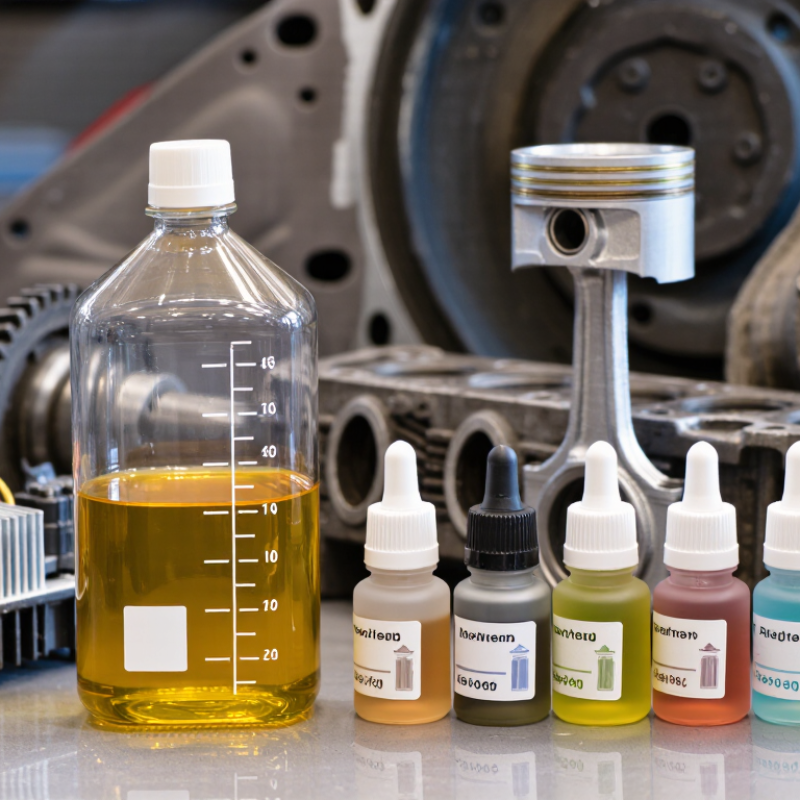
Lubricating oil additives support the base oil; they do not replace it. Detergents help limit deposits on hot engine surfaces, while dispersants keep small contaminants suspended until the oil is changed. Antioxidants slow oil breakdown, and anti-wear agents help protect moving parts when metal surfaces approach each other. Other additives can adjust viscosity, reduce friction, or protect against corrosion. Each has a distinct job.
Their usefulness depends on the equipment, operating temperature, load, and oil formulation. A delivery van making short winter trips may need different protection from a generator running steadily in a warm workshop. Check the equipment manual and oil specification before choosing a product.
Small details matter. Mixing an extra additive into a finished oil can upset its carefully balanced chemistry, and may not solve the problem you notice. A noisy start, for example, can have causes unrelated to additive levels.
Oil analysis can reveal wear metals, oxidation, or contamination, but results need context. Even with good information, selection is not always obvious; that uncertainty is a reason to verify compatibility, not guess.
Match Additives to Equipment and Operating Conditions
Match additives to the machine’s materials, load, speed, temperature, and contamination risk. A slow gearbox carrying heavy loads may need strong extreme-pressure protection. A high-temperature compressor may benefit more from oxidation resistance and deposit control. Heat changes the answer. Check the equipment manual and lubricant specification before changing an additive package; too much detergent or an incompatible chemistry can cause trouble.
For hydraulic systems, prioritize wear protection, air release, and water separation where operating conditions demand them. In wet environments, corrosion control matters. For turbines or circulating systems, oxidation stability and cleanliness often take priority. Look at actual oil-analysis trends, including viscosity, water, oxidation, and wear metals. One sample is only a snapshot. A rising trend is more useful, though it can still be misread without operating context.
The U.S. Department of Energy’s Operations & Maintenance Best Practices Guide (2010) estimates predictive maintenance can cost 8–12% less than preventive maintenance and 30–40% less than reactive maintenance. Those figures support regular condition checks, not automatic additive changes. Confirm the cause of a problem before treating the oil. Additives cannot repair worn parts, and a lab result may not explain every field symptom. Small details matter: a hot bearing, a dusty breather, or a brief water leak can change the right choice.
Identify the Performance Properties Your Oil Needs
Choosing an additive package begins with the oil’s job, not a broad “extra protection” claim. A hot, heavily loaded gearbox needs different performance from a small engine making frequent cold starts. Identify the operating temperature, load, speed, moisture exposure, and target equipment specification. Then prioritize properties such as oxidation resistance, wear control, deposit prevention, rust protection, foam control, and water separation. Check that the finished oil—not merely an additive component—meets the required viscosity and compatibility limits. Small details matter.
The ACEA Oil Sequences 2023 illustrate why viscosity-related properties need context: they set minimum high-temperature, high-shear viscosity at 3.5 mPa·s for C3 oils, while C5 oils must be at least 2.6 and below 2.9 mPa·s. These are category requirements, not universal targets for every machine. For a specific application, compare the equipment manual with test data for the formulated oil. ASTM D445 measures kinematic viscosity; ASTM D892 assesses foaming. Ask suppliers for relevant test results and methods, rather than relying on vague claims. I still find it easy to focus on one attractive number and miss the operating conditions that make it useful.
Check Compatibility With the Base Oil and Existing Additives
An additive that performs well in one lubricant may behave differently in another. Start by identifying the base oil type, viscosity grade, and intended operating temperature. Mineral oils, polyalphaolefins, and esters differ in polarity and solvency, which can affect additive solubility. Review technical data for the additive’s recommended treat rate and compatibility limits. Then check the existing formulation, including detergents, dispersants, antiwear agents, and viscosity modifiers. Small differences matter.
Blend a small, accurately measured sample before changing a full batch. Mix it using the intended temperature and procedure, then inspect it for haze, sediment, or separation. A clear sample is encouraging, but it does not prove performance. Check viscosity, foaming, and other properties relevant to the lubricant’s application. In practice, a sample can look stable on day one and separate after heat exposure. That is easy to miss. Compare results with the original oil and consult qualified laboratory support when interactions are uncertain. Keep records of the base oil, additive concentration, mixing conditions, and test results; these details make troubleshooting more reliable.
7 Tips for Choosing Lubricating Oil Additives: Check Compatibility With the Base Oil and Existing Additives
Base-oil compatibility starts with identification. This chart shows the minimum viscosity-index thresholds for API Groups I–III. These classifications do not establish additive compatibility: confirm the base oil and existing additive package, then validate the blend with appropriate laboratory testing.
Verify Specifications, Dosage, and Maintenance Requirements
7 Tips for Choosing Lubricating Oil Additives
Check the lubricant specification before comparing additive packages. Confirm the required viscosity grade, performance category, operating temperature, and equipment-maker approval. An additive that improves one property may affect another, including seal compatibility or foaming. Small details matter. Keep the product data sheet beside the equipment manual, and verify dosage units carefully; percentages and treat rates are easy to confuse.
Tip: Ask for dosage guidance in writing, including whether it applies to the finished oil or the additive concentrate. Record the batch size and measure with clean, graduated equipment. Do not guess. Also check storage life and mixing instructions. A cloudy sample or unexpected sediment deserves investigation, not an automatic increase in dosage.
Plan maintenance around actual operating conditions. Track oil changes, top-ups, temperature, and any changes in noise or vibration. The U.S. Department of Energy’s Operations & Maintenance Best Practices Guide, Release 3.0, reports predictive maintenance savings of 8–12% over preventive maintenance and 30–40% over reactive maintenance. Those figures are not a guarantee for every machine, but they support condition-based checks. Periodic oil analysis can help confirm whether the chosen additive rate remains suitable. I would still review the results with a qualified lubricant specialist; a single sample can mislead.