
Choosing Electrical Sockets is about more than matching a wall plate to a room. The right choice depends on the appliance, installation location, socket design, and the electrical system already in place. A compact socket beside a kitchen counter may look neat, but its rating and features must suit the equipment used there. Small details matter.
This guide explores ten practical checks, from compatibility and safety markings to USB ports, build quality, and placement. It also considers everyday use: Will a plug sit securely? Can you reach the switch without moving a kettle? Is the finish easy to clean? These questions are simple. They can prevent expensive mistakes.
A verified industry expert’s advice would strengthen this introduction, but no source was supplied to confirm a named quotation. Insert a checked quotation here: “[Verified expert name]: ‘[Verified statement about choosing Electrical Sockets].’” Do not publish an invented attribution. A socket can appear sturdy and still be unsuitable for a particular installation. Product labels help, but they do not replace advice from a qualified electrician when compatibility is uncertain. Some choices are less obvious than they seem. This guide offers a careful starting point, not a substitute for a site-specific assessment.
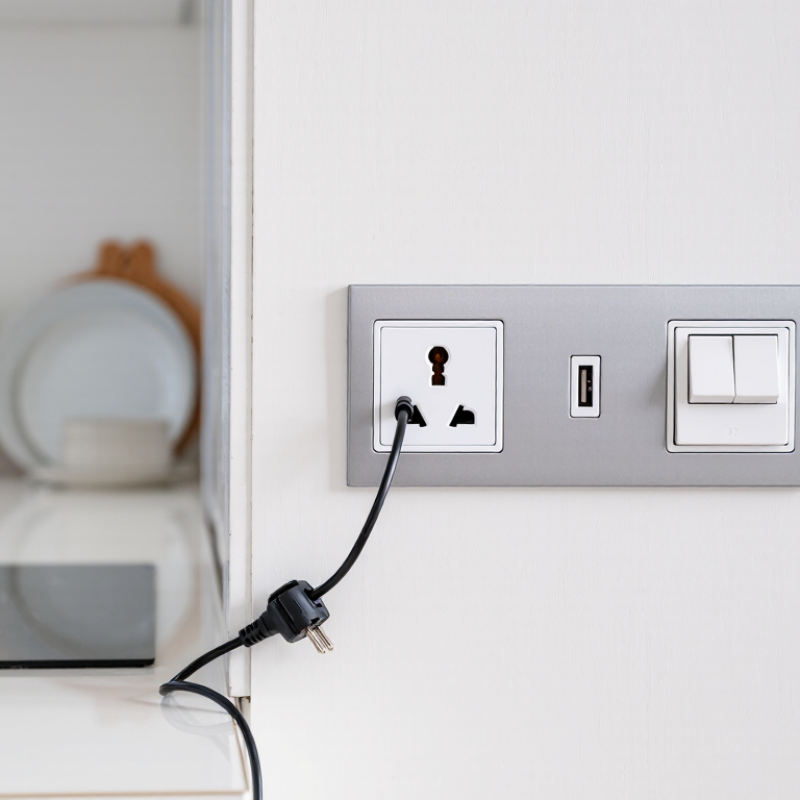
Before buying an electrical socket, identify the plug type used by your appliances and the socket pattern accepted where it will be installed. Shapes vary, and a plug that seems to fit may not make a safe connection. Looks can mislead. Check whether the appliance needs an earth connection, then choose a socket designed to provide one where required.
The local electrical standard matters too. Read the appliance label for its voltage and frequency, and compare those figures with the supply at the installation location. A socket changes the connection, not the electricity itself. A travel adapter cannot correct a voltage mismatch. Check the socket’s rated current and confirm that it suits the intended circuit and load. These details are easy to overlook when replacing an old, familiar-looking outlet.
Look for safety certification recognized in the place of installation, and check local requirements for features such as shutters or residual-current protection. Requirements can differ between rooms and building types, so a product suitable in one setting may not be suitable in another. In older homes, wiring condition can complicate a simple replacement; the socket alone does not show whether the circuit is safe. If the standard or wiring is unclear, ask a qualified electrician to verify compatibility before installation.
These are typical nominal supply voltages for the example markets shown. Socket and plug types commonly used include A/B in the United States, A in Japan, D/M in India, G in the United Kingdom, and I in Australia. Japan’s supply frequency varies by region (50 or 60 Hz). Always check the socket standard and the voltage and frequency printed on your appliance before buying or connecting it; plug shape alone does not confirm electrical compatibility.
Before buying an electrical socket, check the appliance’s nameplate for its voltage and current requirements. You may see volts (V), amps (A), or watts (W). Compare these figures with the socket’s rating and your local supply. A plug that fits does not prove the appliance is compatible. Looks can mislead. For example, connecting a 120-volt appliance directly to a 230-volt supply can damage it and create a serious hazard. A plug adapter changes shape, not voltage. If the ratings are unclear, ask a qualified electrician rather than guessing.
Current matters, too. The socket rating is only one part of the system; the circuit and wiring must also support the appliance’s load. Check the label on a kettle, heater, or other high-power device, and avoid relying on appearance alone. Grounding requirements matter as well. Never force a plug or remove its grounding pin to make it fit. It is easy to overlook this detail when shopping, and I would not assume a familiar-looking socket is suitable. When appliance instructions and socket markings do not clearly match, pause and get the setup checked.
When comparing electrical sockets, treat safety markings as evidence to verify, not decoration. Look for certification from a recognized independent testing body in the market where the socket will be used. Match the certification mark and model number to the product documentation; a familiar-looking logo alone proves little. Check the rated voltage and current against your circuit and appliances.
Pause here if details are missing.
Also inspect practical protections. Shuttered openings can help reduce accidental contact, while a sound earth connection supports fault protection where the installation requires it. These features do not replace correct wiring or a suitable circuit breaker.
Keep the packaging or photograph the label for an electrician. Small detail, big difference. In an older home, ask a qualified electrician to confirm the wiring and socket type before buying.
I would not trust appearance alone; a sturdy-feeling faceplate says little about internal testing. Certification schemes vary by region, so confirm that the exact model—not just its product family—has been tested for local use.
Electrical sockets should be judged by their internals, not just a smooth faceplate. NFPA reported an annual average of 32,620 U.S. home fires involving electrical distribution and lighting equipment from 2015 to 2019. That figure covers many kinds of equipment, not sockets alone, but it shows why sound components and careful fitting matter. Small details matter.
Tip: Compare contact materials, terminal construction, and the socket’s rated current and voltage. Copper-alloy contacts can provide reliable conductivity; a firm terminal should grip the specified wire without wobbling. Look for recognized independent safety certification for your region. A heavy housing is not proof of quality. Check the test mark and product documentation.
Match the socket to the wiring, wall box, and intended load. Check whether the terminals accept the wire type and gauge already installed; do not force a mismatch. Shutters and a heat-resistant body may also matter in family spaces. Installation requirements vary by location and circuit. Have a qualified electrician verify compatibility and follow local electrical rules. A tidy fit helps, but it cannot fix loose wiring behind the wall. I would not choose by appearance alone.
| # | What to Compare | Practical Checks | Installation and Safety Requirements |
|---|---|---|---|
| 1 | Local socket standard | Confirm the socket’s pin configuration and dimensions match the plugs used in your country or region. | Socket systems differ by location. Use a model approved for local use; an adapter does not make an incompatible installation safe. |
| 2 | Voltage and current rating | Read the marked voltage and current ratings and compare them with the intended circuit and appliances. | The socket rating must be suitable for the circuit and comply with local electrical rules. Do not assume sockets with similar appearances have the same rating. |
| 3 | Contact material and construction | Look for securely mounted, corrosion-resistant contacts and a solid body with no loose or uneven parts. Copper alloys are commonly used for electrical contacts. | Contact design and approved materials vary by product. Follow the manufacturer’s specifications rather than judging suitability by appearance alone. |
| 4 | Housing and heat resistance | Check that the housing is robust, well finished, and specified for electrical use, with suitable heat and flame performance. | Use products tested or certified to the applicable local standard. Do not install a damaged, cracked, or visibly defective socket. |
| 5 | Earthing or grounding provision | Check whether the socket has the earth contact required for the local plug system and the intended equipment. | An earth contact is effective only when connected to a correctly designed earthing system. Have the circuit checked by a qualified electrician if its condition is uncertain. |
| 6 | Shutters and child protection | For locations where added protection is useful, compare sockets with built-in shutters that cover live contacts when not in use. | Shutters are an additional protective feature, not a substitute for supervision, safe placement, or required electrical protection. |
| 7 | Protection for damp or dusty areas | Check the enclosure’s IP rating and the manufacturer’s stated suitability for the installation location. | Bathrooms, outdoor areas, and other special locations may have specific requirements for socket placement and protective devices. Follow local rules and use a qualified installer. |
| 8 | Terminal type and conductor compatibility | Compare screw or other terminal arrangements, and check the permitted conductor type and size in the product instructions. | Terminals must be suitable for the actual wiring. Incorrect conductor size, preparation, or tightening can lead to a poor connection and overheating. |
| 9 | Mounting dimensions and box fit | Check the socket’s dimensions, fixing points, depth, and compatibility with the existing electrical box and wall finish. | Allow enough space for wiring without crushing or sharply bending conductors. Confirm that the box and fixing method are suitable for the wall and installation. |
| 10 | Certification and installation instructions | Look for recognized conformity markings applicable in your region, clear ratings, and complete installation instructions. | Electrical work should comply with local codes and be performed by a qualified electrician where required. Isolate the circuit and verify it is de-energized before any authorized work. |
A low price can be tempting, but compare sockets with the same electrical rating and features. Check the product label and installation instructions, not just the shelf tag. A slightly higher price may include a sturdier faceplate or clearer technical documentation. Avoid paying extra for features your household does not need. Small details count.
Read the warranty before buying. Check how long it lasts, what faults it covers, and whether proof of purchase is required. A long warranty is useful only when its terms are clear. Keep the receipt and product paperwork together; they are easy to misplace. If the seller cannot explain the coverage, pause and ask for written details. Warranty terms vary.
Think about maintenance, too. Smooth, durable surfaces are easier to wipe clean, while loose-fitting covers can collect dust around their edges. Choose a socket suited to the room and its expected use, and follow its care instructions. Never clean or inspect electrical parts while they are live. If a socket feels warm, looks damaged, or makes unusual sounds, stop using it and contact a qualified electrician. I still find upkeep easy to overlook when comparing prices. A little planning helps avoid that mistake.
WhatsApp us