
What Is High Purity Humate Used For?

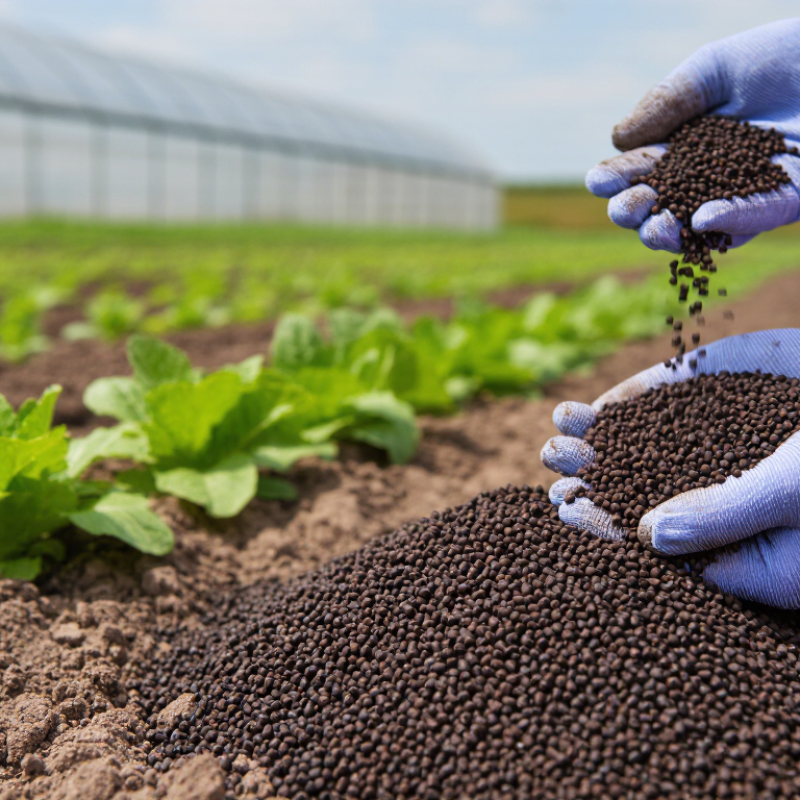
High Purity Humate is used mainly in agriculture and horticulture as a concentrated source of humic substances. It may be applied to soil or included in fertilizer programs, depending on its composition and product label. Growers use humate products to support soil conditioning and nutrient management. The exact response can vary with crop, soil type, water quality, and application rate. There is no universal result.

The need for careful soil management is well documented. The FAO and Intergovernmental Technical Panel on Soils reported in Status of the World’s Soil Resources (2015) that about 33% of the world’s soils were moderately to highly degraded. That global finding describes a broad challenge; it does not show that humate alone can reverse soil degradation. A product’s purity, soluble content, source material, and testing methods all matter. Check the technical specification, not just the front label.

In practical terms, High Purity Humate may fit into a measured nutrient plan, from greenhouse beds to field crops. A grower might compare treated and untreated plots, recording soil conditions and crop response over time. Small trials help. Results can disappoint, too. Claims about faster growth or improved nutrient uptake should be judged against reliable product data and local conditions. A careful overview of its uses starts with what the material contains, how it is applied, and what evidence supports the expected benefit.
What Is High Purity Humate Used For?

Definition and Composition of High-Purity Humate

High-purity humate is a concentrated material derived from humic substances formed as plant and other organic matter decomposes over long periods. In many products, humate refers to salts of humic acids, commonly combined with potassium or sodium. “High purity” generally means fewer unwanted mineral residues and processing by-products. It does not describe one universally agreed grade, so the term alone is not enough.

Its composition is naturally complex. The main components are usually humic substances, including humic and fulvic fractions, along with small amounts of minerals, moisture, ash, and counter-ions. The exact balance depends on the original deposit and the purification method. It may look like a dark powder or granular material, but appearance cannot confirm composition.

Testing matters.

A reliable specification should report relevant measurements, such as humic content, moisture, and insoluble residue. Even then, results need context: testing methods can differ, and the fractions do not behave like single, uniform molecules. This variation is easy to overlook.

Key Properties That Influence Its Applications

What Is High Purity Humate Used For?
Key Properties That Influence Its Applications

High purity humate is used mainly to support soil conditioning and plant nutrient management. Its usefulness depends on its composition, not just the “high purity” label. Humic substances contain functional groups that can bind some nutrients and interact with soil particles. In practice, this may help nutrients remain available around roots. It is not a stand-alone fertilizer, and results vary with soil type, crop, and application rate. That distinction matters.

Solubility is another key property. A water-soluble humate can be easier to mix into irrigation water or spray solutions, while insoluble material may suit soil incorporation better. Product pH, mineral content, and source also affect handling and performance. Lower unwanted ash or contaminants can improve consistency, but specifications should be checked rather than assumed. Soil tests help guide decisions. Humate cannot correct every nutrient deficiency.

Tips: Check the label for solubility, pH, and guaranteed composition. Test a small area before broad use, and follow the stated dilution rate. Avoid mixing it with other inputs until compatibility is confirmed; a jar test can reveal settling or clumping. Not glamorous, but useful.

What Is High Purity Humate Used For? — Key Properties That Influence Its Applications

Key Property What It Means How It Influences Use Common Application Practical Consideration
Humic-substance content and purity A higher proportion of humic substances, with fewer unwanted mineral or organic impurities, provides a more consistent material. Supports predictable formulation and helps users compare products by composition rather than appearance alone. Agricultural formulations, research, and industrial products requiring defined material specifications. “High purity” is not a universal grade. Check the product specification and analytical method used to determine humic content.
Solubility and counter-ion Humate solubility depends on factors including pH, water chemistry, and whether the humate is associated with potassium, sodium, calcium, or other ions. More soluble forms are generally easier to mix into liquid products; some forms may precipitate or disperse poorly in hard or acidic water. Liquid soil amendments, fertigation blends, and other aqueous formulations. Check compatibility with the intended water and fertilizer mixture. Do not assume every humate dissolves completely.
Functional groups and cation-exchange behavior Humic materials contain oxygen-bearing groups, including carboxyl and phenolic groups, that can interact with positively charged ions. These interactions can influence nutrient retention and availability in soils, depending on pH, soil type, and the ions present. Soil conditioning and nutrient-management programs. Humate does not replace essential nutrients or guarantee improved crop response; results depend on site conditions and application rate.
Water interaction and aggregation Humic substances can affect water-holding behavior and soil aggregation, with outcomes varying across soil textures and organic-matter levels. May support soil physical condition and moisture management when used as part of an appropriate soil-management plan. Soil amendments for agricultural and horticultural soils. It is not a substitute for irrigation management, organic-matter inputs, or measures that address drainage and compaction.
Metal-binding behavior Humic substances can bind or complex certain metal ions; the strength and outcome depend on pH, metal type, and surrounding chemistry. Can change the mobility or availability of metals rather than simply removing them. Soil and water research, and selected environmental-management applications. Binding may reduce or increase mobility in different conditions. Site testing and appropriate environmental assessment are important.
Surface activity and dispersibility Humic materials can interact with particle surfaces and influence dispersion or suspension behavior in some systems. May be useful where interaction with mineral particles or formulation stability is relevant. Selected industrial formulations and mineral-processing research. Performance is formulation-specific; test compatibility, settling, and stability under actual operating conditions.
Source and batch consistency Composition can vary with the source material and processing method, including the relative proportions of humic and other organic fractions. Consistency affects solubility, color, ash content, and performance from batch to batch. Any application that requires repeatable handling or product performance. Review a current certificate of analysis and relevant safety documentation for each supplied grade.

Note: Humate is a broad term for salts or materials derived from humic substances. Its properties and permitted uses depend on composition, formulation, local regulations, and the intended application.

Uses in Agriculture and Soil Management

High-purity humate is used in agriculture to support soil structure and nutrient management. Its humic compounds can help soil hold nutrients and water near plant roots. In a dry, sandy bed, that may mean less rapid nutrient loss after irrigation. In heavier soil, improved aggregation can help create small air spaces. Effects depend on soil type, crop, and application method. Humate is not a substitute for fertilizer or sound irrigation.

Farmers may apply it to soil, compost, or growing media, following the product’s directions and local agronomic advice. A soil test can reveal whether the field needs attention beyond organic amendments. Small trial strips are useful: compare treated and untreated areas, then track growth, moisture, and yield. Changes may be subtle. A greener crop alone does not prove better soil health, and responses can vary from season to season. That uncertainty matters. Use humate as one part of a broader plan that includes suitable nutrient levels, crop rotation, and careful water management.

Industrial and Environmental Applications

What Is High Purity Humate Used For?

Industrial and Environmental Applications

High-purity humate is a soluble form of humic substances, used where consistent composition matters. In industrial operations, it may be evaluated as a dispersant or binder in mineral processing and drilling fluids. It can also help condition wastewater by interacting with certain dissolved metals. Results depend on water chemistry, dosage, and the specific humate; bench testing matters.

Environmental uses include soil treatment and wastewater polishing. Humic substances can bind some metals, but binding does not always mean permanent immobilization. Changes in pH or dissolved salts may release them again. UNEP’s Global Resources Outlook 2024 projects global natural-resource extraction could rise 60% by 2060 from 2020 levels. That pressure makes careful process design important, not a reason to treat humate as a cure-all. WHO and UNICEF’s 2023 Joint Monitoring Programme estimated 2.2 billion people lacked safely managed drinking water in 2022; humate is not a disinfectant or substitute for validated treatment.

Tips: Test a small sample under real operating conditions. Track pH, turbidity, and dissolved metals before and after treatment. Keep a control sample. The result may be less tidy than expected.

Factors Affecting Product Selection and Safe Use

High-purity humate is used in soil and crop programs to support soil structure and nutrient availability. Product choice should match the job: a dry granule may suit soil application, while a soluble grade can be easier to meter through irrigation. Check the stated humic and fulvic content, solubility, and recommended application rate. “High purity” alone does not explain how the material was tested or what else it contains. Ask for a recent analysis showing composition and relevant contaminant limits. A product sheet can look reassuring; field conditions still matter.

Consider soil type, crop, water quality, and application equipment before buying. In alkaline or salty soils, performance may differ from results described for other conditions. Humate is not a complete fertilizer, and more is not automatically better. Follow the label, wear gloves, and avoid breathing dust when handling dry material. Keep it away from children and pets. For liquid products, test a small area or perform a jar test before mixing with fertilizers or other inputs; compatibility can vary. Start cautiously. Record the rate and observe crop response, though one season may not tell the whole story. If the supplier cannot provide clear directions or composition data, pause and seek qualified local advice.

What Is High-Purity Humate Used For?

Product-selection checks for agricultural use and safe handling

Humate products are commonly selected for soil and crop-management applications. This qualitative screening-priority scale is an illustrative decision aid, not measured product-performance data. Check the product’s intended-use label, composition, contaminant testing, application instructions, and safety information before use.