10 Essential Tips for Using Plastic Masterbatch Effectively
In the world of manufacturing, plastik masterbatch plays a crucial role. It is a concentrated mixture used to add color and functional properties to plastics. However, achieving the best results with plastik masterbatch is not always straightforward. Many factors can impact its effectiveness.
Properly measuring the amount of masterbatch is essential. Too little can lead to dull colors, while too much can weaken the material. It’s also vital to consider the type of polymer being used. Each polymer may require a unique approach. Testing various ratios is often necessary.
Furthermore, the processing conditions can significantly affect performance. Temperature and mixing time must be monitored closely. Many manufacturers overlook these details. In such cases, they may end up with subpar products. By adhering to these essential tips, users can improve the outcomes of their production processes.
Understanding Plastic Masterbatch: Definition and Applications
Plastic masterbatch is a concentrated mixture of pigments and additives used in plastic production. This innovative solution enhances the color and properties of plastics. Its applications range from packaging materials to automotive parts. Many industries rely on plastic masterbatch to improve product quality and visual appeal.
When using plastic masterbatch, start with a clear understanding of the required properties. Different masterbatches offer varying levels of opacity and brightness. Being precise in this choice can save production time and material costs. Don’t forget to test the masterbatch with your specific resin. Compatibility matters. Sometimes, what works in theory doesn’t perform well in practice.
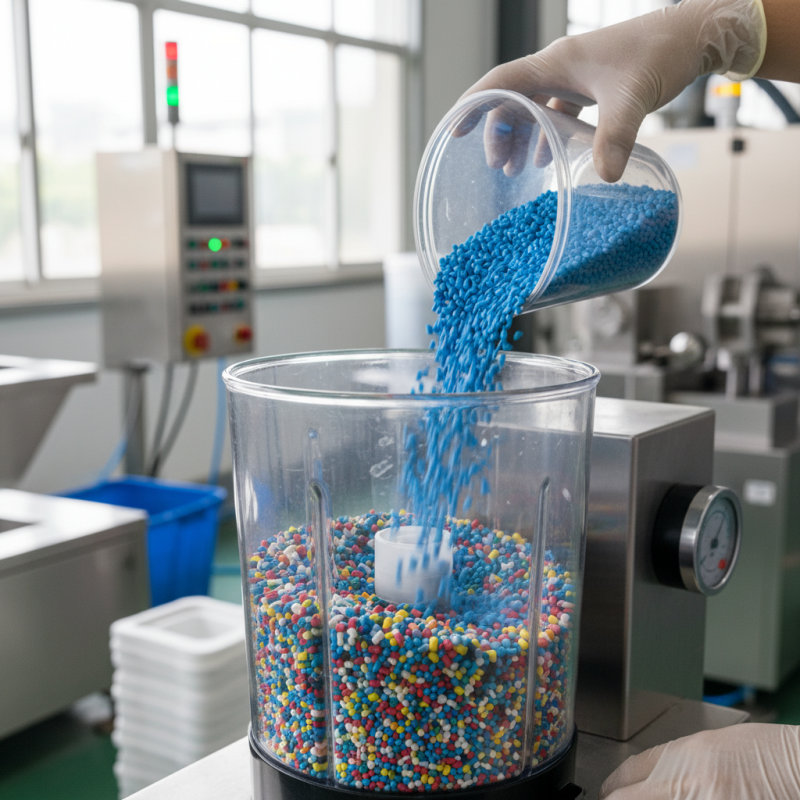
Another important tip is to control the addition rate during mixing. Adding too much can lead to undesirable effects, like poor processing or reduced strength. Monitor your results closely and be ready to adjust. It’s a trial-and-error process. Make sure to document everything. This way, it’s easier to refine your approach over time and avoid repeating mistakes. Experiment with different techniques, but keep in mind that not every method suits all types of plastics. Adaptability is key.
Selecting the Right Type of Plastic Masterbatch for Your Needs
Choosing the right type of plastic masterbatch is crucial for successful applications. Different projects require varying characteristics, such as color intensity or UV stability. It’s essential to identify specific needs before selecting a masterbatch. For instance, industries like packaging may prioritize durability and flexibility, while automotive parts might demand heat resistance. Each project has distinct requirements, which can lead to confusion if not properly addressed.
Understanding the types of masterbatches available can simplify the selection process. There are color masterbatches, additive masterbatches, and even specialty options. It’s vital to match the masterbatch type with the resin being used. Not aligning these elements could result in poor dispersion or compromised product quality. Testing small batches is often overlooked but should be considered. This enables users to assess performance before committing to larger orders, helping avoid costly mistakes.
It’s common to face challenges when selecting masterbatches. Sometimes, the expected outcome doesn’t align with reality. Communication with suppliers can also be vague. Detailed product specifications are necessary but often lacking. Don’t hesitate to ask for samples and gather feedback from your team. This process can uncover insights and improve the final product. Being thorough in this stage can enhance overall application success.
Optimal Dosage Guidelines for Effective Plastic Masterbatch Use
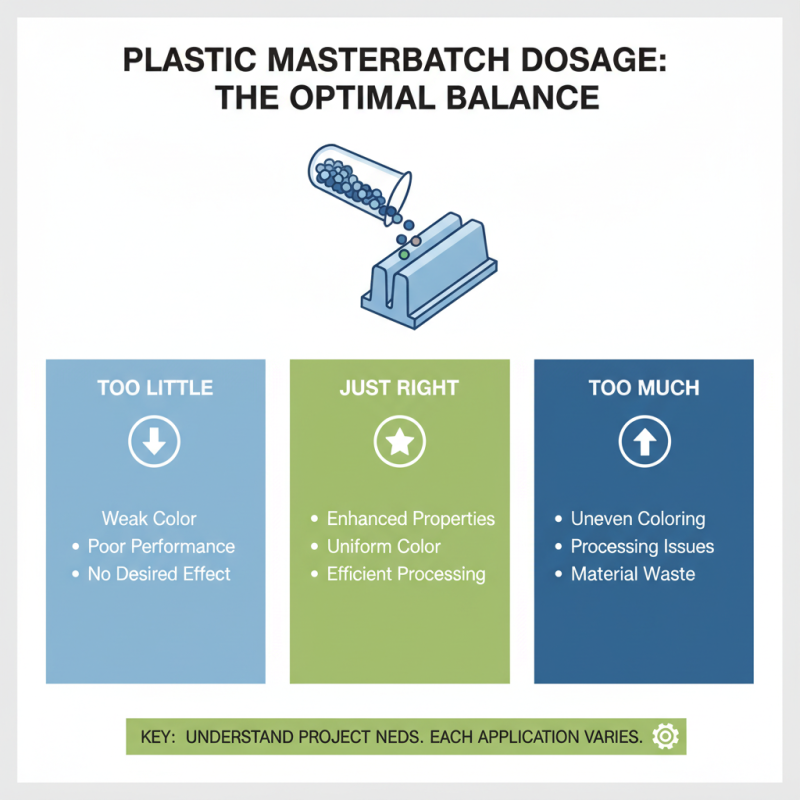
When working with plastic masterbatch, optimal dosage guidelines are crucial. The right amount can enhance the product's properties. However, getting it exactly right is often tricky. Start by understanding the specific requirements of your project. Each application may need a different concentration. Too little may fail to achieve the desired effect, while too much can lead to issues like uneven coloring or poor processing.
Testing is vital. Conduct small-scale trials to find the ideal dosage. It's easy to guess, but real-world tests reveal the truth. Sometimes, the results may surprise you. Adjusting the dosage based on trial outcomes can save time and resources in the long run. Keep a record of what works best.
Consider environmental factors as well. Temperature and humidity can affect the mixing process. A stable environment helps in achieving consistent results. Remember that even minor variations can lead to significant differences. Reflect on each batch's performance. This approach will guide future projects and improve overall outcomes.
Processing Techniques to Enhance Masterbatch Performance
When working with plastic masterbatch, processing techniques play a crucial role in enhancing performance. Pay attention to temperature control during extrusion. Too high temperatures may degrade materials. On the other hand, insufficient heat can lead to poor dispersion. Proper temperature settings ensure even mixing and product consistency.
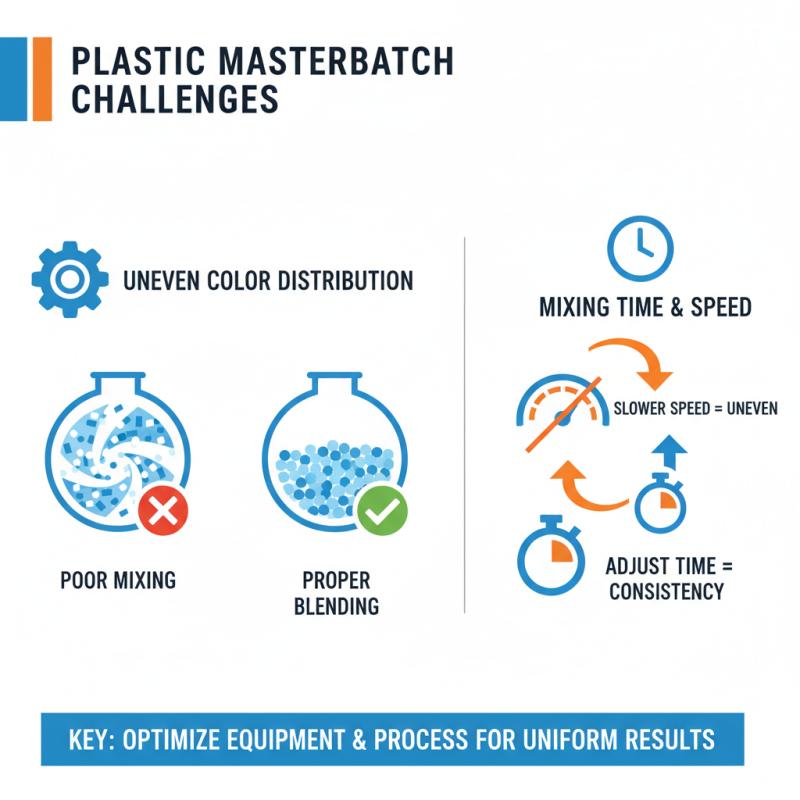
Consider the type of equipment used for blending. Using high-shear mixers can improve the distribution of masterbatch in the resin. However, these machines require careful monitoring. Sometimes, the blending time may be too short, leaving clumps. Adjusting the mixing duration can make a notable difference.
Testing different processing speeds is also important. Slower speeds may improve mixing but increase cycle time. Speed adjustments should be made according to product requirements. Getting this balance right is often a challenge. Reflecting on past experiences can guide future choices. Each production run offers lessons for improvement.