How to Effectively Use Master Batch in Plastic Production?
In the realm of plastic production, the use of master batch has become essential. Industry expert Dr. Sarah Thompson, a leading figure in polymer technology, states, "Master batch is truly transformative for achieving color accuracy and consistency." This insight captures the core of why manufacturers are turning to master batch formulations.
Utilizing master batch effectively can streamline production and enhance product quality. Producers can finely tune color and additives, ensuring uniformity throughout. However, the process also comes with challenges. It requires careful measurement and blending, which can lead to inconsistencies if not executed properly.
Understanding the intricacies of master batch is crucial. Many companies may rush past the preparation stages, leading to wasted materials and time. It's important to invest thought into the selection of master batches. The benefits can be significant but demand attention to detail. Each decision affects the final product, and that’s where the art lies in its application.
Understanding Masterbatch and Its Role in Plastic Production
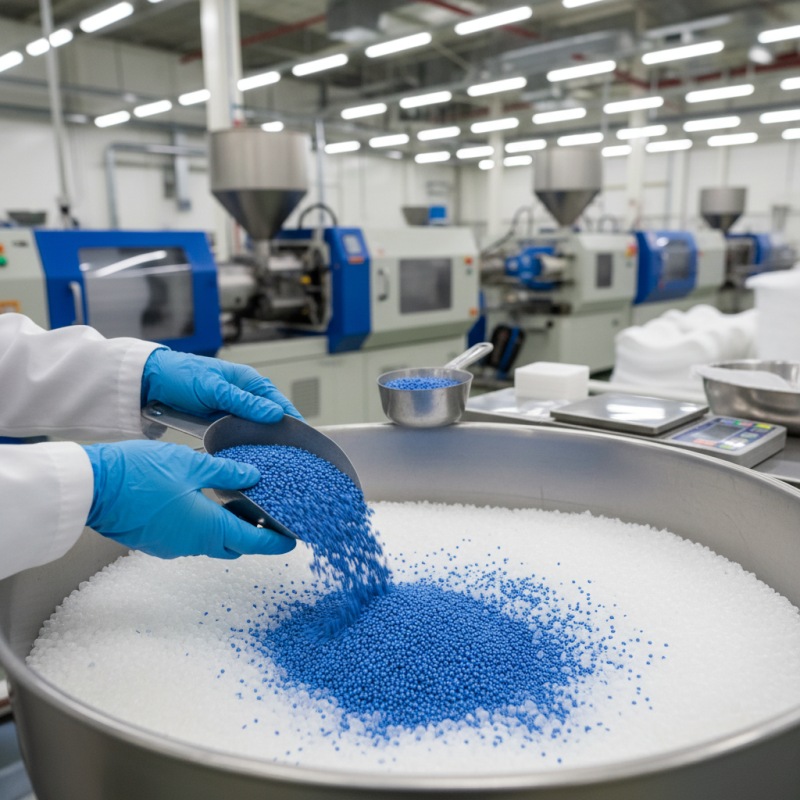
Masterbatch is a concentrated mixture used in plastic production. It contains pigments, additives, and carriers. The goal is to enhance the properties of the base polymer. Masterbatch simplifies the coloring process. It allows for consistent color and performance. This method reduces waste and improves the final product quality.
Understanding how masterbatch works is key. The selection of masterbatch type is crucial. Each application requires different characteristics. For instance, certain products demand high flexibility, while others need strength. These specifics impact the choice of masterbatch and its formulation. The blending process is also significant. Inconsistent mixing can lead to uneven color distribution.
Using masterbatch in production has challenges. Not all producers know which masterbatch to choose. Trial and error can be costly. Some may overlook the importance of proper storage. Expired or improperly stored masterbatch can ruin batches. Continuous learning is vital in mastering this material. Each choice affects the final output quality. Understanding these nuances can lead to better production outcomes.
Usage of Masterbatch in Different Plastic Products
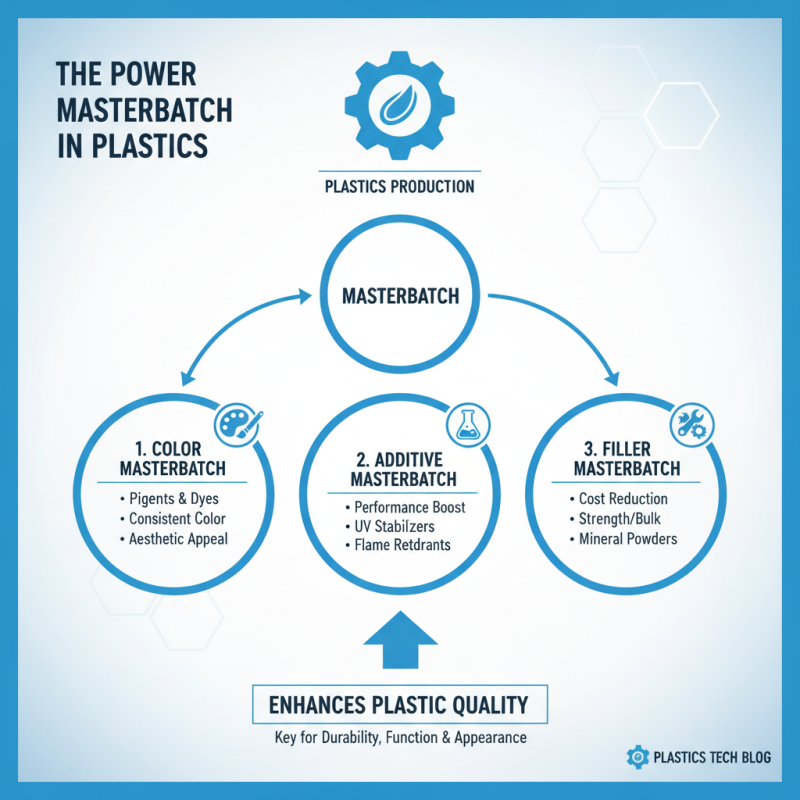
Types of Masterbatch: Color, Additive, and Filler Variants
Masterbatch plays a crucial role in plastic production. It is a concentrated mixture of additives, colorants, or fillers. The right masterbatch can enhance the quality of plastic products. There are three primary types of masterbatch: color, additive, and filler variants.
Color masterbatches contain pigments that provide the desired hue to plastics. According to a Frost & Sullivan report, the color masterbatch market is projected to grow at a CAGR of 5.2% through 2026. This growth is driven by increasing demand in packaging and automotive industries. Additive masterbatches include stabilizers and antioxidants. These additives improve thermal stability and prolong product life. The global additive masterbatch market is showing significant growth, with a rise in demand noticeable across various sectors.
Tips: Choosing the right masterbatch is essential. Always evaluate compatibility with your resin. Conduct testing to ensure optimal performance. Filler masterbatches, meanwhile, enhance mechanical properties while reducing costs. They often use materials like calcium carbonate or talc. However, be cautious; excessive filler may compromise transparency and finish. Balance is key in your formulation.
Color masterbatch also has its challenges. Variations in raw materials can lead to inconsistencies. It's vital to maintain strict quality control. Ultimately, understanding each masterbatch type will lead to better-quality products in the competitive plastic market.
Proper Dosage: Calculating Masterbatch Requirements for Production
Calculating masterbatch requirements correctly is crucial in plastic production. Several factors influence the dosage. Industry reports suggest a typical masterbatch loading of 2% to 10% by weight. However, specific applications may require adjustment. Understanding the type of plastic and desired properties is key.
Different polymer blends demand different amounts of masterbatch. For example, a high-density polyethylene (HDPE) may require a lower dosage compared to polystyrene. An often overlooked aspect is compatibility. Some formulations may not mix well. This can lead to defects in the final product.
Testing is essential. Many companies underestimate the importance of small-scale trials. Often, the initial calculations can feel accurate but lead to poor outcomes. Monitoring production closely is necessary. Observing batch consistency can highlight issues early on. Relying solely on standard guidelines can mislead manufacturers. Each production scenario is unique.
Blending Techniques: Ensuring Uniform Distribution in Plastics
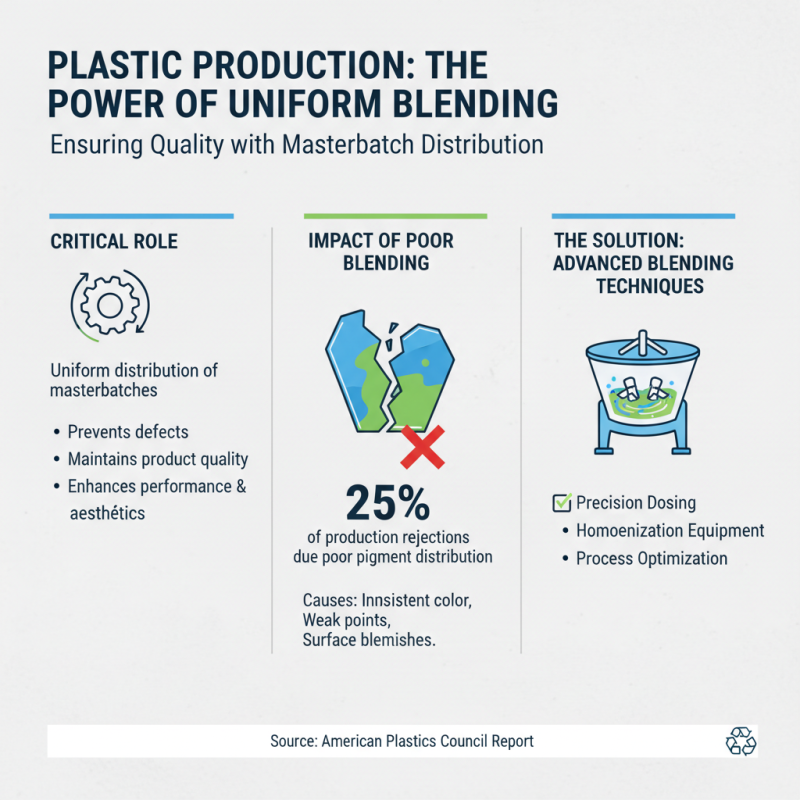
Blending techniques play a critical role in ensuring the uniform distribution of master batches in plastic production. Achieving uniformity is essential for maintaining product quality. According to a report by the American Plastics Council, inconsistent blending can lead to defects, impacting performance and aesthetic quality. Approximately 25% of plastic production rejects are due to poor pigment distribution.
One common method is the use of high-shear mixers. These mixers can break down clumps and ensure even distribution of additives. Research shows that using high-shear mixers can reduce variability by up to 30%. However, not all materials respond well to this technique. Some polymers may degrade under high shear conditions.
Another approach involves pre-blending during the pelletizing process. This can enhance compatibility between master batches and base resins. However, operators must monitor the blending process closely. Even slight deviations can lead to uneven distributions. The use of ineffective blending techniques can double production costs in some cases, highlighting the importance of proper training and equipment selection.
Quality Control: Testing and Evaluating Masterbatch Performance
When using masterbatch in plastic production, quality control is crucial. The performance of masterbatch can significantly affect the final product quality. Testing methods must be robust. Often, simple visual inspections are inadequate. A thorough evaluation requires several tests. These include color matching, dispersion quality, and additive performance.
Evaluating color consistency involves comparing samples under specific lighting conditions. This can reveal flaws in the formulation. Additionally, dispersion tests can show the uniformity of pigment distribution. Uneven dispersion may result in streaks or blotches. It's essential to use precise methods, yet many manufacturers overlook this. Such lapses can lead to costly defects.
We also consider the mechanical properties of the plastic. Tests for tensile strength and flexibility should not be neglected. These tests reveal how the masterbatch performs under stress. Sometimes, results are not as expected. A re-evaluation of the formulation may be necessary. This reflection can drive improvements in both processes and outcomes. Ultimately, maintaining strict quality control ensures better final products.
How to Effectively Use Master Batch in Plastic Production? - Quality Control: Testing and Evaluating Masterbatch Performance
| Masterbatch Type |
Color Properties |
Additive Functionality |
Processing Temperature (°C) |
MFI (g/10min) |
UV Resistance (Hours) |
Cost per Kg ($) |
| Black Masterbatch |
Deep Black |
UV Stabilizer |
180 - 230 |
3.5 |
2000 |
1.20 |
| White Masterbatch |
Brilliant White |
Opacifier |
180 - 220 |
2.8 |
1500 |
1.50 |
| Color Masterbatch (Red) |
Vibrant Red |
Colorant |
190 - 240 |
2.5 |
1200 |
2.00 |
| Additive Masterbatch |
Transparent |
Antioxidant |
200 - 250 |
4.0 |
N/A |
1.80 |