Choosing the right plastic filler masterbatch can greatly influence your product quality. According to industry expert Dr. Emily Chen, "The proper selection impacts both cost efficiency and performance." Her insight highlights the importance of understanding your specific needs.
Plastic filler masterbatch serves various purposes in production. They enhance properties such as strength, opacity, and cost-effectiveness. Selecting the wrong type can lead to unsatisfactory results. For instance, a filler that is too heavy can compromise the product's integrity.
Many manufacturers face challenges during this selection process. Often, they overlook the specific requirements of their applications. Knowing the type, compatibility, and performance criteria can make a significant difference. Careful consideration can prevent wasted resources and improve final outcomes. Simply put, the right plastic filler masterbatch is essential for success in the industry.
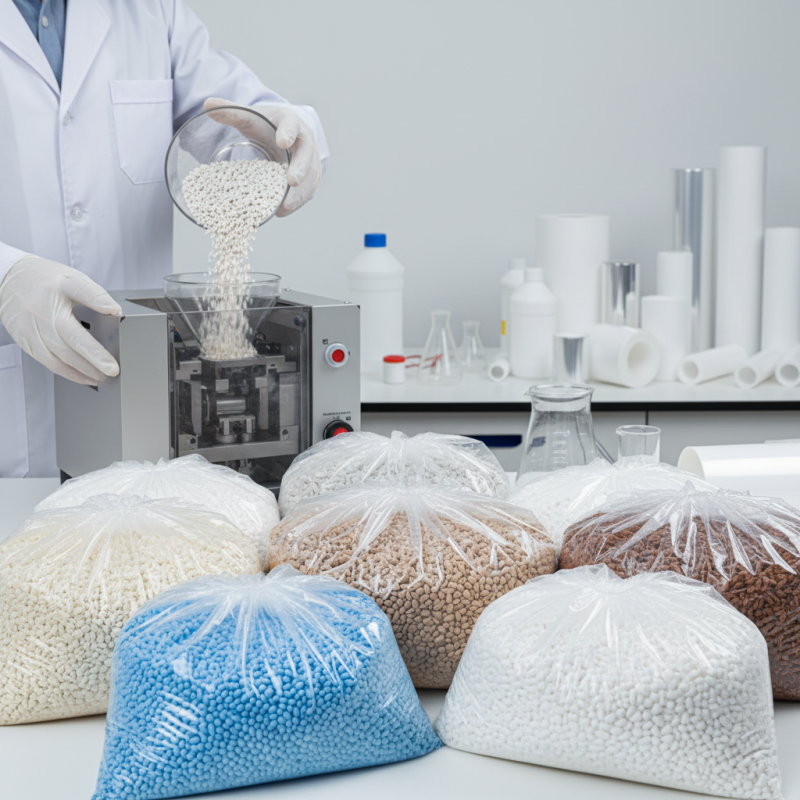
Understanding plastic filler masterbatches is crucial for effective material selection. These additives enhance the properties of polymers, improving strength and cost-effectiveness. According to a recent industry report, the global plastic filler masterbatch market is projected to grow by 6.5% annually. This growth reflects the rising demand for lightweight and durable materials.
Plastic fillers, such as calcium carbonate and talc, play vital roles in various applications. They help reduce production costs while maintaining quality. However, choosing the wrong filler can lead to issues. For instance, excessive filler usage might weaken the final product or alter its aesthetic. Awareness of the specific requirements of each project is key.
Balancing cost and performance is challenging. Some fillers may lower expenses but compromise mechanical properties. Recent data highlights that over 30% of companies experience issues related to filler selection. Understanding the characteristics of each filler and its compatibility with polymers can prevent costly mistakes. Manufacturers should be ready to test and refine their choices based on practical outcomes.
| Filler Type | Typical Applications | Impact on Properties | Recommended Loading Level |
|---|---|---|---|
| Calcium Carbonate | Packaging, Toys | Improves rigidity, reduces cost | 10-30% |
| Talc | Automotive Parts, Film | Enhances stiffness and tensile strength | 5-15% |
| Glass Fiber | Construction, Electrical Components | Increases strength, thermal stability | 10-30% |
| Wood Flour | Composites, Decking | Enhances aesthetics, biodegradable | 20-50% |
| Microballoons | Lightweight Applications, Coatings | Reduces weight, improves insulation | 10-25% |
Identifying your specific application requirements is crucial when selecting the right plastic filler masterbatch. Different industries demand different properties, such as impact resistance, opacity, and thermal stability. For instance, the packaging sector often needs fillers that enhance clarity while maintaining strength. According to a recent industry report, over 40% of packaging applications prioritize high transparency. This can be a critical factor in product visibility and customer appeal.
Additionally, consider the processing conditions of your application. High-temperature processes may require fillers that can withstand extreme conditions without degrading. Research indicates that fillers can impact tensile strength by up to 30% under stress. This means mismatched filler characteristics can lead to product failures.
Understanding the specific nature of your polymer blend also plays a role. Different polymers interact differently with fillers. Selecting a masterbatch that complements the polymer matrix is essential. Many new fillers may not provide a seamless integration, leading to inconsistencies in the final product. This is a common oversight and merits careful evaluation. Don't underestimate the importance of testing filler compatibility with your formulation, as it can directly affect production efficiency and product quality.
Choosing the right plastic filler masterbatch requires understanding the types of filler materials available. Common filler materials include calcium carbonate, talc, and clay. Each of these has unique properties that affect the final product. For example, calcium carbonate increases stiffness, while talc can enhance opacity and surface finish.
When selecting a filler, consider the end-use of your product. Will it be used indoors or outdoors? How much stress will it endure? These factors matter. Test different fillers to see the impact on strength and flexibility. Keep track of your findings. Sometimes a filler does not perform as expected.
Tips:
1. Small-scale tests can save time.
2. Don’t overlook the cost vs. performance ratio.
3. Reflect on your product's appearance. A filler might alter the color or texture.
Make sure to balance performance with aesthetic needs. The goal is to find a filler that meets your requirements without compromising quality. Experimentation is key to discovering the right combination.
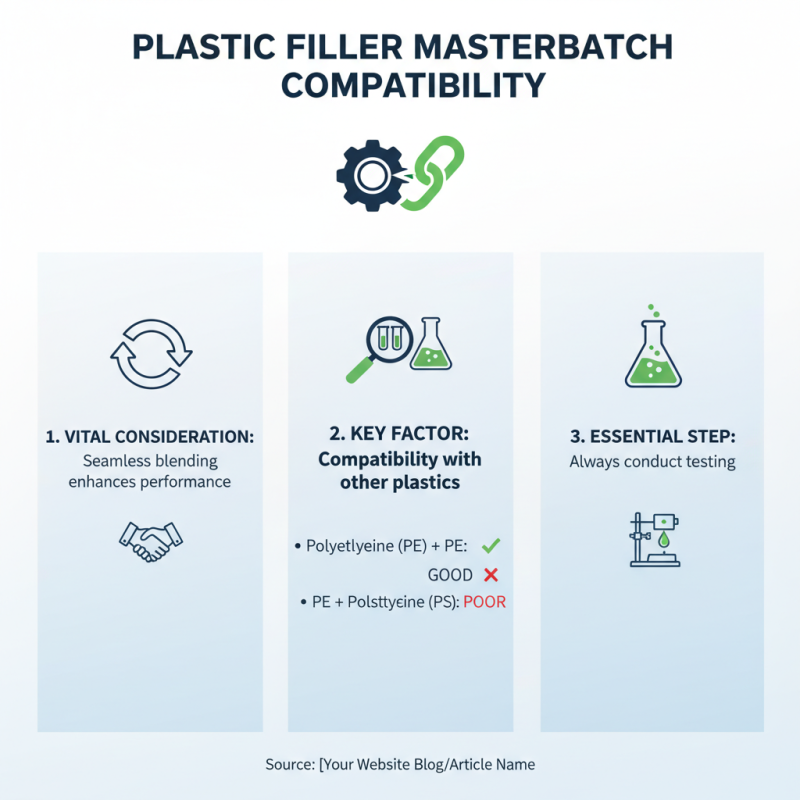
Choosing the right plastic filler masterbatch involves several vital considerations. One critical factor is compatibility with other plastics. Using fillers that blend seamlessly with your chosen resin can enhance performance. For example, a polyethylene masterbatch may work well with specific polyethylene types but not with polystyrene. Testing is essential.
Mismatch can lead to issues such as poor adhesion and weak mechanical properties. It may seem simple, but ensuring that materials work well together requires careful selection. Many products fail because of overlooked compatibility. Testing samples in your production environment can reveal potential problems early on. Pay attention to processing temperatures, as these can also affect compatibility.
Moreover, consider the end application of your product. If it requires specific durability or flexibility, this will influence your choice. Sometimes, results vary dramatically even within the same general category of plastics. It’s crucial to conduct thorough research. Collaborate with your material supplier for insights. This collaboration can improve your chances of finding the best match.
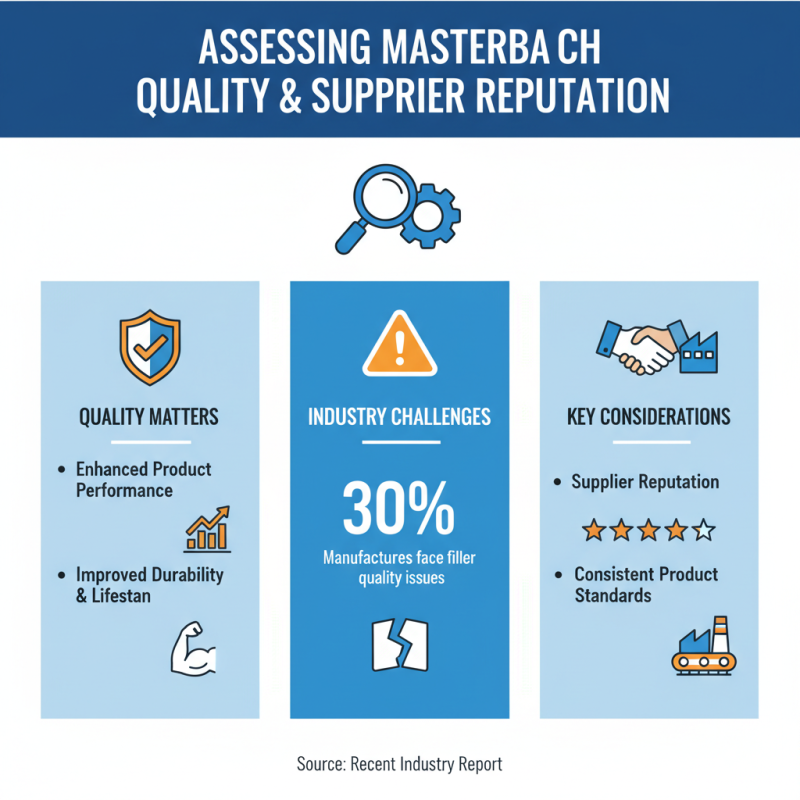
Choosing the right plastic filler masterbatch can be challenging. Assessing quality is crucial. High-quality masterbatches ensure better product performance and durability. A recent industry report indicates that around 30% of manufacturers face issues with filler quality affecting their final products.
Supplier reputation plays a key role. Trustworthy suppliers often provide detailed specifications and testing reports. They understand market needs and exhibit transparency. According to data from the Plastics Industry Association, 75% of respondents highlight supplier reliability as a priority in their purchasing decisions. Engaging with reputable suppliers can prevent costly mistakes.
It's worth noting that not all suppliers maintain consistent quality. Some may have fluctuations in product performance. Thus, seeking customer feedback and reviews is essential. Often, companies neglect the value of hearing from other users. Finding the right balance between cost and quality can lead to better long-term results. The emphasis on quality over price is critical in enhancing operational efficiency.
WhatsApp us