How to Choose the Right Mining Dredge for Your Project
Choosing a Mining Dredge begins with the ground conditions, not the equipment brochure. The right machine must handle the deposit, water depth, production target, and distance to the discharge point. A dredge sized for soft sand may struggle with compacted material or coarse gravel. Conditions vary.
Start by describing the material accurately. Include particle size, expected solids concentration, and any changes across the deposit. Then map the working area: note water depth, shoreline access, seasonal levels, and the route for moving recovered material. These details affect pump selection, pipeline length, cutter requirements, and operating power. They also influence how often crews must reposition the dredge.
A supplier’s production estimate is useful, but it is still an estimate. Ask what material, pipeline setup, and operating hours support the quoted rate. Request comparable project data, equipment specifications, and a clear explanation of maintenance needs. A pump that looks efficient on paper may lose output over a long discharge line. That matters.
Compare options by total operating fit, not purchase price alone. Consider fuel or electrical supply, operator skills, spare-parts access, and the time required for routine service. Ask how the dredge performs when conditions differ from the survey; they often do. A thoughtful selection process cannot remove every uncertainty, but it can expose weak assumptions before mobilization. The best Mining Dredge is the one matched to verified site data, realistic output goals, and the crew’s ability to keep it working safely and consistently.
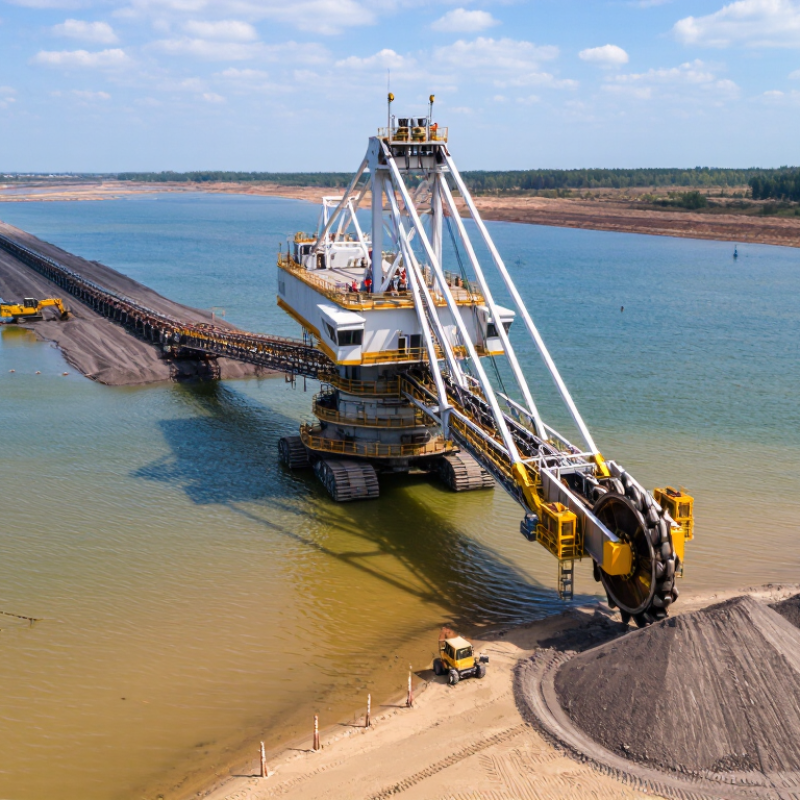
Define Your Mining Project’s Production and Material Requirements
Before comparing dredges, define the required output in dry tonnes per hour. Record annual target, productive hours, planned downtime, and acceptable material size. The USGS Mineral Commodity Summaries 2025 estimates U.S. construction sand and gravel production at about 960 million metric tons in 2024. That figure gives market context, not a production target for your site.
Sample the deposit across its depth and footprint. Measure particle sizes, clay and silt content, and the thickness of usable material. A single bucket sample can miss a sticky layer. That matters. Fine solids may settle in pipelines, while coarse gravel can increase wear and limit transport distance. State whether your target means in-situ volume, slurry volume, or recovered dry product. They are not interchangeable.
Convert the target into a realistic operating rate. For example, producing 500,000 dry tonnes over 2,000 productive hours requires 250 dry tonnes per hour, before allowing for interruptions. USACE Engineering Manual EM 1110-2-5025, Dredging and Dredged Material Management, addresses sediment characterization and production planning in dredging design. Use site samples and a controlled pump test to check your assumptions. Nameplate capacity alone is a weak basis; actual sediment can behave differently than expected.
Compare Dredge Types and Their Mining Capabilities
Mining dredges differ mainly in how they loosen material and move it. A cutter-suction dredge uses a rotating head to break compact layers, then pumps the slurry through a floating pipeline. It suits broad deposits with manageable clay or gravel, but hard boulders can slow production. A bucket-ladder dredge lifts material mechanically, making it useful for dense, coarse deposits where controlled excavation matters. Suction dredges work best in loose sand and fine gravel; they struggle when the bed is cemented. Small details matter: a few large cobbles can clog a suction line.
The USGS Mineral Commodity Summaries 2024 estimates global tin mine production at about 290,000 metric tons in 2023. Its gold estimate is about 3,000 metric tons. These figures describe total mine output, not dredge production; the distinction matters because the report does not separate dredged material. For a project, compare expected grain size, bed hardness, water depth, pipeline distance, and the need to recover fine particles. A bucket system may handle coarse material well, while a hydraulic system can move large volumes of suitable sediment. But “large volume” is not the same as high mineral recovery. That assumption can be wrong. Test representative samples, check likely slurry losses, and ask suppliers for production estimates tied to your actual deposit, not ideal test conditions.
Match Dredge Size and Equipment to Project Conditions
Choosing a mining dredge starts with the deposit, not the catalog. Measure water depth, sediment thickness, grain size, and the distance to the processing plant. Fine sand may travel readily as slurry, while gravel can settle in the line and demand more flushing or a larger pipe. The U.S. Army Corps of Engineers’ Engineering Manual, EM 1110-2-5025, treats material properties, pipeline conditions, and operating constraints as key dredging considerations. Field samples matter. A single test pit may not represent the whole deposit.
Size the dredge around required production and the hours it can actually operate. The USGS Mineral Commodity Summaries 2024 estimated U.S. construction sand and gravel production at about 900 million metric tons in 2023, showing the scale of demand—but that national figure cannot predict output at your site. Compare pump capacity with pipeline length, elevation changes, and the plant’s daily intake. Check whether the cutter, ladder, and hull can reach the working area as water levels shift. A larger unit may move more material, yet its draft and setup needs can limit access. I’d be cautious about relying on nameplate capacity alone; downtime, wear, and changing sediment often reduce real production. Cite site measurements and trial runs when refining the final equipment match.
Assess Site, Water, and Environmental Constraints
A mining dredge should match the ground beneath the water, not just the project’s tonnage target. Map water depth, seasonal levels, current speed, and access for pumps or support vessels. Then sample the bed at several points. A thin gravel layer over soft silt can change the required cutter, suction setup, and production rate. A neat spreadsheet can still miss a buried silt lens. The U.S. Army Corps of Engineers’ Engineering Manual 1110-2-5025 links sediment characterization with dredging-method selection; treat sampling as a design input, not paperwork.
Water quality matters just as much. Record pH, suspended sediment, and sensitive downstream uses before choosing a discharge or water-return plan. The U.S. EPA’s National Recommended Water Quality Criteria lists a freshwater aquatic-life pH range of 6.5–9.0. This is a screening reference, not a universal project limit; local standards and baseline conditions may differ. Small details matter. A clear-looking stream can still carry fine particles that remain suspended. Measure turbidity upstream and downstream during representative flow conditions, including after rain.
Environmental constraints can rule out an otherwise capable dredge. Check for fish-spawning periods, wetlands, protected habitat, and nearby water intakes with qualified local specialists. The USACE manual also supports evaluating sediment and dredged-material characteristics before work begins. Allow time for repeat sampling: one sample may not represent a variable deposit. If access, flow, or habitat conditions are uncertain, build flexibility into the equipment plan rather than assuming ideal operation every day.
Evaluate Costs, Maintenance, and Long-Term Performance
A mining dredge’s purchase price is only one part of its cost. Budget for mobilization, fuel, crew, wear parts, and lost production during repairs. Fuel deserves close attention: the U.S. Energy Information Administration reported an average U.S. on-highway diesel price of $4.21 per gallon in 2023. Treat that figure as a benchmark, not a site forecast; remote delivery and actual consumption can change the bill. Run scenarios using your expected operating hours and the dredge’s fuel use. Small assumptions add up.
Maintenance needs depend on the material and operating conditions. Abrasive sand can wear impellers and liners quickly, while long discharge lines increase pumping demands. Ask suppliers for service intervals and replacement-part costs, then compare them with project-level records in the U.S. Army Corps of Engineers’ Dredging Information System. Match material, haul distance, and project scale; a low headline cost may mislead. Check access to spare parts and repair support before mobilization. Track engine hours, downtime, fuel use, and daily production during operation. That matters. The numbers may expose a poor assumption. I would not treat predicted output as guaranteed: sediment, water depth, and operator practice can all shift performance over time.
How to Choose the Right Mining Dredge for Your Project
Compare typical planning considerations for cost, maintenance, and long-term performance.
Illustrative relative ratings from 1 (low) to 5 (high), not quoted prices or guaranteed performance. Actual costs and upkeep depend on site conditions, sediment, production targets, equipment configuration, and operating hours. Request project-specific estimates before selecting a dredge.