
Choosing Ceremonial Matcha Powder for a business is not just a color test. It is a sourcing decision that affects flavor, consistency, cost, and customer trust. Japan’s Ministry of Agriculture, Forestry and Fisheries reported 7,579 metric tons of green-tea exports in 2023. That figure covers green tea broadly, not matcha alone, but it signals growing international demand for Japanese tea. Buyers still need to assess each supplier and product on its own merits.
Start with origin, harvest details, milling method, and a recent certificate of analysis. Then examine the powder itself: vivid green color, a fine texture, and a fresh aroma can offer useful clues, but none proves quality by itself. Ask for a sample and prepare it using the method your customers will use. Taste it plain, then test it in a latte if that is your main menu application. Small differences matter. Ask suppliers how they protect the powder from heat, light, air, and moisture during storage and shipping. Confirm the lot number, packaging date, and traceability documents before placing a large order. Price matters, of course, but an unusually low quote deserves careful questions about grade, origin, and handling. A checklist helps, yet it cannot replace a tasting or a clear conversation with the producer. Even experienced buyers can miss a mismatch between ceremonial positioning and actual use. This guide explains how to compare suppliers, verify claims, and choose a powder that fits your business.
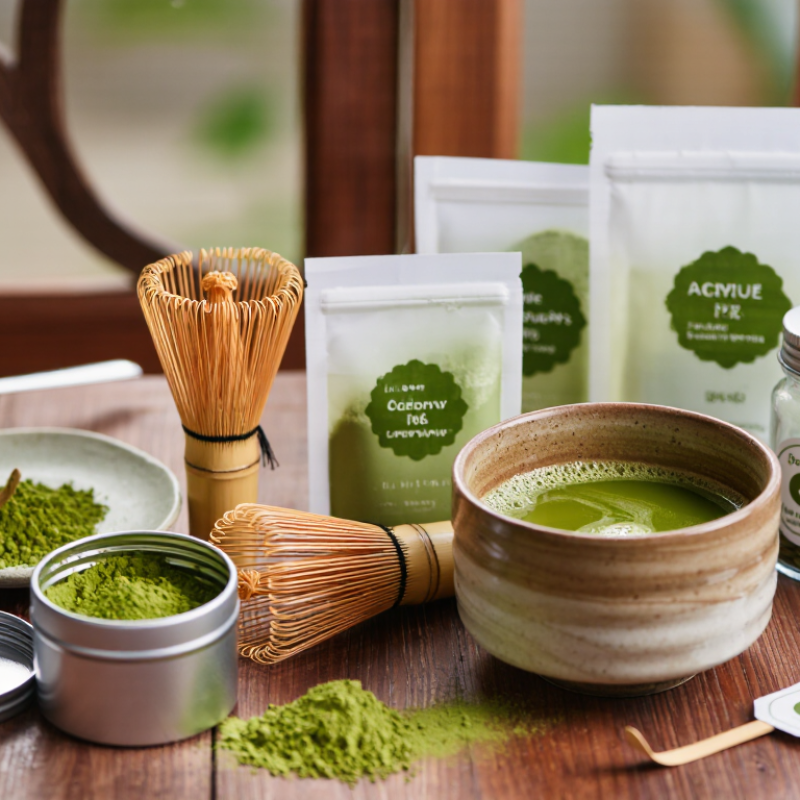
“Ceremonial matcha” sounds like a fixed technical grade, but it has no universal legal definition. Producers and sellers may use the term differently. One may emphasize young leaves, careful milling, or a smooth flavor; another may apply it mainly to a product intended for whisking with water. The label is a starting point, not proof.
For a business, compare samples rather than relying on the name. Whisk a small amount with warm, not boiling, water. Notice whether the powder disperses evenly, smells fresh, and tastes balanced rather than harsh or dull. A vivid green color can be useful, but lighting and photography can mislead. Taste matters. Even a careful tasting is subjective.
Ask suppliers for a written product specification, origin details, harvest or production information, and batch-level quality documents where available. Check whether the powder’s flavor and color remain consistent across samples. Also test it in the way customers will use it, since a matcha that works well on its own may taste different in milk or baked goods. These checks cannot make the term precise. They can make purchasing decisions more transparent, though some uncertainty remains.
For a business buying ceremonial matcha, trace the powder back to its raw material: tencha. Tea plants are shaded before harvest, often for several weeks, though timing varies by producer and region. This reduces direct sunlight and can influence the leaves’ color, aroma, and savory character. After picking, leaves are steamed and dried without the rolling used for many other teas. Stems and veins are removed, and the tencha is finely milled, traditionally with stone mills. The process matters. A bright green powder alone, however, cannot prove careful handling.
Ask suppliers for the growing region, harvest season, shading period, and processing details. Request a sample and prepare it consistently: sift the powder, add measured water, and whisk until a fine foam forms. Notice whether the aroma is clean and leafy, and whether bitterness overwhelms the taste. These checks are useful, but they are not laboratory tests. I still find some origin descriptions frustratingly broad; a precise-sounding label may leave important questions unanswered.
Tips: Ask for batch-specific sourcing documents, not only a general product sheet. Compare samples using the same water temperature and ratio. If a supplier cannot explain how its tencha is grown and processed, pause before making a large purchase.
For ceremonial matcha, ask how long the tea plants were shaded before harvest. Tencha is commonly shaded for about 20–30 days, though methods and timing vary by producer. Shade reduces direct sunlight and can influence the leaves’ color, aroma, and balance of sweetness and bitterness. It is not a quality score by itself.
Ask suppliers for harvest and shading details tied to the specific lot, rather than relying on a general product description. Some growers use layered shade coverings; others adjust coverage gradually. These choices can affect how the leaves develop. Longer shading does not automatically mean better matcha. Look closely.
When comparing samples, whisk each with the same water temperature and amount of powder. Note the green tone, aroma, texture, and whether bitterness feels clean or harsh. A vivid color can be appealing, but it cannot prove how the tea was grown or handled. Request traceable lot information and consistent specifications before placing a business order. I would not judge from one tasting alone; preparation changes the result, and a busy service setting may expose flaws that a careful sample cup hides.
Published matcha analyses report caffeine levels ranging from 19 to 44 mg per gram. That spread matters when you serve consistent portions or formulate a retail product. It does not mean every ceremonial powder falls within that range. Harvest, leaf selection, processing, and laboratory methods can all affect reported results.
Check the basis. A result may describe dry powder, or use a different moisture basis. Ask suppliers for a recent report tied to the lot you are buying, not a generic product sheet. Look for the sample date, test method, units, and laboratory details. If the report omits these, request clarification before comparing suppliers. Small details matter.
For a fair comparison, calculate caffeine using your actual serving weight. A two-gram portion and a one-gram portion will not deliver the same amount, even when the powder has identical test results. Consider testing a retained sample independently if caffeine consistency is important to your business. Then compare the result with the supplier’s report and record any difference. One limitation: a single test cannot describe every future batch. Build routine batch checks into purchasing, and avoid promising a fixed caffeine amount unless your evidence supports it.
Compare published caffeine analyses: reported values range from 19 to 44 mg per gram.
The highlighted section represents the reported range, not a guaranteed value for every matcha. When evaluating suppliers, ask for a recent lab report for the specific product and batch, and compare results using the same units.
For a business, ceremonial matcha is a good fit only if its quality holds up in your actual service. Ask for the packing date and storage guidance, then check the powder soon after opening. Look for a vivid green color, a fresh vegetal aroma, and a fine, even texture. These are useful clues, not guarantees. Make a test drink. Whisk a small portion with your usual water temperature and taste it before adding milk or sweetener. That step is easy to skip.
Match the minimum order quantity to your sales pace and storage space. A low price may tempt you to buy more, but opened matcha gradually loses aroma and color when exposed to air, light, heat, or moisture. Compare the supplier’s bulk and smaller-pack options. Foil-lined, well-sealed packaging can help protect freshness; check whether packs are resealable and practical for staff to handle. If possible, test the pack in your real workflow, not just on a sample table.
Compare cost per usable serving, not only cost per kilogram. Include freight, packaging, expected waste, and the time needed to portion each order. A cheaper lot can become costly if flavor varies between deliveries. Ask how consistency is checked and whether specifications can be documented. Supplier answers may sound reassuring, but a written sample specification and repeat tasting give you something concrete to review. Even careful checks cannot remove every uncertainty.
| Business Need | Freshness Checks | Practical MOQ to Request | Packaging to Look For | Cost Evaluation | What to Confirm with the Supplier |
|---|---|---|---|---|---|
| Small café or first-time launch | Ask for harvest and milling dates, plus the recommended storage conditions. For a premium launch, request a recently milled lot and sample it before ordering. | Request a sample or a small trial order, ideally around 1–5 kg if available. Minimums vary by supplier and product. | Resealable, opaque, high-barrier pouches in manageable pack sizes help limit exposure to light, air, heat, and moisture after opening. | Estimate powder cost per serving: cost per kilogram × serving grams ÷ 1,000. At 2 g per serving, each kilogram makes about 500 servings before preparation loss. | Sample availability, lot consistency, lead time, shipping cost, and whether the trial price differs from repeat-order pricing. |
| Established café with regular drink volume | Check that the lot has a clear date or lot code and that the supplier can explain its storage and stock-rotation practices. | Compare quotes for a forecast-based order, such as 5–20 kg, while confirming whether split deliveries are possible. | Choose pack sizes that can be used promptly once opened. Ask about nitrogen flushing or other oxygen-control measures where available. | Compare landed cost per kilogram, including freight, duties, and expected wastage—not just the quoted powder price. | Reorder availability, price breaks, delivery schedule, lot-to-lot taste variation, and the supplier’s procedure for quality issues. |
| Retail or online resale | Check the packed-on or milling information, best-before date, storage guidance, and traceability details for each lot. | Request a minimum that fits the expected sales rate and product shelf life; confirm the supplier’s actual MOQ before planning inventory. | Use sealed, food-contact packaging with an effective light and moisture barrier. Confirm pack sizes, sealing method, and whether custom labels are permitted. | Include packaging, labeling, fulfillment, payment fees, and unsold-stock risk in the unit economics. | Labeling requirements for the intended market, available documentation, shelf-life basis, and whether packaging changes affect MOQ or lead time. |
| Wholesale distributor or multi-location operator | Request lot-level documentation and a consistent method for communicating harvest, milling, or packing information. | Build the MOQ around a documented demand forecast. Larger-volume pricing may be available, but thresholds are supplier-specific. | Confirm carton configuration, inner-pack sizes, pallet requirements, and protection from heat and moisture during transit and storage. | Compare total landed cost at each volume tier and account for storage, cash tied up in inventory, and possible product loss. | Production capacity, allocation during peak demand, delivery terms, traceability, and the process for handling out-of-specification lots. |
| Gifting or seasonal products | Order close to the planned production date and verify that the expected selling period fits the supplier’s stated best-before guidance. | Choose a batch size that matches confirmed orders or a conservative sales estimate; ask whether smaller production runs are available. | Use a well-sealed inner pouch. A decorative outer tin or box should not replace a suitable barrier package for the powder itself. | Calculate powder and packaging cost per finished unit, including assembly, freight, and any seasonal inventory that may remain unsold. | Packaging lead time, artwork approval dates, batch coding, storage guidance, and the deadline for repeat orders. |
Cost example: The calculation is based on a 2 g serving. For illustration only, a powder cost of $100, $200, or $300 per kg equals $0.20, $0.40, or $0.60 of powder per serving, respectively, before freight, waste, labor, and other ingredients. These are calculation examples, not market quotes. MOQ, shelf life, packaging options, and prices vary by supplier and product; verify current details directly.
WhatsApp us