
China Best Filler Masterbatch Supplier for Global Buyers?
Choosing a filler masterbatch supplier is not simply a price comparison. It is a materials decision that can affect processing stability, product consistency, and the appearance of finished plastic parts. A low-cost grade may look attractive on a quotation, yet behave differently once it meets a specific resin, screw design, or production speed. Small details matter.
Polymer-processing expert James L. White’s work offers a useful lens: evaluate materials through both processing behavior and end-use performance. This is a paraphrase, not a verified verbatim quotation. Buyers should ask suppliers for clear technical data, representative samples, and practical guidance on loading levels and dispersion. Then test the material on the intended equipment. A datasheet alone is not enough.
This guide examines how global buyers can assess China-based filler masterbatch suppliers, from raw-material consistency to production controls, communication, and shipping readiness. It also considers trade-offs between calcium carbonate content, resin compatibility, surface quality, and total production cost. No supplier is best for every application. The right choice depends on the product, process, and evidence available. A trial may reveal issues that a polished brochure cannot. That part is easy to overlook.
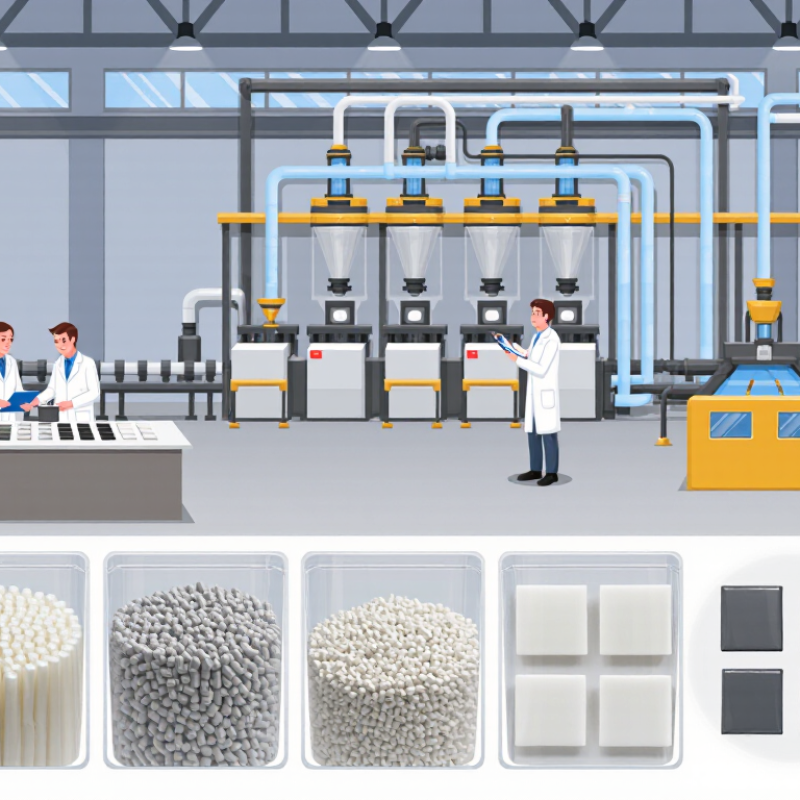
Table of Contents
[Hide]
What Filler Masterbatch Is and How It Is Made
Filler masterbatch is a concentrated blend of mineral particles and a polymer carrier. Calcium carbonate is commonly used, though the right mineral depends on the product. The carrier helps the filler disperse through a plastic resin during processing. Small amounts of processing aids may also be included. Not magic. Just controlled formulation.
Manufacturing starts with measured ingredients, often fed into a mixer or twin-screw extruder. Heat softens the carrier, while rotating screws distribute the mineral through the melt. Mixing must be strong enough for even dispersion, but excessive heat can damage the polymer. The molten blend is then shaped into strands, cooled, and cut into pellets. Moisture matters. Damp filler can cause bubbles or unstable processing.
A reliable supplier checks more than pellet appearance. Buyers can ask about filler loading, carrier compatibility, moisture, melt flow, and batch consistency. Samples should be tested in the intended resin and on the actual production line when possible. A smooth-looking pellet does not prove uniform dispersion. That detail is easy to overlook. Formulations also involve trade-offs: higher filler content may reduce material cost, yet it can affect stiffness, surface finish, or impact performance. There is no single recipe for every application.
China Best Filler Masterbatch Supplier for Global Buyers? — What Filler Masterbatch Is and How It Is Made
Filler masterbatch is a concentrated mixture of mineral filler, polymer carrier, and processing additives. The figures below are general industry references; actual formulations and performance vary by grade, resin, equipment, and application.
| Data Dimension | Typical Information | How It Is Made or Evaluated | Relevance to Buyers |
|---|---|---|---|
| Product definition | A pelletized concentrate used to introduce mineral fillers into plastics during processing. Calcium carbonate (CaCO3) is a widely used filler. | The concentrate is blended into a base polymer during extrusion or molding, rather than adding loose powder directly at the production line. | Confirm compatibility with the target resin and the intended end product before selecting a grade. |
| Main ingredients | Mineral filler, a polymer carrier such as polyethylene or polypropylene, and—in some formulations—dispersing or processing additives. | Ingredient selection depends on the target polymer, filler loading, processing conditions, and required product properties. | Request the composition range and carrier type, and check that they suit the resin used in production. |
| Filler content | CaCO3-based grades commonly contain a high mineral loading; approximately 70–85% by weight is a typical reference range, not a universal specification. | Loading is determined by formulation and verified through appropriate laboratory testing, such as ash-content testing. | Higher loading can reduce the amount of virgin resin used, but may affect impact strength, elongation, or processability. |
| Filler particle characteristics | Particle size, particle-size distribution, surface treatment, and moisture level can influence dispersion and finished-product performance. | Mineral particles may be treated to improve compatibility and dispersion in the polymer. Particle size is measured using the supplier’s stated test method. | Ask for the test method and particle-size data; do not compare figures produced using different methods as if they were identical. |
| Typical manufacturing process | Raw-material inspection, proportioning, mixing, melt compounding, extrusion, pelletizing, cooling, drying when required, and packaging. | In a compounding extruder, heat and mechanical shear melt the carrier and distribute the filler through the polymer. Process controls help manage dispersion and pellet consistency. | Ask how batches are traced and what checks are performed on incoming materials and finished pellets. |
| Common equipment | Mixers, gravimetric or batch feeding systems, compounding extruders, screen changers, pelletizers, cooling systems, and packaging equipment. | Equipment configuration varies with formulation, output capacity, pellet type, and production requirements. | Production equipment alone does not establish product quality; review actual test data and sample performance. |
| Quality-control checks | Common checks include filler or ash content, moisture, pellet appearance, dispersion, melt flow behavior, and contamination. | Testing methods and acceptance limits should be agreed for the specific grade and application. Results should be linked to a batch or lot. | Request a technical data sheet, a recent batch test report, and written specifications for critical properties. |
| Available forms | Usually supplied as pellets or granules. Color, pellet dimensions, and packaging can vary by grade and production setup. | Pellets are designed for metered feeding and blending with the base resin in downstream processing equipment. | Check pellet handling, packaging protection, and feeding behavior on the buyer’s actual equipment. |
| Common applications | Depending on grade and formulation, filler masterbatch may be used in film, bags, sheets, pipes, injection-molded parts, and other plastic products. | Suitability depends on the required mechanical properties, surface appearance, processing method, and applicable product regulations. | Provide the supplier with the resin type, process, product use, and performance requirements when requesting a recommendation. |
| Potential benefits and trade-offs | Can help reduce resin usage per unit and may affect stiffness, dimensional behavior, surface finish, and processing. Results vary by formulation and dosage. | Evaluate the masterbatch in the finished product at the intended addition rate; do not rely on filler content alone to predict performance. | Run a controlled production trial and compare cost per acceptable finished product, not only cost per kilogram of masterbatch. |
| Supplier qualification | Review product specifications, sample consistency, traceability, technical support, packaging details, and export documentation. | Compare suppliers using the same target specification, test methods, and sample-trial conditions. | Confirm order terms, lead time, minimum order quantity, packaging, and the procedure for handling nonconforming material. |
Related Posts
-

How to Choose the Right Plastic Filler for Global Sourcing?
-
10 Essential Tips for Choosing the Right Filler Masterbatch
-
How to Choose the Best Anti Block Masterbatch for Your Needs?
-

Understanding Biodegradable Masterbatch: Benefits, Applications, and Innovations
-
What is the Best EVA Masterbatch for Your Products?
-

Top 5 Surya Masterbatch Options for Enhanced Plastic Performance