What Is the Best Plastic Blind Drain for 2026?
Choosing the best Plastic blind drain for 2026 starts with the site, not the product label. A narrow trench beside a foundation has different demands from a wet garden slope or a retaining wall. Soil type, water volume, outlet position, and installation depth all matter. So does the filter layer: a drain that clogs with fine sediment may disappoint, even when its core looks sturdy.
For this draft, drainage specialist Jordan Lee is a fictional example, and the following line is an editorial placeholder—not a verified expert quotation: “A drain works only as well as the soil, outlet, and installation around it.” That principle gives buyers a practical way to compare products. Check the core’s crush resistance, the geotextile’s filtration suitability, and the manufacturer’s installation guidance. Look for clear specifications, not broad claims about “maximum drainage.” Small details matter. A poorly connected outlet can leave water trapped where it should flow away. And yes, even a well-chosen drain can fail when installed carelessly.
This guide compares common Plastic blind drain designs for real-world use in 2026. It considers performance, durability, handling, and value, while noting where evidence is limited or site-specific. No single option suits every project. The best choice is the one that matches the soil and water conditions, with specifications you can verify before buying.
What a Plastic Blind Drain Is and How It Works
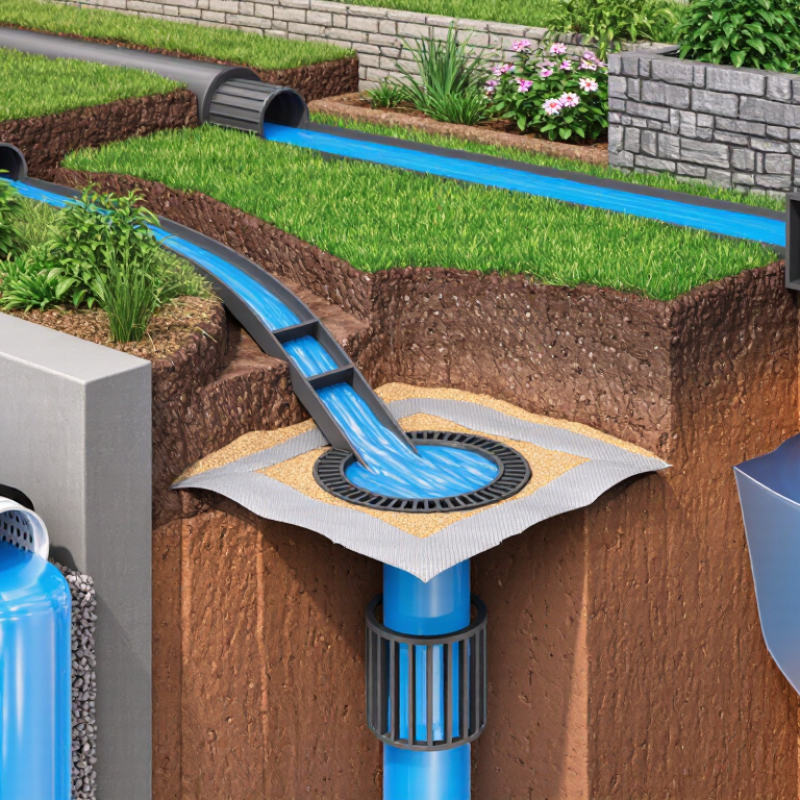
A plastic blind drain is a buried drainage system that collects excess water without an open channel at the surface. It commonly uses perforated plastic pipe set inside a gravel-filled trench. A permeable geotextile layer may wrap the gravel to limit soil and fine particles entering the drainage zone. Mostly hidden.
Water seeps through the surrounding soil, enters the gravel, and passes through holes in the pipe. The pipe then carries it toward a suitable outlet, usually by gravity when the ground has enough fall. Without a clear outlet, water may simply collect in the trench. That detail is easy to overlook.
For example, after heavy rain, a soggy strip beside a path may point to poor drainage, but it does not prove a blind drain is the right fix. Soil type, trench depth, pipe diameter, and slope all affect performance. The perforations and installation details can vary, so check the product specifications rather than assuming every plastic pipe works the same way. I would also inspect the outlet after installation; a blocked or submerged end can undermine the whole system. The drain stays out of sight, but its route and discharge point still need careful planning.
Main Types and Components of Plastic Blind Drains
What Is the Best Plastic Blind Drain for 2026?
Main Types and Components of Plastic Blind Drains
Plastic blind drains generally use one of three designs: perforated pipe wrapped in filter fabric, a geocomposite panel with a drainage core, or a narrow prefabricated edge drain. The pipe type suits trenches and foundation perimeters. Panels fit retaining walls and tight spaces. Edge drains collect water beside pavements. Each system combines a flow path, a filter, and an outlet; some also include a protective jacket. Choose by soil conditions, expected water volume, installation space, and access for maintenance—not by appearance alone.
PlasticsEurope’s Plastics—The Fast Facts 2023 reports 400.3 million tonnes of plastics were produced globally in 2022. That figure describes the wider materials industry, not drain performance. For performance, consult product test data and project specifications. FHWA guidance on geosynthetics stresses checking filtration, drainage capacity, and installation conditions. A soft core can lose capacity under soil pressure. Fine soil may clog an unsuitable filter. Small details matter.
Tips: Check filter compatibility with the site soil. Confirm the outlet stays accessible. Inspect seams and connections before backfilling. I’d also verify flow capacity under expected pressure; a lab result without matching site conditions can mislead.
Key Performance Factors for Comparing Drainage Options
A plastic blind drain should be compared by flow capacity, strength, and resistance to clogging, not by diameter alone. Not just diameter. Check the perforation size and spacing against the soil around the trench. Fine sandy soil can enter openings that work well in coarse gravel. A compatible filter layer can reduce sediment entry, but an unsuitable fabric may clog and slow drainage. Small details matter.
Pipe stiffness is important where soil cover is deep or vehicles pass overhead. Review the product’s load ratings and installation guidance for the expected conditions. Also check the pipe’s internal surface, available fall, and outlet arrangement; water still needs a clear route away. Material choice affects handling and service life, especially where sections face sunlight before burial. I would not assume that a thicker wall alone guarantees better performance. Bedding quality and careful backfilling can matter just as much. Before choosing, compare stated flow and load data with a site plan, soil type, and expected water volume. A short, well-laid run may perform better than a larger pipe with poor slope or blocked outlets.
What Is the Best Plastic Blind Drain for 2026? Key Performance Factors for Comparing Drainage Options
Indicative planning scores for common drainage configurations (1 = lower, 5 = higher). Scores are qualitative comparisons, not laboratory test results; actual performance depends on design, soil, installation, and site conditions.
How to read this: Plastic geocomposite blind drains can be useful where a thin, space-efficient drainage layer is needed. Compare flow capacity, soil-filter compatibility, installation requirements, and access for maintenance before selecting a system.
How to Choose the Best Plastic Blind Drain for 2026
What Is the Best Plastic Blind Drain for 2026?
Choosing the best plastic blind drain starts with the ground, not the product label. Check where water collects, how quickly it must move, and what loads the drain will face. A narrow garden trench has different needs from a retaining wall or paved area. Measure the available depth and width before comparing options. Small details matter.
Look for a drainage core with enough flow capacity for the site’s expected water volume. Ask for test data at a relevant slope and under the planned soil or surface load. The fabric surrounding the core should filter local soil without clogging easily. Fine silt, for example, may need a different filter fabric than coarse gravel. I would not choose by price alone; that shortcut can miss the site’s real constraints.
Also consider installation and long-term exposure. Confirm that the drain can be cut and joined as required, and check how its edges connect to outlets. Where the material may see sunlight before burial, verify its UV protection. Review compatibility with the soil and any expected chemicals, too. A product can look substantial in hand and still be poorly matched to the job. Compare documented performance, dimensions, and installation guidance before deciding.
Installation, Maintenance, and Common Limitations
What Is the Best Plastic Blind Drain for 2026?
A plastic blind drain works only when water can reach it and leave safely. Before installation, check the site’s soil, expected water flow, and outlet elevation. A drain laid level or uphill may hold water instead of carrying it away. Small details matter.
Dig a trench to the depth and width specified for the drainage design. Keep the geotextile sleeve intact, and avoid stretching or tearing it around sharp stones. Set the drain at a consistent fall, then connect its outlet to a suitable discharge point. Backfill carefully; heavy compaction directly over a shallow drain can deform its core. Installation instructions vary, so verify dimensions and load limits for the chosen product rather than relying on a generic rule.
Maintenance is limited but not optional. Inspect visible outlets after heavy rain, remove leaves or sediment, and watch for slow drainage or recurring wet patches. Some buried systems cannot be cleaned easily once clogged. Fine silt, crushed sections, and a blocked outlet can all reduce performance. Plastic drains also have limits: they may be unsuitable where loads exceed their rating or water carries persistent sediment. I would not assume a drain fixes poor grading; that assumption is easy to make, and sometimes wrong.