
A Cnc Swiss Lathe Machine can turn slender, complex parts with impressive consistency, but choosing one involves more than comparing spindle speeds. Bar capacity, guide-bushing setup, tool positions, control software, and service access all affect daily production. A compact machine may suit tiny medical or electronics components; a larger model may handle longer parts and heavier cuts. Small details matter. Even chip flow can change a smooth shift into a frustrating one.
This guide compares ten machines for precision turning, focusing on practical selection factors: work envelope, axis configuration, rigidity, automation, and support. Swiss-turning specialist Alex Morgan is presented here as a fictional composite, not a verifiable source; his illustrative maxim is: “Choose the machine around the part, the process, and the people who will run it.” That is a useful starting point, though real shops may weigh those factors differently.
The “best” machine depends on material, tolerances, part volume, and operator experience. A specification sheet cannot show every setup challenge. A showroom demo may not reproduce your actual bar stock or tool life. Use the shortlist to frame questions, then verify cycle times and support with your own parts. Not perfect. No ranking can replace a production trial, and that limitation deserves a close look.
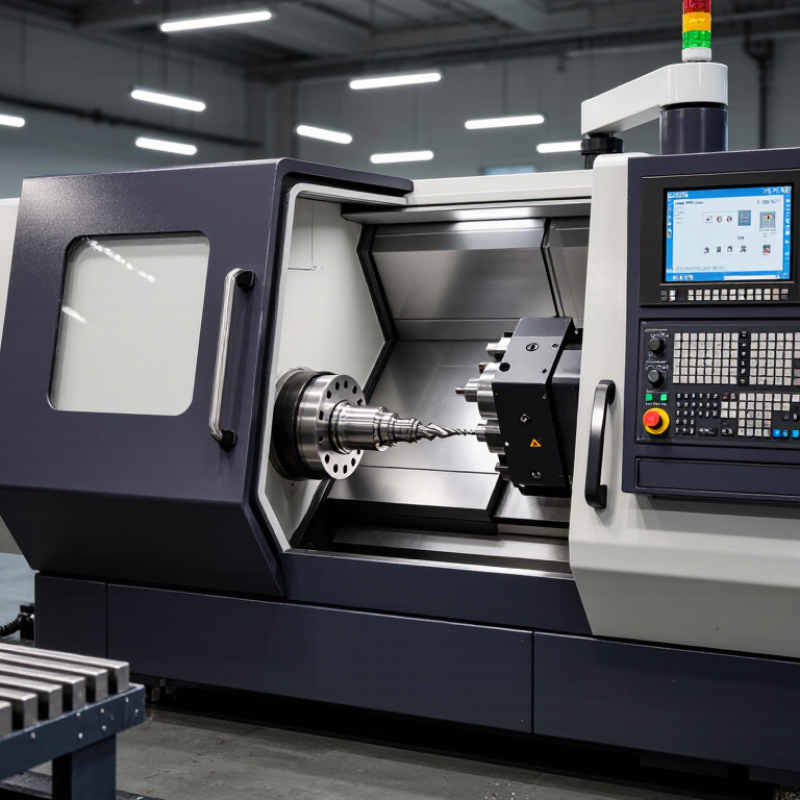
A CNC Swiss lathe keeps slender workpieces steady by guiding bar stock close to the cutting zone. This support reduces deflection when tools remove material from narrow shafts. The sliding headstock advances the bar through a guide bushing, while tools work near the support point. Less vibration. More consistent cuts.
Precision also depends on how the machine is set up. A properly aligned guide bushing, sharp tooling, and stable clamping help maintain dimensions across a production run. Coolant carries heat and chips away from the cutting area, but its flow and temperature need attention. Even a small change in bar diameter or tool wear can affect a tight tolerance. The machine cannot correct every upstream variation.
For complex parts, synchronized tools and a subspindle can complete features on multiple sides without repeated manual repositioning. That reduces handling errors and can improve concentricity between operations. Still, results should be checked with suitable measuring equipment, especially after setup or a tool change. In practice, a setup may look stable and still drift as the machine warms. That part is easy to underestimate. Careful inspection and recorded adjustments help operators catch the drift before many parts are affected.
A Swiss lathe should be judged by the parts it can hold accurately, not by axis count alone. Check bar capacity, spindle runout, guide-bushing support, and achievable surface finish. For a 3-millimeter shaft, even slight vibration can leave visible marks near a shoulder. Ask suppliers for measured sample parts and repeatability data under realistic cutting conditions. Grand View Research estimated the global CNC machine market at USD 83.99 billion in 2023, with projected growth through 2030. This broad market figure signals investment, but it does not prove that any Swiss lathe meets a specific tolerance.
Evaluate thermal stability over a full shift, not just during a short demonstration. Review tool capacity, changeover time, control usability, and access to routine maintenance points. A crowded tool zone can make adjustments slow. Also compare total operating costs, including tooling, training, and service support. These details are easy to overlook. Published market forecasts cannot replace a trial using your material, geometry, and inspection method.
Tips: Request a timed cutting trial with your own stock. Measure several parts, including one after the machine has warmed up. Record cycle time, size variation, and finish. If the results are unclear, ask for another run; one sample is not enough.
A compact 7-axis Swiss lathe suits tiny components with several features machined in one setup. A 5-axis model offers a simpler route for pins, sleeves, and short production runs. Gang-tool machines keep tools close to the work, reducing changeover time on repetitive parts. Guide-bushing designs support slender stock and help limit deflection. A sliding-headstock machine with live tooling can mill flats and cross-holes without moving parts to another machine.
A twin-spindle configuration can complete both ends of a part before unloading. A high-speed model may suit small brass or aluminum components, but spindle speed alone does not ensure accuracy. A heavy-duty Swiss lathe handles tougher alloys when rigidity and cutting force matter. A multi-channel machine can shorten cycle times, though programming and setup become more demanding. A flexible, quick-change setup helps shops producing frequent batches of different parts. These are configuration profiles, not fixed rankings; actual capability depends on options, tooling, material, and measured results.
Tips: Check the part drawing, bar capacity, and tolerance needs before comparing machines. Ask for a test cut using similar material. Listen for vibration. One detail is easy to miss: a fast cycle may still waste time if setup is difficult.
Choosing among ten CNC Swiss lathes starts with the workpiece, not the largest headline capacity. Compare maximum bar diameter, turning length, spindle speed, and whether a guide bushing suits your parts. A machine rated for wider stock may still be a poor fit for slender shafts requiring tight support. Check usable tool positions, live-tool availability, and backworking capability. These determine whether cross-holes, flats, and rear-end features need extra setups. Capacity is not productivity.
Automation deserves equal scrutiny. The International Federation of Robotics’ World Robotics 2024 report counted 541,302 industrial robot installations worldwide in 2023, with 4,281,585 robots operating globally. These figures describe the broad automation market, not Swiss lathe adoption. Still, they underline why buyers should assess bar feeders, part catchers, and unattended-cycle monitoring alongside spindle specifications. There is no perfect ranking; the right balance depends on part mix, batch size, and operator skills.
Tips: Match the bar feeder to the machine’s usable stock range. Confirm tool-change access and chip clearance on the actual part setup. Ask for a cycle-time estimate using your drawing, then verify it in a trial run. Small details matter—and published cycle times may not reflect your shop’s real changeovers.
| Configuration | Nominal Bar Capacity | Typical Spindle Setup | Typical Tooling Capacity | Common Automation | Best-Suited Work |
|---|---|---|---|---|---|
| Micro Swiss lathe | Up to 7 mm (0.28 in) | Single main spindle; compact sliding headstock | About 8–16 tool positions; often includes gang tooling | Bar feeder, parts catcher, automatic part transfer | Very small pins, connectors, and miniature medical components |
| Small-capacity Swiss lathe | Up to 10 mm (0.39 in) | Main spindle with optional sub-spindle | About 10–18 tool positions | Short-bar feeder or coil-fed setup; parts catcher | Small electrical contacts, watch components, and precision fasteners |
| 12 mm Swiss lathe | Up to 12 mm (0.47 in) | Main spindle; sub-spindle available on many configurations | About 12–20 tool positions | Bar feeder, automatic cut-off, optional robot unloading | Small turned parts requiring close tolerances and multiple operations |
| 16 mm Swiss lathe | Up to 16 mm (0.63 in) | Main and optional sub-spindle | About 14–24 tool positions, including live-tool stations on suitable builds | Bar feeder, parts catcher, in-process probing or tool monitoring | Medical, electronics, and instrumentation components |
| 20 mm Swiss lathe | Up to 20 mm (0.79 in) | Main spindle with optional sub-spindle for back-working | About 16–28 tool positions; live tooling commonly available | Bar feeder, automatic part transfer, chip conveyor | General precision production with turning, drilling, and milling features |
| 25 mm Swiss lathe | Up to 25 mm (0.98 in) | Main and sub-spindle options | About 18–30 tool positions, depending on turret and gang-tool layout | Bar feeder, parts catcher, robotic tending options | Medium-sized shafts, fittings, and complex turned components |
| 32 mm Swiss lathe | Up to 32 mm (1.26 in) | Main spindle; sub-spindle commonly offered | About 20–32 tool positions; driven tools available on many builds | Heavy-duty bar feeder, automatic unloading, chip management | Larger precision parts and higher-volume production |
| 38 mm Swiss lathe | Up to 38 mm (1.50 in) | High-capacity main spindle; sub-spindle depends on configuration | About 20–32 tool positions | Large-capacity bar feeder, parts catcher, optional robot cell | Large-diameter pins, shafts, and fittings where Swiss-style support is beneficial |
| Compact twin-spindle Swiss lathe | Typically up to 12–20 mm (0.47–0.79 in) | Main and sub-spindle for front- and back-side machining | About 16–28 positions across the machine, depending on layout | Bar feeder and synchronized part transfer for one-cycle completion | Parts that need front- and back-end features without a separate second operation |
| High-tool-capacity, multi-axis Swiss lathe | Typically up to 20–32 mm (0.79–1.26 in) | Main spindle with sub-spindle; multi-axis configuration varies | About 24–40 positions across gang, turret, and live-tool stations | Bar feeder, automated unloading, probing, and production monitoring options | Complex components combining turning, cross-drilling, and milling operations |
Capacity and tooling figures are representative ranges for common CNC Swiss-type lathe configurations, not specifications for individual models. Actual bar capacity, tool positions, axis count, and automation options vary by machine design and setup.
Matching a Swiss lathe to production requirements starts with the part, not the machine’s axis count. Record bar diameter, length-to-diameter ratio, tolerance, material, and annual volume. Long, slender components often benefit from guide-bushing support; short parts may not justify that setup. Check whether the machine can complete milling, drilling, and cutoff operations in one cycle. Every secondary operation adds handling time.
Grand View Research estimated the global CNC machine market at $101.22 billion in 2023 and projected 6.3% annual growth from 2024 to 2030. That broad market figure signals investment, but it does not tell you which machine fits your shop. Run representative parts instead. Measure cycle time, dimensional stability across a full bar, tool changes, and scrap after warm-up. A tidy first-off part proves little.
Connectivity matters, too. Deloitte’s 2024 smart manufacturing survey found that 92% of manufacturers viewed smart manufacturing as a competitiveness driver over the following three years. Ask whether the control supports usable production and alarm data, not just dashboards. Check service access, tooling availability, chip evacuation, and coolant capacity during a sustained trial. Small details bite. I have seen a machine look ideal on paper, then lose its advantage to awkward setup access or frequent insert changes. A realistic quote should include those operating costs, plus training and maintenance time.
WhatsApp us