
Choosing the best CNC parts suppliers in 2026 requires more than comparing prices. Cnc Parts support aerospace, automotive, medical, robotics, and precision equipment production. Each sector demands different tolerances, materials, certifications, and delivery standards. According to Grand View Research, the global CNC machine market was valued at approximately USD 83.95 billion in 2023. The firm also projects strong growth through 2030. This expansion reflects rising automation, reshoring, and demand for repeatable manufacturing.
Quality remains the real dividing line. A capable supplier should demonstrate documented inspection procedures, calibrated measuring equipment, and traceable material certificates. ISO 9001 registration provides a useful baseline. Aerospace buyers may also require AS9100, while medical manufacturers often expect stricter process controls. Reports from Deloitte’s manufacturing outlooks continue to identify labor shortages, digital production, and supply-chain resilience as major industry pressures. The strongest suppliers respond with automated inspection, transparent production updates, and practical engineering support.
Still, supplier selection is not perfectly measurable. A polished website proves little. A low quotation may hide tooling fees, weak packaging, or delayed revisions. Buyers should request sample reports, tolerance examples, and realistic lead-time commitments. Ask difficult questions. Review the answers carefully. Communication matters when a 0.02-millimeter deviation affects assembly.
This guide compares the 2026 best CNC parts suppliers through capabilities, material range, quality systems, pricing transparency, communication, and delivery reliability. It also considers supplier experience with complex geometries, surface finishing, and low-volume production. Some rankings may remain debatable, because project requirements vary widely. That limitation deserves attention. The best partner is not always the largest company, but the one that consistently converts technical drawings into dependable parts.
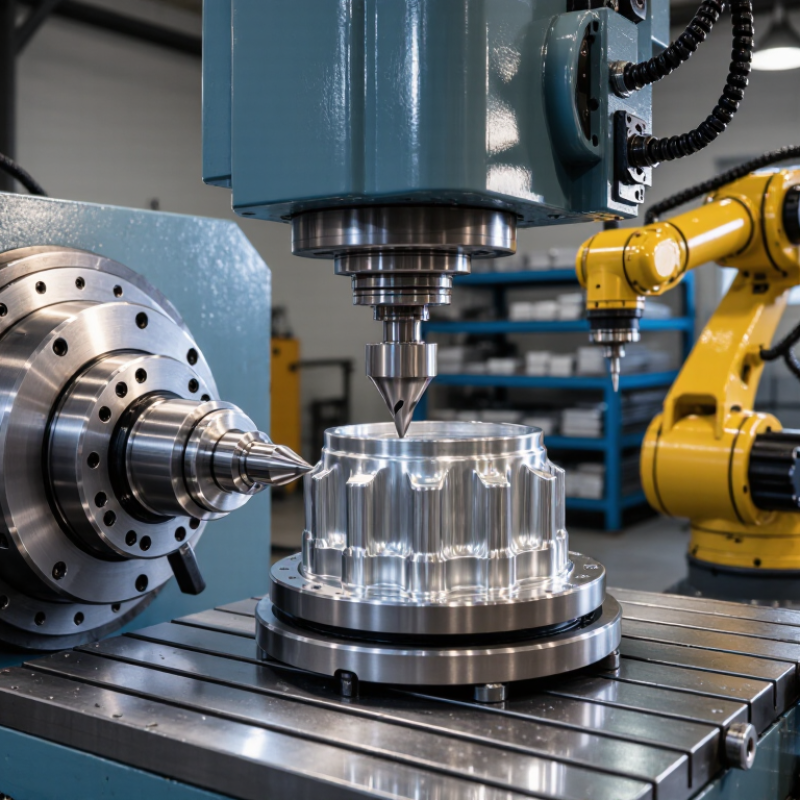
The best CNC parts supplier in 2026 is not simply the cheapest option. It should control variation from material intake to final inspection. Deloitte’s 2024 Smart Manufacturing and Operations Survey found that 86% of manufacturers expect smart manufacturing to become a major competitiveness driver within three years. A capable supplier should therefore offer digital job tracking, revision control, and inspection records that customers can access quickly.
Ask how the supplier proves repeatability. Look for calibrated CMM equipment, documented first-article inspections, and clear tolerance reviews before cutting metal. Delivery performance matters too. A late prototype can delay testing, production, and revenue. Skilled suppliers should explain realistic lead times instead of promising everything immediately. That honesty is valuable.
Short answers are warning signs.
Material certificates, surface-finish reports, and serialized parts create stronger traceability. Suppliers should also understand machining risks, such as thin-wall distortion, burr formation, and heat treatment changes. The International Organization for Standardization reports that millions of organizations use ISO 9001 worldwide, but certification alone does not guarantee excellent machining. Shop-floor evidence matters more.
I would still question every supplier’s sustainability claims. Energy use, scrap rates, and packaging should be measured, not decorated with vague language. No supplier is perfect. A better choice is one that admits process limits, records mistakes, and improves after corrective action. That practical transparency often separates a reliable CNC partner from a polished sales presentation.
A strong CNC parts supplier should prove capability, not merely display modern machinery. Review tolerance records, material certificates, inspection plans, and sample reports. Ask whether measurements are traceable to recognized standards. A supplier that shares inspection photos, coordinate-measuring-machine results, and tool-life data shows practical experience. Still, documentation can be polished. Request a small pilot order before approving larger production.
Delivery reliability deserves equal attention. Deloitte’s 2024 Smart Manufacturing and Operations Survey found that 86% of surveyed executives expect smart manufacturing to become a major competitiveness driver within three years. This matters because digital production tracking can reveal delayed materials, machine downtime, and repeated defects earlier. Evaluate real-time order updates, capacity planning, and backup processes. A supplier should explain what happens when a critical machine fails.
Price alone misleads.
Quality systems also require careful review. Check certifications, corrective-action records, operator training, and process capability data. Ask for Cp and Cpk values on critical dimensions, rather than accepting vague claims about precision. The 2024 Manufacturing Industry Outlook from a major professional services research group identified labor shortages and supply-chain disruption as continuing manufacturing pressures. Therefore, assess workforce depth and material sourcing, not just equipment lists. I would not treat five-axis capability as automatic proof of excellence. A modest workshop with disciplined inspection may outperform a larger factory. The uncomfortable question is whether the supplier can repeat quality under pressure.
The best CNC parts suppliers combine machining depth, inspection discipline, and responsive engineering support. Their core capabilities should include CNC milling, turning, Swiss machining, five-axis work, and surface finishing. According to MarketsandMarkets, the CNC machine market is projected to grow from about USD 88 billion in 2023 to more than USD 112 billion by 2028. That growth reflects wider demand for repeatable, digitally controlled production.
A capable supplier also understands material behavior. Aluminum needs different cutting strategies than stainless steel or PEEK. Look for documented tolerances, calibrated CMM inspection, first-article reports, and clear traceability. ISO 9001 certification helps, but it does not replace practical evidence. Ask for sample inspection reports and realistic lead-time data. According to the 2024 Deloitte Manufacturing Industry Outlook, manufacturers continue prioritizing automation, resilience, and flexible production capacity. A supplier with stable programming systems and backup equipment can respond better when schedules change. No supplier is perfect. I would still verify communication speed before approving a complex order.
Tips: Compare suppliers using the same drawing, material, quantity, tolerance, and finish requirements. Review scrap rates, not only quoted prices. Check whether inspection occurs during production, not just at shipment. A low price can hide weak process control. Small details matter.
| Supplier Category | Best-Fit Production Need | Core CNC Capabilities | Common Materials | Typical Part Size Range | Typical Machining Tolerance | Secondary Processes | Quality and Compliance Indicators | Recommended Evaluation Focus |
|---|---|---|---|---|---|---|---|---|
| Rapid-Prototyping Specialist | Functional prototypes, design verification, and low-volume development parts | 3-axis and 5-axis milling, CNC turning, rapid quoting, short-run machining | Aluminum ABS Nylon POM Stainless steel | Small to medium parts, commonly up to approximately 500 mm | About ±0.05 mm for many standard features; tighter tolerances require drawing review | Anodizing, bead blasting, powder coating, laser marking, basic assembly | First-article inspection, material certificates, dimensional inspection reports | Quote response time, design-for-manufacturing feedback, prototype consistency |
| Precision CNC Machining Supplier | Close-tolerance components for industrial, instrumentation, and engineered products | Multi-axis milling, CNC turning, live-tool turning, probing, high-accuracy inspection | Tool steel Stainless steel Titanium Aluminum Brass | Small to medium components, typically from a few millimeters to 600 mm | About ±0.01–0.02 mm on selected features when process conditions support it | Heat treatment, passivation, plating, grinding, wire EDM, coordinate inspection | ISO 9001 quality system, calibrated measuring equipment, traceable inspection records | Process capability, datum control, inspection method, repeatability at production volume |
| High-Volume Production Supplier | Stable recurring orders, cost-sensitive components, and standardized product lines | CNC turning centers, horizontal and vertical machining centers, pallet systems, automated loading | Aluminum Carbon steel Stainless steel Brass Engineering plastics | Small to medium parts, with capacity determined by machine envelope and fixture design | Common production tolerance range of approximately ±0.02–0.10 mm | Deburring, washing, heat treatment, plating, coating, kitting, packaging | Statistical process control, control plans, lot traceability, corrective-action procedures | Throughput, cycle time, capacity planning, scrap rate, delivery performance, unit cost |
| Complex 5-Axis Machining Supplier | One-piece components, contoured surfaces, deep features, and reduced-setup manufacturing | Simultaneous 5-axis milling, indexed machining, complex 3D surfacing, collision-aware programming | Titanium Inconel-type alloys Stainless steel Aluminum Tool steel | Small to large parts, depending on machine travel and workholding capacity | Approximately ±0.01–0.05 mm for controlled features; geometric tolerances depend on size and design | EDM, heat treatment, surface finishing, precision grinding, non-destructive testing coordination | Advanced inspection planning, machine calibration, material traceability, documented process control | Five-axis experience, fixture strategy, tool-life control, surface quality, inspection capability |
| CNC Turning and Mill-Turn Supplier | Rotational parts, shafts, bushings, threaded components, and completed turned assemblies | CNC turning, Swiss-type turning, mill-turn machining, threading, grooving, drilling, bar feeding | Stainless steel Brass Aluminum Alloy steel Plastics | Very small Swiss-turned parts through medium-sized shafts and housings | Approximately ±0.01–0.05 mm for many turned dimensions | Grinding, knurling, heat treatment, passivation, plating, laser marking | Thread gauges, roundness checks, surface roughness measurement, lot inspection | Bar-stock control, concentricity, thread quality, burr prevention, automatic inspection |
| Large-Part CNC Supplier | Machine bases, structural components, energy equipment parts, and large housings | Large-format milling, boring, turning, drilling, heavy material removal, weldment machining | Carbon steel Cast iron Stainless steel Aluminum | Large workpieces, often above 1,000 mm; exact limits depend on travel and lifting capacity | Typically ±0.05–0.20 mm, influenced by part size, material, and thermal stability | Stress relief, welding, painting, coating, dimensional alignment, on-site machining support | Large-volume CMM or laser measurement, weld documentation, lifting and handling controls | Machine envelope, floor loading, thermal management, fixturing, transportation planning |
| Medical and High-Traceability Supplier | Medical devices, laboratory equipment, surgical instruments, and regulated components | Precision milling and turning, small-batch production, clean handling, traceable documentation | 316L stainless steel Titanium PEEK Cobalt-chromium alloys Aluminum | Small to medium precision parts, subject to product-specific requirements | Often ±0.01–0.05 mm for controlled features, subject to design and regulatory requirements | Passivation, electropolishing, polishing, cleaning, laser marking, sterilization coordination | ISO 13485 where applicable, lot traceability, validated processes, documented change control | Material pedigree, contamination control, validation records, inspection documentation, change management |
| Aerospace and Defense-Oriented Supplier | Flight hardware, propulsion components, unmanned systems, and high-performance assemblies | Multi-axis machining, difficult-to-cut alloy processing, thin-wall machining, controlled production | Titanium Nickel alloys Aluminum Stainless steel High-strength alloys | Small to medium parts, with larger capacity available at specialized facilities | Commonly ±0.01–0.05 mm on selected features; GD&T and surface requirements are project-specific | Heat treatment, non-destructive testing, chemical processing, grinding, certified special processes | AS9100 where applicable, material traceability, first-article inspection, configuration control | Special-process approvals, export-control requirements, documentation accuracy, risk management |
| Integrated CNC and Finishing Supplier | Customers seeking one supplier for machining, finishing, assembly, and delivery | CNC milling and turning combined with coordinated subcontracted or in-house finishing services | Aluminum Steel Stainless steel Brass Engineering plastics | Small to medium parts, depending on machining and finishing equipment | Approximately ±0.02–0.10 mm for many production features | Anodizing, powder coating, plating, passivation, heat treatment, assembly, packaging | Supplier qualification, process certificates, final inspection, documented subcontractor control | Single-point accountability, finish consistency, lead-time coordination, packaging quality |
| Regional Low-Volume Job-Shop | Custom replacement parts, maintenance work, engineering changes, and mixed small orders | General-purpose CNC milling and turning, manual support operations, repair and modification work | Mild steel Stainless steel Aluminum Brass Plastics | Small to medium parts, based on available machines and local handling equipment | Commonly ±0.05–0.เค10 mm unless a tighter requirement is specifically quoted | Deburring, welding coordination, painting, simple assembly, local heat treatment | Drawing review, basic inspection records, material verification, delivery documentation | Communication, flexibility, engineering support, minimum order quantity, local response time |
Note: Capability ranges are typical industry benchmarks rather than guarantees. Actual performance depends on part geometry, material, machine condition, workholding, inspection method, production volume, and drawing requirements.
The strongest CNC parts suppliers in 2026 prove quality through measurable records, not attractive promises. Request inspection reports, material certificates, and sample parts before approving production. A supplier should explain achievable tolerances, surface roughness, and thread accuracy in clear language. I also examine how parts are packed. Scratched aluminum surfaces often reveal weak process control. Quality can look excellent on paper.
Pricing deserves closer attention. A low quote may exclude tooling, deburring, inspection, finishing, or shipping. Ask for an itemized estimate with setup costs and volume breaks. Compare the complete delivered price, not only the machining charge. One inexpensive quote I reviewed seemed convincing until inspection fees appeared later. That mistake was avoidable. Still, the highest price does not automatically indicate better workmanship.
Lead time depends on machine availability, material sourcing, programming, and approval speed. Reliable suppliers provide milestone dates and communicate delays before they become emergencies. Customization is equally important for prototypes and changing designs. Check whether the supplier supports common CAD files, unusual alloys, tight tolerances, and specialized finishes. Engineering feedback matters when a thin wall or deep pocket raises production risks. A supplier that questions the drawing may protect the project. Yet, too many revisions can slow production, so define approval limits early.
Choosing a CNC parts supplier in 2026 requires more than comparing prices. Your project needs a partner that understands tolerances, materials, finishes, and production risks. Ask whether the supplier has experience with parts similar to yours. Review sample inspection reports, machine capabilities, and process controls. A supplier should explain how it manages ±0.01 mm tolerances, surface requirements, and dimensional changes.
Tips: Send a complete technical package. Include drawings, 3D files, material grades, quantities, and inspection requirements. Request a small prototype run before larger production. Check communication speed, revision control, packaging details, and delivery planning. Clear answers matter more than polished promises.
Reliable suppliers provide traceability from raw material to final inspection. Look for documented quality procedures, calibrated measuring tools, and realistic lead times. Ask how they handle rejected parts or late changes.
An honest supplier will identify difficult features before machining begins. That saves time, although it may challenge your original design. I have learned that the lowest quote can hide extra inspection, rework, or freight costs.
A slightly higher offer may provide better consistency. Still, do not assume a higher price guarantees quality. Compare evidence, not confidence.
Also, consider future production needs. A supplier suitable for ten prototypes may struggle with ten thousand parts. A practical trial can reveal more than a long sales presentation.
WhatsApp us