Choosing reliable UV plastic suppliers worldwide requires more than comparing prices on a spreadsheet. The right partner must understand how ultraviolet exposure affects polymers, colors, additives, and long-term performance. A supplier may offer attractive samples, yet production batches can behave differently under heat, moisture, or constant sunlight. That gap deserves careful attention.
This guide introduces seven practical tips for evaluating suppliers with greater confidence. It examines material specifications, UV-resistance testing, quality systems, production capacity, documentation, communication, and total cost. Look for evidence such as technical data sheets, test reports, traceability records, and clearly defined inspection procedures. A trustworthy supplier should explain resin grades, stabilizer choices, expected service life, and suitable processing conditions without hiding behind vague claims. Ask how samples were tested. Ask whether results reflect real outdoor exposure or only short laboratory screening.
Details matter. A clear carton label, consistent pellet color, and prompt answer can reveal operational discipline. So can a willingness to discuss failed trials honestly. No checklist is flawless. Even experienced buyers can overlook regional shipping delays, changing raw-material availability, or differences between local testing methods. Independent verification remains valuable, especially for demanding applications. The best decision balances technical evidence, communication quality, ethical sourcing, and realistic commercial needs. Reliable results take time. This introduction provides a practical framework for selecting a UV plastic supplier that can support stable quality across borders, not merely win an initial quotation.
Start with the environment, not the supplier catalogue. Describe sunlight intensity, operating temperature, humidity, chemical exposure, and expected service life. A plastic used beneath a roof needs different protection from one exposed to desert sunlight.
State measurable targets. Specify UV exposure hours, wavelength range, color-change limits, tensile-strength retention, impact performance, and dimensional stability. Include processing requirements such as injection temperature, shrinkage tolerance, and acceptable surface finish. Vague terms like “high UV resistance” invite inconsistent quotations.
Ask suppliers for test methods, aging conditions, and complete reports. Results from accelerated weathering do not always match outdoor performance. That gap matters. Request samples made with the proposed grade and production process. Examine them after exposure, not only when they arrive.
Check whether additives, recycled content, or pigment changes affect durability. A minor formulation adjustment can alter brittleness or color retention. Require batch traceability, certificates of analysis, and documented quality controls. Independent laboratory verification may be worthwhile for critical applications.
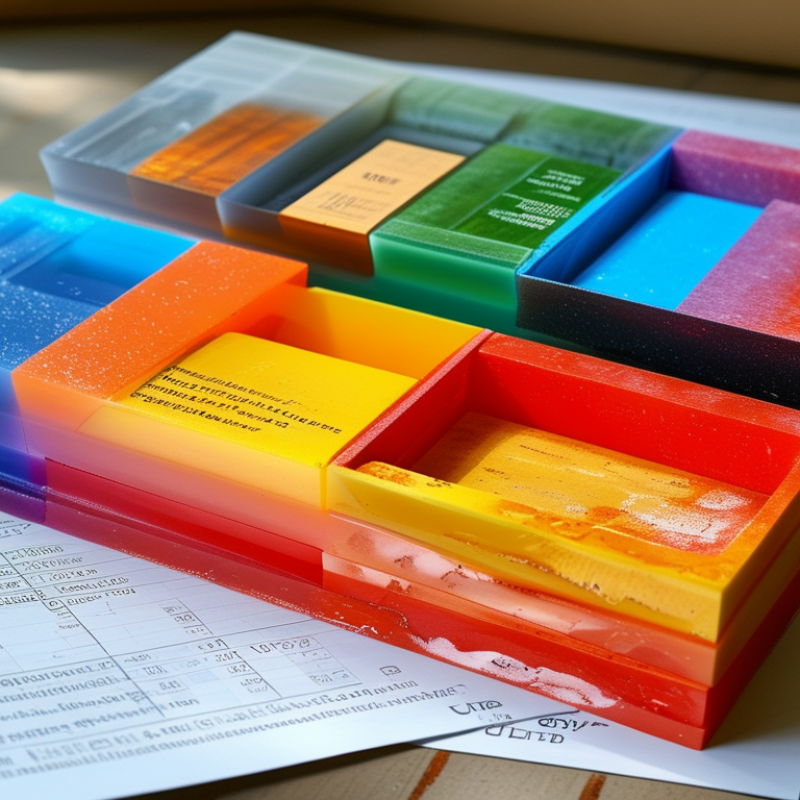
Use a simple comparison sheet. Record test values, tolerances, sample dates, and unanswered questions. Suppliers should explain failures, not hide them. Reliability is visible in the details.
One practical lesson deserves attention: specifications often miss cleaning chemicals and installation stress. Review the design with manufacturing and maintenance teams before approval. Even a strong UV-stabilized plastic can fail when the requirement is incomplete.
Choosing a UV plastic supplier requires evidence, not attractive brochures. UNEP’s 2023 Turning off the Tap report estimates that more than 430 million tonnes of plastic waste are generated annually. Longer-lasting components can reduce replacement demand, but only when durability claims are credible. Ask for the exact resin grade, stabilizer type, additive percentage, and production batch. Do not accept “UV resistant” without test conditions.
Request reports based on ASTM G154 or ISO 4892-3. These standards define controlled exposure using fluorescent UV lamps, temperature, moisture, and cycling. Check the exposure duration, irradiance, specimen thickness, and measured property loss. Tensile strength, impact resistance, color change, and surface cracking matter differently. A supplier showing only color retention may hide serious brittleness. That is a warning sign.
Compare accelerated results with your real environment. Coastal salt, heat, dust, and condensation can change degradation rates. OECD’s Global Plastics Outlook projects plastic waste could nearly triple by 2060 without stronger intervention, making service life increasingly important. Ask for outdoor exposure data, not laboratory results alone. Review raw data and calibration records. Confirm whether testing used your intended color and geometry. Thin black samples may perform better than light, molded parts. The comparison may be imperfect, but it is still more useful than a general warranty. Keep retained samples for independent retesting, especially after formulation changes. Supplier reliability is demonstrated through traceable records, repeat batches, and willingness to disclose limitations.
| No. | Evaluation Dimension | What to Verify | Reliable Evidence or Test Reference | Practical Acceptance Criteria | Common Red Flag |
|---|---|---|---|---|---|
| 1 | Confirm the Base Polymer and Grade | Check the exact resin family, grade designation, filler content, colorant system, recycled content, and whether the material is intended for outdoor exposure. | Request a current technical data sheet, safety data sheet, certificate of analysis, and a batch-specific material declaration. | The documents should identify the polymer and provide measurable properties such as tensile strength, impact resistance, heat-deflection temperature, and processing conditions. | The supplier uses only terms such as “outdoor plastic” or “UV grade” without identifying the polymer or grade. |
| 2 | Verify the UV Stabilizer System | Ask whether the formulation uses hindered amine light stabilizers, UV absorbers, pigments, carbon black, or a compatible combination. Confirm that additives are suitable for the intended temperature and environment. | Review a formulation statement, regulatory declaration, or controlled additive specification. Exact additive percentages may be confidential, but the performance system should be clearly defined. | The supplier can explain how the stabilization system supports the required service life without compromising color, impact strength, food-contact status, or other application requirements. | A supplier promises UV resistance based only on color or on the presence of a generic “UV additive.” |
| 3 | Check the Exposure Test Method | Confirm the light source, irradiance, temperature, humidity or condensation cycle, specimen geometry, exposure duration, and inspection intervals. | Commonly recognized references include ASTM G154 for fluorescent ultraviolet exposure, ASTM G155 for xenon-arc exposure, and ISO 4892-2 or ISO 4892-3 for laboratory light-source exposure of plastics. | The test report should state the complete cycle and conditions. “1,000 hours tested” is incomplete unless the equipment, cycle, and irradiance are also reported. | The report lists exposure hours but omits the lamp type, irradiance, black-panel temperature, condensation cycle, or specimen details. |
| 4 | Measure Performance Retention, Not Appearance Alone | Compare properties before and after exposure, including color change, gloss, tensile strength, elongation, impact strength, cracking, chalking, warpage, and surface embrittlement. | Use application-relevant methods such as color measurement with an agreed color-difference formula, tensile testing, impact testing, and visual inspection under defined lighting. | Set written limits before testing. For structural parts, mechanical-property retention is generally more important than a pass based only on visual color stability. | The supplier provides photographs or a color statement but no numerical before-and-after performance data. |
| 5 | Separate Accelerated Testing from Outdoor Lifetime | Determine whether the claim refers to laboratory exposure, natural-weathering exposure, or a field-service prediction. Laboratory hours cannot be converted directly into years for every climate or product design. | Ask for test location, orientation, climate description, exposure angle, start date, specimen design, and correlation data when a service-life estimate is provided. | A credible claim states the test conditions and limitations instead of presenting a universal “X years outdoors” guarantee. | The supplier converts a single accelerated-test duration directly into a fixed worldwide service life without climate or application qualifications. |
| 6 | Audit Quality and Batch Consistency | Review incoming-resin controls, additive dosing, color control, molding parameters, traceability, retained samples, calibration, and corrective-action procedures. | Request quality certificates, sample inspection records, calibration records, lot traceability, and an audit plan. ISO 9001 certification can support a quality system review but does not prove UV performance by itself. | Production samples should match the approved material in color, density, key mechanical properties, and UV-related performance within agreed limits. | Test results are supplied only for a development sample, while production lots have no traceability or release criteria. |
| 7 | Use Independent Verification and Application Trials | Send production-intent samples to an independent laboratory and test the actual part, thickness, color, surface finish, and assembly—not only a laboratory plaque. | Compare supplier data with an independent report using the same test method and acceptance limits. Conduct pilot production and, where practical, a controlled outdoor trial. | Approve the supplier only when documentation, independent results, pilot parts, and production controls support the same performance conclusion. | The supplier refuses sample testing, cannot reproduce its results, or asks the buyer to accept an unverified lifetime claim. |
Tip 1: Examine the supplier’s manufacturing capabilities, not only its product catalog. Confirm experience with injection molding, extrusion, compounding, or custom profiles. Ask for production photos, equipment lists, and typical tolerances.
Tip 2: Request material details. UV-resistant plastics need suitable stabilizers, pigments, and resin grades for their exposure conditions. Outdoor parts face sunlight, heat, moisture, and sudden temperature changes.
Tip 3: Review the quality system carefully. A valid ISO 9001 certificate is useful, but it cannot replace process evidence. Request inspection plans, batch records, calibration reports, and nonconformance procedures.
Tip 4: Check testing methods. Accelerated weathering, color retention, impact strength, and dimensional stability should match your application. Test results need sample identification and clear laboratory conditions. A polished certificate wall can still hide weak process control.
Tip 5: Verify certifications through the issuing organization when possible. Confirm their scope, expiry date, and manufacturing location.
Tip 6: Order production samples before approving large volumes. Inspect surface finish, warpage, color consistency, and packaging after transport.
Tip 7: Evaluate traceability and communication across borders. Can the supplier explain a failed batch within one working day? Can they provide corrective actions with evidence? Do not assume a low price proves efficiency. Sometimes, it reflects weaker testing or unstable raw material control. A small oversight can become a costly mold revision.
When choosing UV plastic suppliers worldwide, compare more than the unit price.
Tip 1: Request identical resin grades, UV ratings, thickness tolerances, and packaging terms. A lower quote may exclude tooling, testing, or export documentation.
Tip 2: Calculate landed cost, including freight, insurance, duties, port charges, and local delivery. My early quote comparisons failed because I compared factory prices only. That mistake was expensive.
Tip 3: Ask for the minimum order quantity and its price breaks. A small MOQ can reduce inventory risk, but it may increase the price per kilogram.
Tip 4: Check production capacity against your forecast. The World Bank’s 2023 Logistics Performance Index shows clear differences in customs efficiency, infrastructure, and shipment reliability between markets. Request recent on-time delivery records, not promises.
Tip 5: Confirm lead times in writing, including sampling, production, inspection, and shipping. Add a buffer for resin shortages or port congestion. Forecasts are never perfect.
Tip 6: Compare logistics routes using realistic shipment sizes. UNCTAD’s Review of Maritime Transport 2024 reported that global maritime trade grew 2.4% in 2023, while disruption risks continued to affect schedules and costs. Ask whether suppliers can offer sea, rail, or air options.
Tip 7: Require test reports for UV resistance, impact strength, and color stability. ISO-based testing improves comparability, but results still depend on specimen preparation. Keep a backup supplier approved. It may feel unnecessary until the first delay.
7 Tips for Choosing UV Plastic Suppliers Worldwide?
Choosing a UV plastic supplier requires more than comparing quotations. Communication often reveals operational discipline. Ask how quickly the team answers technical questions and who handles urgent issues. Reliable suppliers provide clear specifications, production timelines, and written change notices. They should explain UV exposure tests, color stability, and expected service life in practical terms.
Request samples made with the proposed material, not a similar substitute. Examine surface finish, dimensions, brittleness, and color after controlled UV testing. Customization support matters when you need special additives, wall thicknesses, tooling, or outdoor performance. A capable supplier will discuss limitations honestly. Perfect claims deserve caution. Share drawings, operating temperatures, annual volume, and installation conditions before requesting a final recommendation. Vague requirements often create expensive revisions.
Long-term reliability depends on traceability and consistent production. Review batch records, inspection methods, test reports, and corrective-action procedures. Ask whether the supplier can maintain supply during raw-material shortages. A second production line or approved backup material may reduce future risk. I once focused too heavily on sample quality and overlooked response time after approval. That mistake delayed a field trial. Now, I test communication during ordinary weeks, not only during negotiations. Visit the facility when practical, or request a live video inspection. Small details matter: labeled storage areas, calibration records, and staff who answer without hesitation.
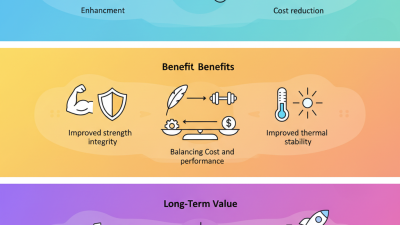
Recommended evaluation weight for communication, customization support, product quality, and long-term reliability.
Use this 100-point evaluation model to compare UV plastic suppliers consistently. Communication and customization support help reduce project risk, while quality validation, compliance documentation, delivery reliability, and after-sales service support long-term cooperation.
WhatsApp us