
Choosing the right Single Gauge Manifold in 2026 requires more than comparing prices or counting included accessories. A dependable manifold should match your service work, refrigerant type, pressure range, and measurement habits. It should also feel stable in your hand, even beside a vibrating outdoor condensing unit.
This guide examines practical features that technicians can verify before buying. We will consider gauge accuracy, valve response, hose construction, connection compatibility, body materials, and readable scale design. Digital models may offer temperature conversion and data logging. Analog models remain useful because they need no batteries. Both options have weaknesses. A digital display can fail in heat, while an analog gauge can drift after repeated impact.
Look for documented calibration information and clear manufacturer support. Check whether the product suits the refrigerants and pressures used in your region. Confirm thread standards before ordering replacement hoses or adapters. Small mismatches create frustrating delays. Safety matters, too. Use equipment rated for the intended pressure and follow the manufacturer’s operating instructions. Protective eyewear and suitable gloves remain sensible choices during routine service.
Real field experience often changes the buying decision. A compact manifold may fit a crowded cabinet better, but short hoses can make access awkward. A rugged case can protect the instrument, although it adds weight. No single design wins every job. This 2026 guide compares those trade-offs carefully, while admitting that product specifications do not always reflect long-term workshop performance. Verify claims, inspect reviews critically, and test calibration regularly. That extra step can prevent expensive mistakes.
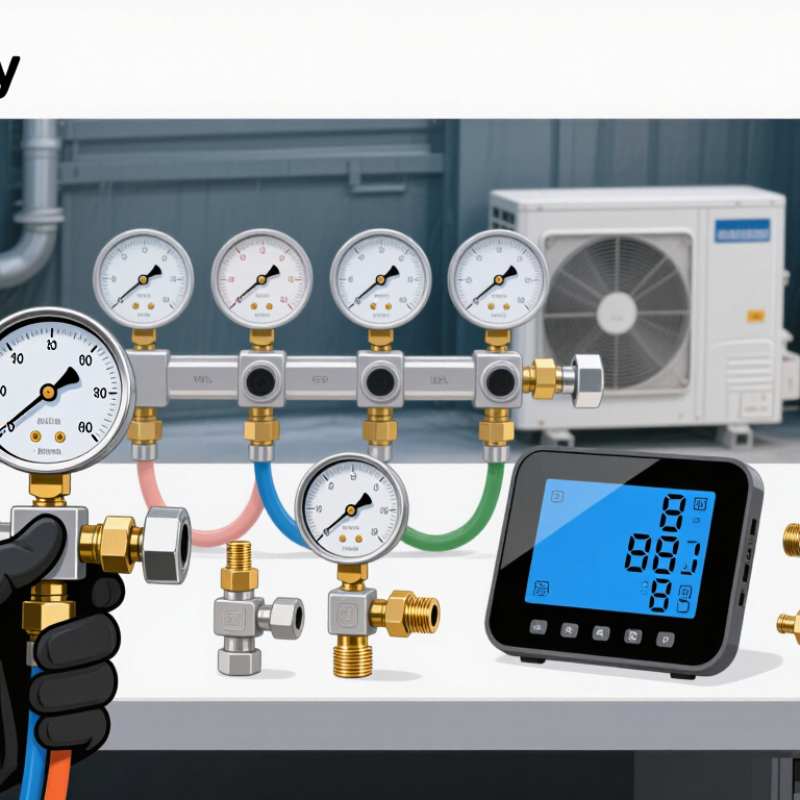
A single gauge manifold is a compact HVAC service tool with one pressure gauge and a central valve body. It connects the equipment’s service port to the gauge through a charging hose. When the valve opens, system pressure reaches the gauge. The reading helps technicians assess refrigerant conditions, but pressure alone cannot confirm a correct charge.
Its operation is simple, yet interpretation requires experience. Ambient temperature, refrigerant type, airflow, and compressor operation all affect pressure. The ASHRAE Handbook emphasizes using pressure-temperature relationships with measured operating conditions. A gauge does not measure refrigerant mass. It also cannot replace recovery equipment, leak testing, or temperature readings. The IEA’s The Future of Cooling report projects global cooling demand could more than triple by 2050. Accurate servicing will matter more as equipment use expands.
Tips: Check the refrigerant designation before connecting. Inspect hoses and seals for damage. Record outdoor temperature and gauge pressure together. Keep the hose short and secure. A single-gauge manifold is useful for basic checks, but it has limits. For example, without a separate high-side reading, diagnosis may remain incomplete. That limitation is easy to overlook.
My practical view is simple: use the gauge as one piece of evidence, not the final answer. Calibration records and manufacturer service data should guide any adjustment.
2026 Top Single Gauge Manifold Buying Guide
Key Components and Technical Specifications to Compare
A single gauge manifold should match your daily service work, not only your budget. Check the pressure range before comparing extra features. A gauge rated for both low and moderate pressures offers broader use, but finer readings may become harder to see. Clear markings matter in dim mechanical rooms.
The manifold body should resist corrosion and repeated hand pressure. Brass remains common because it tolerates frequent connections and temperature changes. Inspect the valve stems, seals, and hose fittings closely. Smooth valve movement is important. Stiff controls often signal poor finishing or contamination inside. Choose hoses with suitable working pressure, burst pressure, and refrigerant compatibility. Short hoses reduce clutter, while longer hoses improve access around compact equipment.
Accuracy deserves careful attention. A typical service gauge may claim accuracy within a small percentage of full scale, yet scale design affects real readings. I have found that a wide, uncluttered dial is easier to read than a crowded precision-looking face. That assumption can fail when lighting is poor. A protective lens, secure hook, and replaceable seals add practical value. Check the temperature scale only if you truly use it. Unused markings can distract from pressure readings. Also examine connection standards and fitting size before purchase. An adapter may solve the mismatch, but it adds another possible leak point. Calibration records are useful, though many buyers overlook them.
The chart compares representative maximum working-pressure benchmarks and upper operating-temperature limits for commonly used single-gauge manifold body materials. Actual ratings depend on valve design, connection type, seals, media, and temperature, so always confirm the manufacturer’s pressure-temperature rating before selection.
When comparing a single-gauge manifold, check the number of isolation and bleed valves, gauge connection size, process connection standard, body material, seal compatibility, pressure rating, temperature range, and whether the valve design supports safe venting and calibration.
Choosing the right single gauge manifold starts with your system’s actual operating conditions. Record normal pressure, maximum pressure, process temperature, and fluid composition before comparing models. A manifold rated far above your needs may cost more and complicate installation. A weak rating creates a serious safety concern.
Match the connection size and thread type to existing tubing or pipework. Confirm the gauge port position, mounting space, and handle clearance around nearby equipment. Material compatibility matters, especially with corrosive fluids or humid outdoor installations. Stainless steel suits many demanding environments, but it is not automatically the best choice for every process. Check seals carefully.
Gauge accuracy should fit the measurement task. For stable readings, select a suitable pressure range rather than the largest available scale. The gauge should normally operate near the middle of its range. Look for smooth valve operation, clear labeling, and a design that allows isolation during maintenance. A vent or bleed feature can make pressure release more controlled, when the system design permits it.
In field installations, small details often decide long-term reliability. I have seen a well-rated manifold fail early because vibration loosened a connection. Support tubing properly, inspect threads, and test for leaks after installation. Follow site procedures and verify specifications with qualified personnel. Selection is rarely perfect on the first attempt. Recheck the choice after observing real pressure fluctuations.
A single gauge manifold combines isolation, venting, and pressure indication in one compact assembly. For installation, match the body material, seal type, and pressure rating to the process fluid and temperature. ASME B40.100 recommends selecting gauges with suitable accuracy, readability, and overpressure protection. In practice, keep normal pressure near the middle of the dial, not at its limit.
Mount the gauge where operators can read it without standing beside hot or vibrating equipment. Use a rigid support and avoid forcing the manifold into alignment. Clean tubing matters. Small particles can obstruct the sensing path and distort readings. NIST Technical Note 1297 emphasizes that measurement results require stated uncertainty, not just a displayed value. Record the gauge range, calibration date, ambient temperature, and reference instrument during commissioning.
Operate the manifold slowly. Open the isolation valve gradually, then check for leaks and unstable pointer movement. Never vent process pressure toward personnel or an uncontrolled area. A trapped impulse line can produce a convincing but false reading. I have seen this happen after maintenance. The zero looked correct.
Pressure readings should be compared with calibrated reference equipment at planned intervals. ISO 10012 links reliable measurement to traceability, documented procedures, and controlled equipment. A small temperature change can also affect seals and indication, especially in outdoor installations. The buying decision is not only about maximum pressure. Consider vibration, pulsation, access, drain routing, and whether the operator can isolate the gauge safely. One detail is easy to miss: the best manifold still measures poorly when the installation is poorly supported.
2026 Top Single Gauge Manifold Buying Guide
Safety checks should come before pressure readings. A single-gauge manifold can look simple, yet it controls a high-pressure refrigerant connection. Wear eye protection, gloves, and closed-toe footwear during every service task. Check the gauge lens for cracks and confirm the pressure range suits the system. Inspect hoses for cuts, bulges, and hardened ends. Verify that valve knobs turn smoothly without sticking. Never connect damaged equipment. Follow the system manual and local refrigerant-handling requirements.
Maintenance is often skipped when the gauge still appears accurate. Wipe oil from the body after use, because residue can hide small leaks. Keep connection caps fitted during storage. Replace worn seals instead of tightening fittings excessively. Store the manifold in a dry case, away from direct sunlight and sharp tools. I have found that a short leak check prevents many frustrating callbacks. One detail I still sometimes overlook is the hose gasket. Small parts matter.
When buying, compare pressure scale clarity, hose length, fitting compatibility, valve construction, and calibration information. A large, readable dial helps in dim mechanical rooms. Smooth valve movement improves control near a condenser or evaporator. Choose hoses rated for the expected pressure and refrigerant type. Ask whether replacement seals and calibration support are available. Avoid selecting only by the lowest price. A cheap gauge that drifts can create costly decisions. Record the gauge reading, date, and equipment condition after service. That record may reveal a pattern before failure becomes obvious.
WhatsApp us